
About This Podcast
Produced by Net Zero Compare
Interviews + explainers for the energy transition, without the greenwash. Hear from innovators across climate tech and sustainability (battery chemists, hydrogen founders, marine energy, EV charging, carbon markets), then get buyer’s-guide clarity on tools like carbon accounting, ESG monitoring and supply-chain solutions. Straight facts, business outcomes, real-world adoption.
Why Listen
- Practical, market-aware conversations that translate policy + technology into actions for teams.
- Broad yet targeted coverage across the energy transition - one feed to stay literate on multiple verticals.
- Vendor-agnostic comparisons that help you evaluate solutions before you commit budget.
- Agenda-free tone: useful whether you’re here for compliance, customers, or personal mission.
Episodes
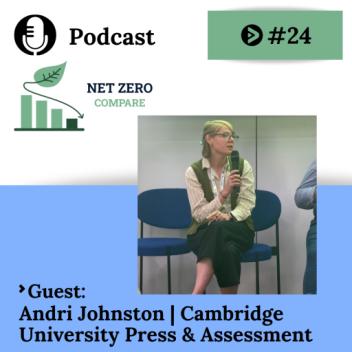
Andri Johnston on Digital Sustainability in Publishing: Practical Lessons from Cambridge University Press & Assessment
Ep. 24
·
Jan 29, 2026
47:54
In a Net Zero Compare conversation, Andri Johnston, Digital Sustainability Lead at Cambridge University Press & Assessment, shared practical lessons on managing digital emissions in global publishing. While print remains the largest emissions source, digital products still generate impact through hosting, networks, and end-user access. Johnston emphasized acting without perfect data, documenting assumptions, refining methods, and using early estimates to drive momentum. Efficiency gains, such as reducing file sizes, optimizing image formats, and designing for low-bandwidth regions, delivered sustainability and accessibility benefits without harming learning outcomes. Supplier transparency, Scope 3 reporting gaps, and hardware lifecycles remain challenges, addressed through collaboration, governance, and circular IT practices. Cultural change, from Cleanathons to accessibility initiatives, proved essential. The key takeaway: digital sustainability is about continuous improvement, informed tradeoffs, and embedding efficiency into everyday digital decisions.
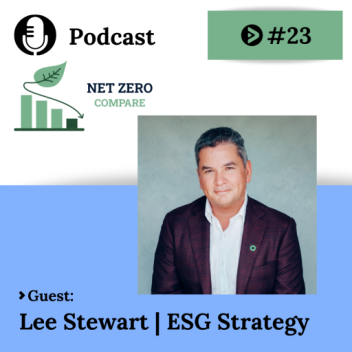
Lee Stewart on How Companies Can Turn ESG Commitments Into Real Progress: Insights from Lee Stewart
Ep. 23
·
Jan 22, 2026
24:39
In this Net Zero Compare interview, Lee Stewart, CEO of ESG Strategy, explains why many companies struggle to turn ESG commitments into real operational progress. The issue, he argues, is rarely a lack of ambition. Instead, sustainability efforts often fail due to weak governance, poor data foundations, and over-reliance on small, overstretched sustainability teams. Stewart stresses that sustainable ownership must be distributed across the business, embedded in existing governance structures, and aligned with executive incentives. He introduces his “Triple C” framework: Confidence through board-level understanding, Commitment grounded in robust and customer-inclusive materiality assessments, and Consistency via clear accountability and incremental progress. He also highlights the growing importance of early preparation for sustainability reporting and assurance, warning that companies will increasingly face data demands from regulators and customers alike. Automation, careful data architecture, and future-ready systems are essential. Ultimately, Stewart encourages companies to treat compliance as an opportunity for efficiency, innovation, and competitive advantage. Consistent action, rather than perfect strategies or reports, is what drives meaningful ESG progress.
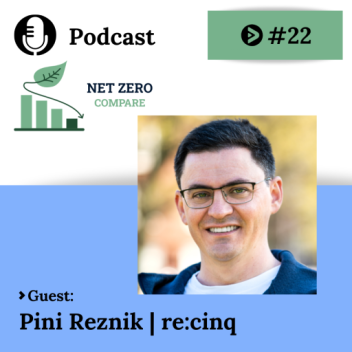
Pini Reznik on Why AI Native Transformation Is About Structure, Not Tools
Ep. 22
·
Jan 17, 2026
39:12
In this Net Zero Compare podcast, Pini Reznik, CEO and co-founder of re:cinq, explains why AI Native transformation is fundamentally about organizational structure, not tools. Drawing on his experience with large-scale Cloud Native systems, Reznik highlights how underutilized infrastructure, data silos, and poor data quality create both economic inefficiency and unnecessary emissions. He argues that treating AI as a productivity add-on fails to deliver value and often amplifies existing problems. Instead, AI reshapes how work is organized, shifting the focus from execution to interpretation, governance, and decision-making. Successful AI Native adoption requires strong data foundations, incremental transformation, and committed leadership. Reznik emphasizes that meaningful efficiency and sustainability gains come from redesigning systems to eliminate waste by design, making AI Native transformation a continuous capability rather than a one-off initiative.
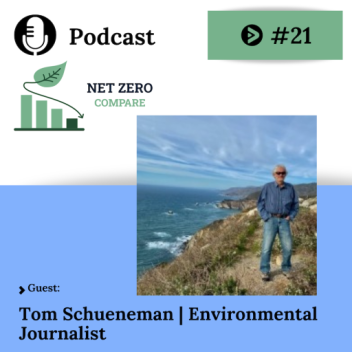
Tom Schueneman on From Doom to Dialogue: How Climate Communication Can Reconnect People With Reality
Ep. 21
·
Jan 9, 2026
35:16
In this conversation, environmental journalist Tom Schueneman argues that the main barrier to climate action is not lack of information, but ineffective communication. While public awareness of climate change has increased and outright denial has declined, many people feel overwhelmed, fatigued, or disconnected by alarmist and abstract messaging. Schueneman stresses that audiences increasingly want practical solutions and narratives that reflect everyday realities. He highlights the importance of storytelling over statistics, using shared values such as clean water, healthy ecosystems, and future generations to build connection and reduce polarization. The discussion also addresses systemic issues such as greenwashing, misplaced responsibility on consumers, and communication silos between science, business, and the public. Schueneman advocates for transparency, evidence-based sustainability claims, and balanced engagement to avoid burnout. He also highlights underexplored challenges, such as AI’s environmental footprint and its dependence on plastic, and calls for urgent reductions in emissions through scalable renewable energy sources. Ultimately, he concludes that clear, honest, and human-centered communication is essential to turning climate awareness into meaningful action.
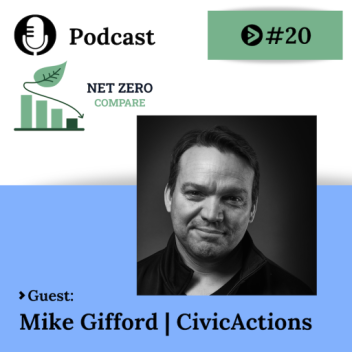
Mike Gifford on Digital Sustainability Starts with How We Build the Web
Ep. 20
·
Jan 2, 2026
38:02
Digital sustainability is becoming a core requirement for credible ESG reporting. In a discussion with Mike Gifford of CivicActions, the focus was on how digital systems themselves, beyond the data they produce, must be sustainable, accessible, and transparent. Open standards are critical to building trust, enabling interoperability, and ensuring long-term compliance as regulatory expectations grow. Gifford emphasized that accessibility is not optional or niche; it reflects real human diversity and directly affects usability, reach, and risk. Designing inclusively from the start is more effective and less costly than retrofitting later. He also highlighted that digital sustainability extends beyond data centers: inefficient, heavy digital products increase energy use and shorten device lifespans, amplifying environmental impact. Ultimately, sustainable digital practices depend on ethical design, open systems, and continuous improvement. Organizations that embed these principles into their technology decisions strengthen credibility, reduce risk, and support meaningful climate accountability.
.png)
Nina Benoit (Brightest) on How AI Is Transforming Sustainability Work
Ep. 19
·
Dec 27, 2025
26:51
AI is increasingly reshaping how sustainability teams operate, but its value depends on how thoughtfully it is used. In this episode of the Net Zero Compare Podcast, Nina Benoit, Director of Sustainability at Brightest, explains how AI can streamline ESG reporting, improve data consistency, and support Scope 3 emissions collection through automation and AI agents. The conversation explores common misconceptions about AI, the risks of poor data inputs, and why human oversight remains essential to avoid misreporting. Nina also highlights the often-overlooked environmental footprint of AI systems, discusses how different teams and industries respond to automation, and outlines practical guidance for sustainability leaders seeking to adopt AI responsibly without increasing unnecessary environmental impact.
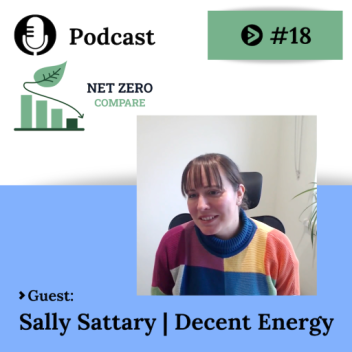
Sally Sattary (Decent Energy) on Weather Intelligence, Forecasting Uncertainty, and Decarbonizing Energy Demand
Ep. 18
·
Dec 18, 2025
20:22
Weather is becoming one of the most important drivers of volatility in modern power systems. In this episode of the Net Zero Compare Podcast, Sally Sattary, Co-Founder and Director of Energy and Operations at Decent Energy, explains how weather forecasting, probabilistic models, and demand-side flexibility shape renewable-heavy grids. The conversation covers forecasting uncertainty, why fog and microclimates still disrupt solar output, the limits of deterministic forecasts, and where AI helps or falls short. Sally also introduces Decent Energy’s Shifter tool, which automates battery charging and discharging to reduce carbon intensity while lowering electricity costs for households.

Stefana Sopco (PortXchange) on Data, Digital Coordination, and Port Decarbonization
Ep. 17
·
Dec 16, 2025
36:18
Ports play a central role in maritime emissions, but most already have the data needed to act. In this conversation, Stefana Sopco of PortXchange explains how ports can reduce Scope 3 emissions through better data sharing, just-in-time arrival coordination, and transparent reporting. The discussion covers practical decarbonization levers, the limits of technology without collaboration, and why inclusive leadership and community accountability matter for accelerating real progress.
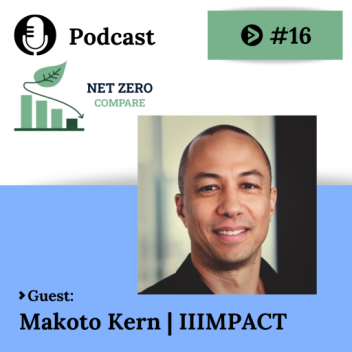
Makoto Kern (IIIMPACT) on Product Strategy for Climate Tech and Energy Innovation
Ep. 16
·
Dec 2, 2025
30:43
A practical conversation with Makoto Kern, UX product strategy leader at IIIMPACT, on how companies can turn complex ideas into usable, adoption-ready software. We discuss alignment across leadership, design, and engineering, how enterprise UX differs from consumer UX, managing risk in climate and energy sectors, and building systems that deliver measurable business value.
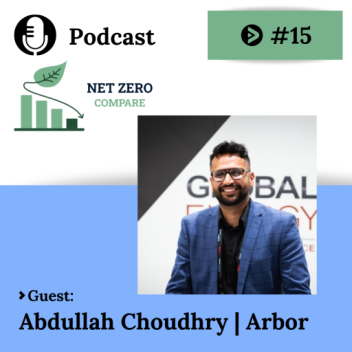
Abdullah Choudhry (Arbor) on Product-Level Carbon Data & Real Emissions Cuts
Ep. 15
·
Nov 6, 2025
38:57
In our conversation with Arbor’s co-founder, Abdullah Choudhry, we explore how product-level models, anomaly checks, secondary data fills, and an auditor view can turn uncertain supplier inputs into confident, repeatable decisions. The result is less time spent on spreadsheets and more time cutting Scope 3.
- «Previous
Showing results
1
to 10
of 24
Topics
Similar Podcasts
Cleaning Up with Michael Liebreich
Liebreich Associates
Active
Weekly

Climate Rising
Harvard Business School
Active
Twice a week

Outrage + Optimism
Global Optimism
Active
Weekly

People Places Planet
Environmental Law Institute (ELI)
Active
Monthly
The Energy Gang
Wood Mackenzie
Active
Twice a week

The Sustainable Law Podcast
Active
Irregular
Added on Oct 14, 2025 by Amadeusz Annissimo
·
Updated on Oct 14, 2025 by Amadeusz Annissimo