AVEVA’s Sustainable Aviation Fuel Data Deal Highlights the Role of Digital Tools in Clean Technology Adoption

Cut through the green tape
We don't push agendas. At Net Zero Compare, we cut through the hype and fear to deliver the straightforward facts you need for making informed decisions on green products and services. Whether motivated by compliance, customer demands, or a real passion for the environment, you’re welcome here. We provide reliable information. Why you seek it is not our concern.
Aviation remains one of the most difficult sectors to decarbonise. Aircraft have long operational lifetimes, alternatives to liquid fuels are limited for long-haul flights, and global passenger demand continues to grow. While efficiency improvements and operational measures have delivered incremental emissions reductions, they are not sufficient to align the sector with net-zero targets.
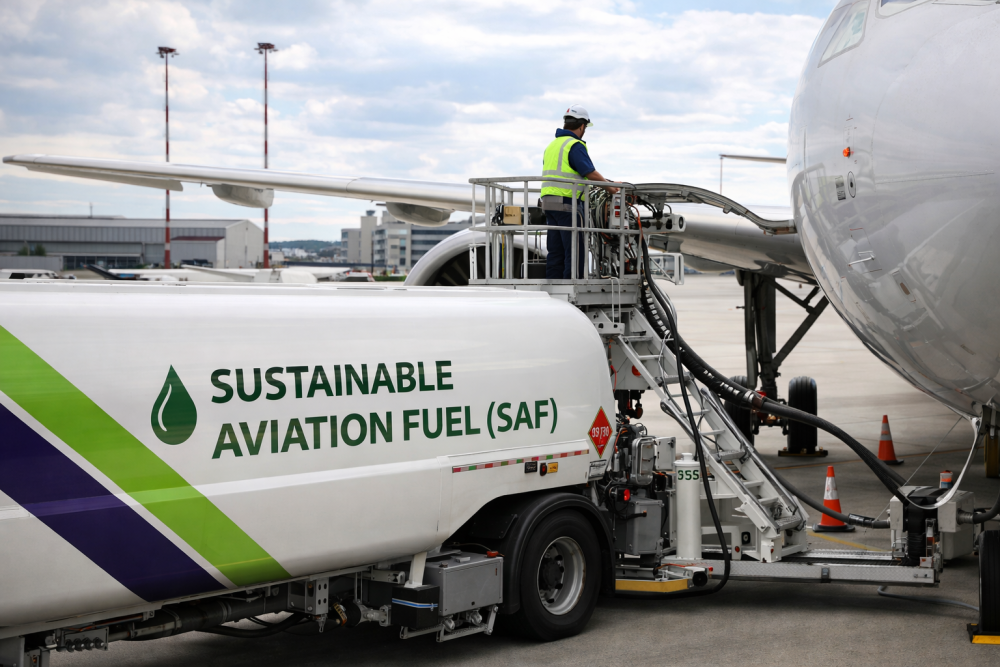
Sustainable aviation fuel, commonly referred to as SAF, has therefore become a central pillar of aviation decarbonisation strategies. Produced from feedstocks such as waste oils, agricultural residues, or synthetic pathways using captured carbon, SAF can deliver lifecycle emissions reductions of up to 80% compared with conventional jet fuel, depending on the production route.
Despite its potential, SAF currently accounts for well under one percent of global aviation fuel use. Scaling production and adoption remains constrained by cost, limited supply, and the complexity of tracking and verifying sustainability claims across global supply chains.
The Role of Data in Scaling Sustainable Aviation Fuel
One of the less visible but critical barriers to SAF adoption is data management. Airlines, fuel suppliers, airports, and regulators all require accurate, auditable information on feedstocks, emissions intensity, blending volumes, and end use. Without consistent and reliable data, it is difficult to demonstrate compliance with regulations, meet corporate climate commitments, or build confidence among investors and customers.
The recent AVEVA deal highlighted by Sustainability Magazine addresses this challenge by focusing on digital data infrastructure for SAF. By using industrial software platforms to standardise and integrate sustainability data, the agreement aims to improve transparency and traceability throughout the SAF value chain.
Such platforms enable stakeholders to move beyond fragmented reporting systems and manual processes. Instead, they provide a single source of truth that links fuel production data, emissions factors, and usage records directly to operational and financial systems.
Regulatory Pressure and Reporting Requirements
The importance of robust SAF data systems is increasing as governments introduce more stringent aviation climate policies. In the European Union, the ReFuelEU Aviation regulation mandates progressively higher SAF blending levels at EU airports, starting this decade and rising significantly by 2050. Airlines must demonstrate compliance through detailed reporting on fuel sourcing and emissions performance.
Similar policy signals are emerging elsewhere. In the United States, SAF tax credits are tied to verified lifecycle emissions reductions. Other regions are developing carbon markets, blending mandates, or disclosure requirements that rely heavily on accurate emissions data.
Digital platforms play a key role in enabling compliance with these frameworks. Automated data collection and reporting reduce the risk of errors, improve audit readiness, and help companies adapt more quickly as rules evolve.
Implications for Airlines and Fuel Suppliers
For airlines, access to reliable SAF data supports multiple strategic objectives. It allows them to accurately account for emissions reductions in corporate sustainability reporting, meet voluntary net-zero commitments, and respond to growing customer demand for lower-carbon travel options.
Fuel producers and suppliers also benefit from improved data transparency. Verified sustainability credentials can help differentiate products in a competitive market, support long-term offtake agreements, and unlock financing for new production capacity. As SAF projects are often capital-intensive, credible data on emissions performance and demand is increasingly important for investors.
Airports and logistics providers are similarly affected. As hubs for fuel blending and distribution, they must coordinate between multiple suppliers and airlines while maintaining compliance with safety, quality, and sustainability standards.
Digitalization as an Enabler of Clean Technology Adoption
The AVEVA agreement reflects a broader trend across hard-to-abate sectors, where digitalisation is becoming a prerequisite for effective decarbonisation. Clean technologies such as SAF, green hydrogen, and carbon capture involve complex systems with multiple inputs, outputs, and stakeholders. Managing these systems without advanced data tools is increasingly impractical.
Industrial software platforms enable companies to connect sustainability metrics directly to operational performance. This integration supports better decision-making, such as optimising fuel procurement, assessing cost versus emissions trade-offs, or prioritising investments based on verified climate impact.
From a policy and market perspective, digital transparency also helps address concerns around greenwashing. As scrutiny of corporate climate claims intensifies, the ability to demonstrate measurable, auditable emissions reductions is becoming a competitive necessity rather than a voluntary extra.
Looking Ahead
Global SAF demand is expected to grow rapidly over the coming decades, driven by regulatory mandates, airline commitments, and corporate travel policies. However, supply constraints and cost premiums are likely to persist, particularly in the near term. In this environment, solutions that improve efficiency, credibility, and coordination across the value chain will be critical.
The AVEVA SAF data deal highlights an often-overlooked aspect of the energy transition: clean fuels alone are not enough. Digital infrastructure, data integrity, and collaboration across industries are equally important in translating climate ambition into real-world emissions reductions. For aviation, the combination of sustainable fuels and advanced digital tools may prove decisive in aligning growth with net-zero objectives.
Source: sustainabilitymag.com

Mentioned in this article...
Organizations
Glossary terms
More related content

OMV Warns Rigid Recycling Rules May Slow Plastics Innovation
Wind and Solar Overtake Fossil Fuels in EU Power Generation

OpenAI Outlines Strategy to Control Rising Data Centre Energy Costs