India’s Solar Boom Positions It Ahead of China’s Fossil-Fueled Growth Path, Report Says

Cut through the green tape
We don't push agendas. At Net Zero Compare, we cut through the hype and fear to deliver the straightforward facts you need for making informed decisions on green products and services. Whether motivated by compliance, customer demands, or a real passion for the environment, you’re welcome here. We provide reliable information. Why you seek it is not our concern.
India’s accelerating adoption of solar energy and other clean technologies is creating a development model that avoids much of the fossil-fuel reliance seen in China’s rapid industrialisation, according to a recent report. The finding highlights how declining costs for renewable technology can enable emerging economies to pursue low-carbon growth pathways without replicating past emissions-heavy patterns.
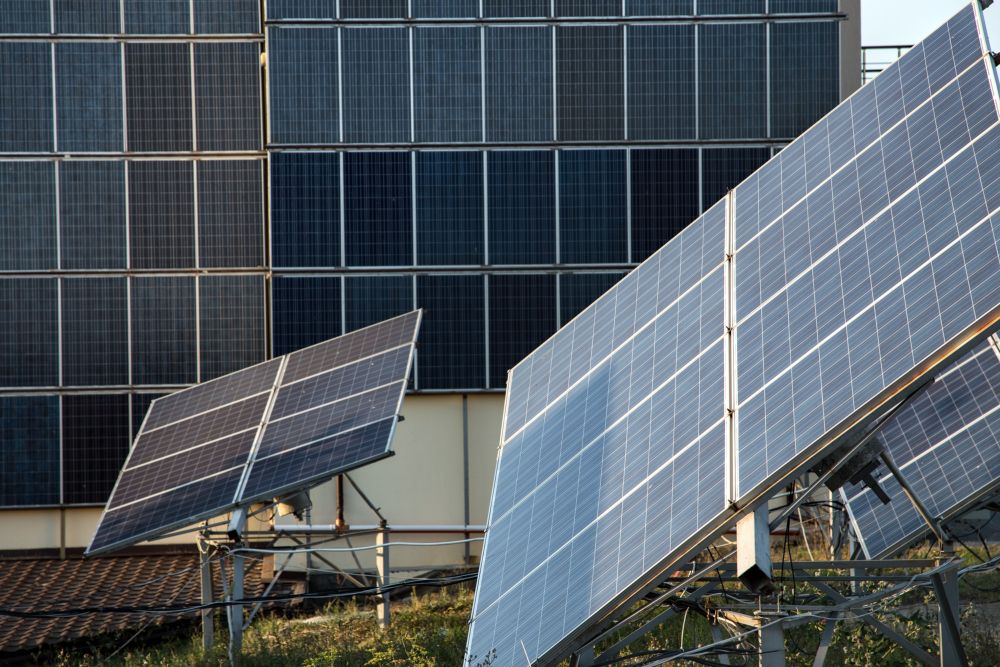
Record-low prices for solar photovoltaic (PV) modules and related green technologies have made solar power among the most cost-competitive sources of electricity in India’s energy mix. This economic shift is a central factor allowing India to scale up renewable energy deployment faster than China did at a similar stage of economic growth.
India added a record amount of renewable energy capacity in 2025, with solar contributing the bulk of this expansion. Government data indicate that India installed around 44.5 gigawatts (GW) of new renewable capacity through November 2025, nearly doubling expansion from the previous year. Solar capacity alone reached approximately 132.85 GW, significantly boosting its share of the national energy portfolio.
Experts say India’s clean energy surge goes beyond capacity figures. Analysis by energy think tanks shows solar power accounted for about 9% of India’s total electricity generation in 2025, a share that came earlier in India’s development trajectory than China achieved. This suggests India may be transitioning to clean electricity at a lower emissions intensity and earlier in its economic rise than China did.
Drivers of India’s Clean Energy Leap
Several key factors underpin India’s ability to leverage cheap solar and leapfrog traditional fossil-fuel growth. Global manufacturing scale-ups, particularly in China, have dramatically reduced prices for solar panels and wind turbines. India benefits from these cost declines, importing affordable technology while expanding its domestic capacity.
India’s policy environment also supports renewable deployment. The government’s ambitious target to achieve 500 GW of non-fossil fuel energy capacity by 2030 has shaped investment and infrastructure planning. Public-sector initiatives, like the Pradhan Mantri Surya Ghar Muft Bijli Yojana, aim to boost rooftop solar adoption among households, while Production-Linked Incentive schemes are catalysing module manufacturing and job creation across states.
These measures complement broader renewable growth, including floating solar projects on dam reservoirs and large public-private projects, further diversifying clean energy sources across regions.
Economic and Climate Implications
India’s shift toward high-growth renewable deployment has meaningful implications for its energy security, economic development, and emissions trajectory. By integrating a significant share of solar power early in its industrialisation, India is reducing its dependence on fossil fuels such as coal, which historically dominated power generation and contributed to high greenhouse gas emissions.
This evolving energy mix can support India’s long-term climate commitments. Under its Nationally Determined Contribution (NDC) to the Paris Agreement, India aims to reduce carbon intensity and expand renewable capacity as part of broader efforts to limit global temperature rise. Faster adoption of renewables could help meet these goals more cost-effectively, reducing reliance on new coal infrastructure while generating economic opportunities.
However, India still faces challenges in balancing demand growth, grid integration, and investment flows. While renewable capacity is expanding rapidly, issues such as grid stability and transmission bottlenecks persist, particularly as electricity demand climbs with urbanization and industrial expansion. Moreover, recent market developments have shown strains in renewable project implementation, prompting policy adjustments to align supply with buyer demand.
Comparisons with China’s Development Path
China’s development trajectory has been closely linked with coal-fired power expansion and heavy industrial emissions. While China is also a global leader in renewable energy capacity, it historically relied on abundant domestic coal resources to fuel its industrial growth. India’s emerging model, driven by low renewable costs and a strategic policy push, contrasts with this fossil-fuel-centric pattern.
Energy analysts note that India’s ability to hit key solar penetration milestones at a lower economic income level than China underscores the changing economics of clean energy. This transformation suggests that emerging economies can prioritise low-carbon infrastructure without sacrificing growth, provided that technology costs continue to decline and supportive policy frameworks remain in place.
Outlook and Practical Implications
For industry stakeholders, India’s renewable trajectory presents both opportunities and risks. Rapid expansion of solar capacity creates markets for project developers, investors, and clean-tech manufacturers. International firms engaged in renewable infrastructure and supply chains may find growing demand for capital, technology transfers, and long-term power purchase agreements. At the same time, managing grid integration, storage solutions, and financing gaps will require coordinated public-private action.
Governments and companies involved in power generation and decarbonisation planning can draw lessons from India’s experience, particularly in leveraging cost economics to accelerate clean energy deployment. For policymakers, maintaining transparent regulatory frameworks and addressing infrastructure constraints will be critical to sustaining momentum.
Conclusions
India’s solar boom and clean energy growth are redefining traditional pathways to development by enabling a lower-carbon growth strategy than that of China’s historical model. With continuing cost declines for renewable technologies and supportive policy measures, India’s trajectory underscores how emerging economies can integrate sustainability objectives with economic expansion.
Source: carbon-pulse.com

Mentioned in this article...
Organizations
Glossary terms
More related content

OMV Warns Rigid Recycling Rules May Slow Plastics Innovation
Wind and Solar Overtake Fossil Fuels in EU Power Generation
OpenAI Outlines Strategy to Control Rising Data Centre Energy Costs