Scientists Develop Low Carbon Method to Transform Biomass Into Biofuels Using Electrochemical Pathway

Cut through the green tape
We don't push agendas. At Net Zero Compare, we cut through the hype and fear to deliver the straightforward facts you need for making informed decisions on green products and services. Whether motivated by compliance, customer demands, or a real passion for the environment, you’re welcome here. We provide reliable information. Why you seek it is not our concern.
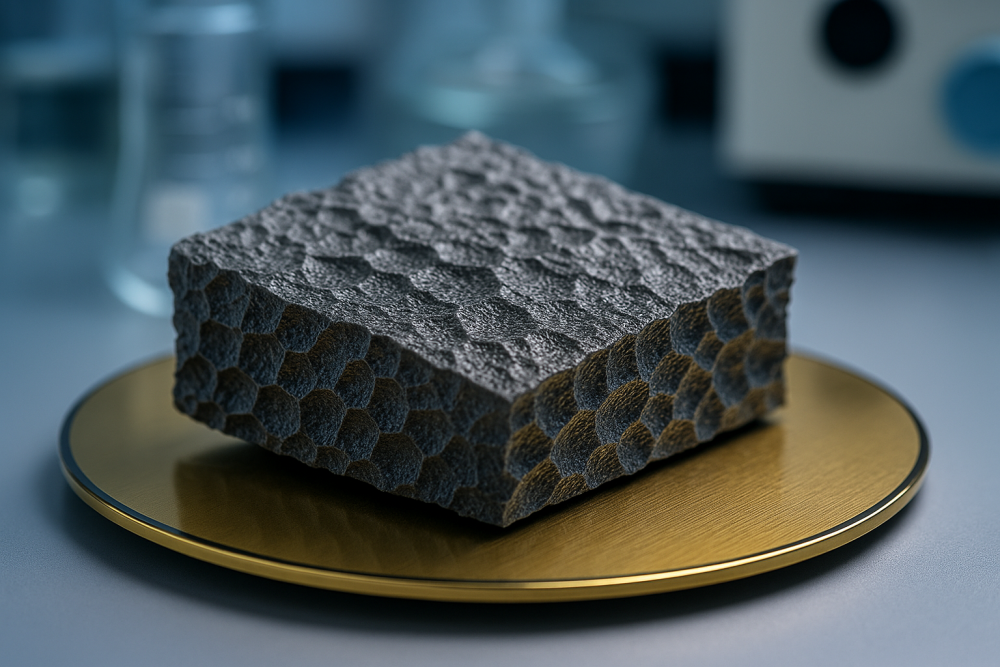
A team of researchers has unveiled a breakthrough in graphene engineering that dramatically improves the performance of supercapacitors, positioning the material as a candidate for future high power energy storage systems. The innovation focuses on creating a more efficient graphene structure capable of storing greater amounts of energy without sacrificing the fast charging capabilities that supercapacitors are known for. This development arrives at a critical time as industries pursue solutions that bridge the gap between batteries and high power storage technologies.
Why Graphene Matters for the Energy Transition
Graphene, a carbon material only one atom thick, has long been recognized for its exceptional electrical, mechanical and thermal properties. Its large surface area and high conductivity make it an ideal material for supercapacitors, which store energy by accumulating charges on surfaces rather than relying on chemical reactions. However, traditional graphene sheets tend to stack together, reducing the effective surface area and limiting charge storage.
The newly developed structure overcomes this problem by preventing graphene layers from collapsing, preserving open channels for ion movement and improving energy retention. With storage systems playing a critical role in renewable energy integration and electric mobility, advances like this can strengthen grid resilience and improve performance in power-intensive applications.
Technical Advance: Improved Energy and Power Density
According to the research team, the redesigned graphene structure achieved a volumetric energy density of up to 99.5 Wh per liter, which approaches levels typically associated with commercial lithium-ion batteries. At the same time, it maintained a power density of 69.2 kW per liter, allowing rapid charging and discharging with minimal performance loss.
These metrics indicate that the technology could support applications requiring both high power and moderate energy storage. The combination is particularly attractive for electric vehicles, where fast charging is a priority, and for renewable energy systems that require instantaneous smoothing of fluctuations from solar and wind power.
Potential Applications Across Clean Energy Systems
If scaled successfully, the breakthrough could expand the role of supercapacitors beyond niche uses. Traditional supercapacitors offer exceptional power but limited energy storage, making them unsuitable for long duration applications. The improved graphene design narrows this gap, potentially allowing supercapacitors to:
Support regenerative braking systems in electric vehicles
Enhance power management in hybrid storage architectures
Provide stabilizing functions in microgrids and renewable installations
Improve performance in portable electronics requiring rapid charging
The technology may also lower maintenance requirements due to the long cycle life and stable electrochemical behavior of graphene based supercapacitors.
Challenges Ahead Before Commercial Deployment
Despite the promising results, researchers note several challenges that must be addressed. Manufacturing high quality graphene at scale remains costly, and ensuring structural consistency across large volumes is technically demanding. Integration with existing storage platforms will also require further testing, particularly under varying temperature and real world operational conditions.
Economic viability will depend on advances in graphene production, improvements in electrode fabrication techniques and the development of scalable processes for assembling structured graphene materials. Long term durability studies are also needed to assess how the structure performs after thousands of charge cycles.
Significance for Net-Zero Strategies
The energy transition depends not only on clean generation but also on effective storage solutions. Technologies that increase the efficiency, power and durability of storage systems can reduce reliance on fossil based backups, improve renewable energy reliability and accelerate electrification.
Graphene based supercapacitors, if successfully commercialized, could complement battery systems by handling fast charging and high power demands, reducing strain on lithium-ion cells and potentially extending their lifespan. Such hybrid configurations could support more robust electric vehicle architectures and make grids more resilient to intermittency.
Conclusion
The new graphene breakthrough represents an important step in advancing high performance energy storage. By enhancing both energy density and power output, the technology broadens the possibilities for supercapacitors in clean energy systems. Continued research and development will determine how quickly this innovation can move from laboratory results to industrial adoption, but the findings underscore graphene’s potential role in shaping the next generation of sustainable energy infrastructure.
Source: www.sciencedaily.com

Mentioned in this article...
More related content
OMV Warns Rigid Recycling Rules May Slow Plastics Innovation
Wind and Solar Overtake Fossil Fuels in EU Power Generation
OpenAI Outlines Strategy to Control Rising Data Centre Energy Costs