Microsoft Secures Biochar Carbon Removal Deal With Varaha in India

Cut through the green tape
We don't push agendas. At Net Zero Compare, we cut through the hype and fear to deliver the straightforward facts you need for making informed decisions on green products and services. Whether motivated by compliance, customer demands, or a real passion for the environment, you’re welcome here. We provide reliable information. Why you seek it is not our concern.
Microsoft has entered into a new carbon dioxide removal agreement focused on biochar production in India, marking another step in the company’s expanding portfolio of long-term carbon removal investments. The agreement was signed with Varaha, a climate technology company specializing in nature-based and durable carbon removal solutions across the Global South.
Under the deal, Microsoft will purchase a significant volume of carbon removal credits generated through biochar projects implemented in rural regions of India. While the companies have not publicly disclosed the financial value of the agreement, the contract is structured as a multi-year offtake, aligning with Microsoft’s goal of securing a scalable, high-integrity carbon removal supply over time.
Biochar as a Durable Carbon Removal Pathway
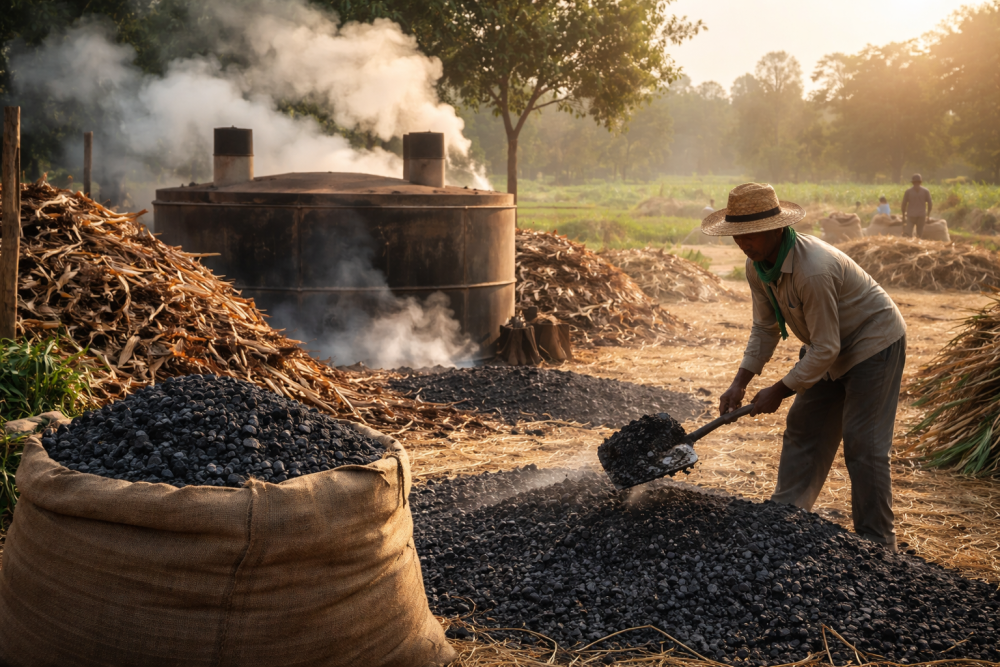
Biochar is produced by heating organic biomass, such as agricultural residues, in a low-oxygen environment through a process known as pyrolysis. This process converts carbon that would otherwise return to the atmosphere through decomposition or burning into a stable, charcoal-like material. When applied to soils, biochar can remain intact for hundreds to thousands of years, effectively locking away carbon and qualifying as a form of durable carbon dioxide removal.
In addition to its climate benefits, biochar can improve soil fertility, water retention, and nutrient efficiency. These co-benefits are particularly relevant in agricultural regions facing soil degradation, erratic rainfall, and declining productivity.
Varaha’s projects focus on sourcing crop residues that are often burned in open fields, a practice that contributes to air pollution and greenhouse gas emissions. By diverting this biomass into controlled biochar production, the project aims to reduce local pollution while generating verifiable carbon removal outcomes.
Project Implementation and Verification
According to publicly available information, Varaha’s biochar projects are designed to meet recognized carbon crediting standards, with rigorous monitoring, reporting, and verification processes. These frameworks are critical in ensuring that carbon removal claims are measurable, additional, and permanent, criteria that have become increasingly important for corporate buyers.
Microsoft has stated that all carbon removal credits it purchases must meet high durability thresholds, generally exceeding 100 years, and be supported by transparent lifecycle assessments. Biochar, when produced and applied correctly, is considered one of the more mature and scientifically supported pathways within the broader carbon dioxide removal landscape.
The credits generated through Varaha’s projects will be retired on Microsoft’s behalf and counted toward the company’s long-term climate goals rather than being resold or traded.
Strategic Fit with Microsoft’s Climate Commitments
Microsoft has committed to becoming carbon negative by 2030 and to removing all of the carbon it has emitted since its founding by 2050. To achieve these goals, the company has increasingly shifted its focus beyond conventional carbon offsets toward durable removal solutions, including direct air capture, enhanced mineralization, reforestation, and biochar.
The agreement with Varaha reflects Microsoft’s strategy of diversifying its carbon removal portfolio across technologies, geographies, and project scales. India represents a particularly strategic location due to its large agricultural sector, abundance of biomass feedstocks, and growing capacity for climate-focused project development.
Microsoft has previously emphasized that early offtake agreements are intended to help emerging carbon removal technologies scale while driving improvements in cost, measurement accuracy, and operational efficiency.
Implications for Markets and Rural Economies
For carbon markets, the deal highlights rising demand for durable carbon removal credits from large corporate buyers, a trend that is reshaping voluntary carbon market dynamics. As scrutiny over offset quality intensifies, buyers are increasingly prioritizing removals over avoidance-based credits.
For rural communities, biochar projects can create new revenue streams by monetizing agricultural residues that previously had little economic value. They may also reduce health impacts linked to crop residue burning and support more resilient farming systems.
However, experts note that scaling biochar sustainably requires careful feedstock management to avoid competition with food systems or unintended land-use impacts. Transparent governance and localized project design are therefore critical to long-term success.
Looking Ahead
While biochar alone will not deliver the scale of carbon removal required to meet global climate targets, agreements such as this one illustrate how it can play a complementary role within a diversified removal strategy. Continued investment, scientific validation, and policy alignment will be essential to unlock broader deployment.
As corporate climate strategies evolve, deals like the Microsoft–Varaha agreement are likely to become more common, particularly in regions where climate mitigation, adaptation, and development priorities intersect.
Source: esgnews.com

Mentioned in this article...
Organizations
More related content

OMV Warns Rigid Recycling Rules May Slow Plastics Innovation
Wind and Solar Overtake Fossil Fuels in EU Power Generation
OpenAI Outlines Strategy to Control Rising Data Centre Energy Costs