Formula 1 to Introduce Carbon-Neutral Sustainable Fuels and Greener Tech in 2026 Push

Cut through the green tape
We don't push agendas. At Net Zero Compare, we cut through the hype and fear to deliver the straightforward facts you need for making informed decisions on green products and services. Whether motivated by compliance, customer demands, or a real passion for the environment, you’re welcome here. We provide reliable information. Why you seek it is not our concern.
Formula 1 is preparing for one of the most significant regulatory changes in its history as it moves toward the mandatory use of carbon-neutral, sustainable fuels from the 2026 season. The change is part of a wider overhaul of technical rules that will reshape power units, fuel composition, and energy use across the championship. Together, these measures are designed to align the sport with its stated objective of reaching net-zero carbon emissions by 2030 while preserving competition, performance, and global appeal.
The new regulations place sustainability at the core of Formula One’s technological direction. Rather than abandoning internal combustion engines altogether, the sport is positioning itself as a testing ground for low-carbon liquid fuels that could be used beyond motorsport, particularly in sectors where electrification remains difficult.
What Carbon-Neutral Sustainable Fuels Mean in Practice
Under the 2026 rules, all Formula One cars will be required to run exclusively on fuels produced from sustainable sources. These include advanced bio-based feedstocks, non-food biomass, waste materials, and synthetic fuels created using captured carbon dioxide combined with renewable hydrogen. The defining principle is that the carbon released during combustion must be balanced by carbon already present in the atmosphere or diverted from waste streams, resulting in a net neutral carbon balance over the fuel’s lifecycle.
This approach differs from traditional fossil fuels, which introduce new carbon into the atmosphere. It also differs from first-generation biofuels, which raised concerns about land use change and competition with food production. The governing body requires fuel suppliers to meet strict sustainability and traceability criteria, ensuring that claimed emissions reductions are credible and verifiable.
Power Units Redesigned Around Efficiency
The fuel transition coincides with a major redesign of Formula 1’s power units. From 2026, cars will continue to use hybrid engines but with a greater emphasis on electrical power. The energy split between the internal combustion engine and electric systems will be adjusted to improve efficiency and reduce fuel consumption, while maintaining the high speeds and performance expected of the sport.
Manufacturers have framed this hybrid approach as more relevant to real-world transport than fully electric racing formats. By combining sustainable fuels with advanced hybrid systems, Formula One aims to demonstrate how internal combustion technology can evolve in a carbon-constrained world rather than disappear entirely.
Why Formula 1 is Betting on Sustainable Fuels
Formula 1’s leadership argues that sustainable fuels represent a practical decarbonisation pathway for millions of existing vehicles worldwide. While electric vehicles are expanding rapidly, large segments of global transport, including aviation, shipping, and heavy road transport, are likely to depend on liquid fuels for decades. Advances made in motorsport could help accelerate fuel innovation, improve efficiency, and reduce costs through scale.
The championship’s global reach also plays a role. With races held across multiple continents and broadcast to hundreds of millions of viewers, Formula One sees itself as a platform to showcase alternative energy solutions and influence public and industry perceptions of what low-carbon technologies can achieve.
Challenges Around Scale and Energy Demand
Despite the ambition, sustainable fuels face significant challenges. Producing synthetic fuels requires large amounts of renewable electricity, particularly to generate green hydrogen. This raises questions about cost, scalability, and competition for renewable energy resources that might otherwise be used directly for electrification.
Critics argue that sustainable fuels should be prioritised for sectors with no viable alternatives, rather than high-performance racing. Supporters counter that innovation often begins in niche, high-investment environments before moving into mainstream applications, and that motorsport has historically played this role in areas such as safety, materials, and efficiency.
Progress Toward Formula 1’s Net-Zero Target
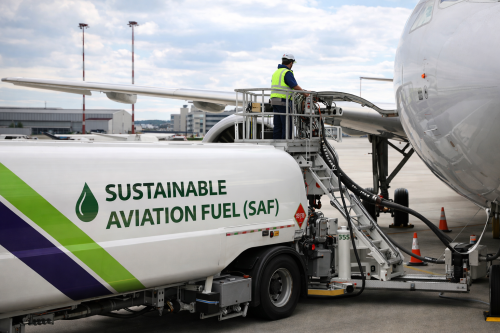
The fuel mandate is only one component of Formula 1’s broader sustainability strategy. The organisation has already implemented measures to reduce emissions from logistics, travel, and operations. These include more efficient freight routes, increased use of sustainable aviation fuels, remote broadcasting technologies to limit staff travel, and a growing reliance on renewable energy at team factories and event sites.
According to recent disclosures, these initiatives have already delivered a substantial reduction in the sport’s carbon footprint compared with pre-pandemic levels. The remaining challenge lies in addressing the emissions associated with global travel and supply chains, which account for a large share of total impact.
Implications for Manufacturers and Suppliers
The 2026 regulations have attracted major automotive manufacturers and fuel companies, many of whom see Formula One as a research and development environment aligned with their own decarbonisation goals. Developing fuels that meet strict performance and sustainability requirements demands close collaboration between teams, engine manufacturers, and energy providers.
For fuel suppliers, participation offers an opportunity to test new production pathways, certification systems, and supply chains under extreme conditions. For car manufacturers, it provides a route to refine hybrid technologies and fuel compatibility that may later influence road vehicles.
Relevance Beyond Motorsport
Formula One’s shift reflects a broader trend in climate and energy policy that recognises the need for multiple decarbonisation pathways. While electrification is central to reducing emissions, alternative fuels are increasingly seen as necessary complements, particularly where batteries are impractical.
The regulatory framework being developed for Formula One, including sustainability criteria, lifecycle accounting, and independent verification, may offer useful reference points for policymakers and industries considering how to regulate and scale sustainable fuels.
A High-Profile Test Case for Net-Zero Innovation
As the 2026 season approaches, Formula One is positioning itself as a high-profile test case for integrating performance, commercial viability, and climate responsibility. Whether sustainable fuels can deliver meaningful emissions reductions at scale remains an open question, but the sport’s decision ensures that the issue will remain visible and contested.
For a championship built on engineering excellence and rapid innovation, the transition marks a strategic bet that carbon-neutral fuels and advanced hybrids can play a credible role in the global net-zero transition, both on the track and far beyond it.
Source link: Financial Times

Mentioned in this article...
Glossary terms
More related content

OMV Warns Rigid Recycling Rules May Slow Plastics Innovation

Wind and Solar Overtake Fossil Fuels in EU Power Generation

OpenAI Outlines Strategy to Control Rising Data Centre Energy Costs