UK Research Uses Artificial Intelligence to Tackle Sustainability and Space Environmental Risks

Cut through the green tape
We don't push agendas. At Net Zero Compare, we cut through the hype and fear to deliver the straightforward facts you need for making informed decisions on green products and services. Whether motivated by compliance, customer demands, or a real passion for the environment, you’re welcome here. We provide reliable information. Why you seek it is not our concern.
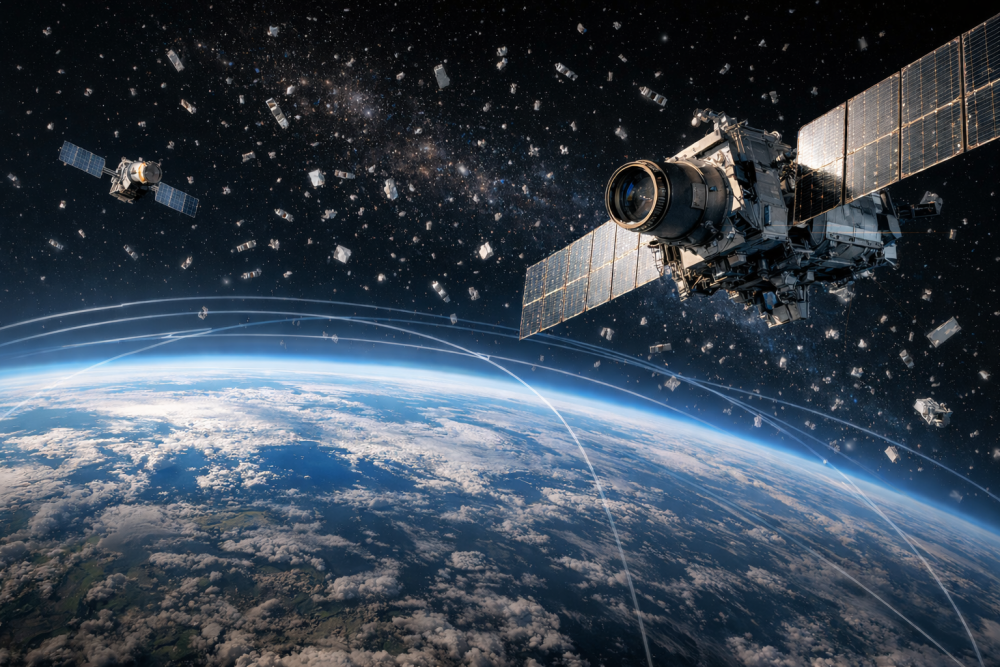
The rapid expansion of space activity has brought significant environmental and operational challenges. Thousands of satellites are now in orbit, supporting communications, navigation, Earth observation and security services. Alongside these operational assets, large volumes of space debris have accumulated, including inactive satellites, rocket fragments and collision remnants. This congestion increases the risk of accidents that could disrupt critical services and further worsen orbital pollution.
UK Research and Innovation points out that traditional tracking and monitoring systems are increasingly strained by the scale and complexity of the orbital environment. Without improved tools, the long-term sustainability of space operations is at risk, with potential consequences for industries and public services that rely on satellite data.
Artificial Intelligence as a Management Tool
Artificial intelligence is emerging as a key solution to managing these challenges. AI systems can analyse vast datasets from radar, telescopes and satellite sensors to predict orbital paths and assess collision risks. Machine learning models can identify patterns and anomalies faster than conventional methods, allowing operators to make more informed decisions about manoeuvres and satellite end-of-life strategies.
By automating and enhancing these processes, AI can help reduce the likelihood of collisions and minimise the creation of additional debris. This is particularly important as large satellite constellations continue to grow, placing further pressure on low Earth orbit.
Addressing the Climate Impact of Space Activity
Beyond orbital safety, space activity has environmental impacts that extend back to Earth. Rocket launches release emissions into the upper atmosphere, including black carbon particles that can influence atmospheric processes and climate dynamics. While the overall contribution remains smaller than many terrestrial sources, the increase in launch frequency has raised concerns among researchers and policymakers.
UKRI-supported research is exploring how AI can improve modelling of these emissions and their effects. Advanced simulations can help optimise launch trajectories, evaluate propulsion technologies and support the development of lower-emission launch systems. These insights are increasingly relevant as governments seek to align space sector growth with national and international climate commitments.
Strengthening Earth Observation for Net-Zero
Satellites are a critical component of global climate monitoring and net-zero strategies. They provide continuous data on greenhouse gas emissions, land use change, deforestation, ice loss and ocean conditions. Artificial intelligence enhances the value of this data by enabling faster processing, improved accuracy and automated detection of trends and anomalies.
AI-powered analysis of satellite imagery can support carbon accounting by identifying emission sources, tracking methane leaks and monitoring changes in carbon sinks such as forests and wetlands. These capabilities are becoming increasingly important for regulators, investors and companies required to meet climate disclosure and reporting standards.
Benefits for Industry and Policymakers
The integration of AI into space sustainability research has practical implications for multiple sectors. Satellite operators can reduce operational risks and costs through improved collision avoidance and asset management. Launch providers can use data-driven insights to increase efficiency and reduce environmental impacts. At the same time, downstream users, including energy companies, agriculture businesses and infrastructure operators, gain access to more reliable environmental intelligence to support decarbonisation efforts.
For policymakers, AI-enhanced space data supports evidence-based decision-making. Improved monitoring enables better assessment of climate policies, land use planning and environmental protection measures. It also strengthens the transparency and credibility of climate commitments by providing independent, verifiable data.
Collaboration Across Disciplines
UKRI emphasises that addressing space sustainability requires collaboration across scientific and policy domains. The research brings together expertise in artificial intelligence, space science, environmental studies and governance. This interdisciplinary approach reflects the interconnected nature of space and Earth systems, where decisions made in orbit can influence environmental outcomes on the ground.
Such collaboration also supports responsible innovation, ensuring that AI tools are developed with transparency, accountability and ethical considerations in mind. As AI systems play a greater role in operational decision-making, governance frameworks will be essential to manage risks and build trust.
Data, Governance and Future Challenges
Despite its potential, the use of AI in space sustainability faces challenges. Effective models depend on high-quality, accessible data, yet orbital tracking information is often fragmented across national and commercial systems. Greater data sharing and standardisation will be necessary to unlock the full benefits of AI-driven solutions.
There are also governance questions around automated decision-making in space operations. As AI tools become more advanced, clear rules and oversight mechanisms will be needed to ensure safety, accountability and international cooperation.
A Strategic Role for Sustainable Space
UKRI’s focus on AI and space sustainability aligns with the UK’s broader ambitions in science, technology and climate action. Space is a strategic sector for economic growth, while net-zero remains a central policy objective. By applying artificial intelligence to manage environmental risks, the research demonstrates how these priorities can be pursued together.
As satellite deployments continue to expand globally, the ability to manage their environmental footprint will be increasingly important for investors, regulators and operators. AI-based approaches developed through UK-funded research may play a crucial role in ensuring that space remains a safe, sustainable and valuable resource, while strengthening the data foundations needed for global net zero transitions.
Source: www.ukri.org

Mentioned in this article...
Organizations
More related content

OMV Warns Rigid Recycling Rules May Slow Plastics Innovation

Wind and Solar Overtake Fossil Fuels in EU Power Generation

OpenAI Outlines Strategy to Control Rising Data Centre Energy Costs