ENGIE and PepsiCo Sign 10-Year Biomethane Agreement to Cut UK Supply Chain Emissions

Cut through the green tape
We don't push agendas. At Net Zero Compare, we cut through the hype and fear to deliver the straightforward facts you need for making informed decisions on green products and services. Whether motivated by compliance, customer demands, or a real passion for the environment, you’re welcome here. We provide reliable information. Why you seek it is not our concern.
ENGIE has signed a 10-year biomethane supply agreement with PepsiCo aimed at reducing greenhouse gas emissions across PepsiCo’s UK supply chain. The agreement will see ENGIE provide biomethane certificates equivalent to a defined share of PepsiCo’s gas consumption in the United Kingdom, supporting the transition away from fossil-based energy sources in industrial operations.
The contract reflects growing interest among large manufacturers in renewable gas solutions, particularly in sectors where electrification remains complex or cost-intensive. Food and beverage production relies heavily on thermal energy for processes such as cooking, drying, and sterilization, making gas decarbonization a critical challenge for companies with ambitious climate targets.
How Biomethane Supports Industrial Decarbonization
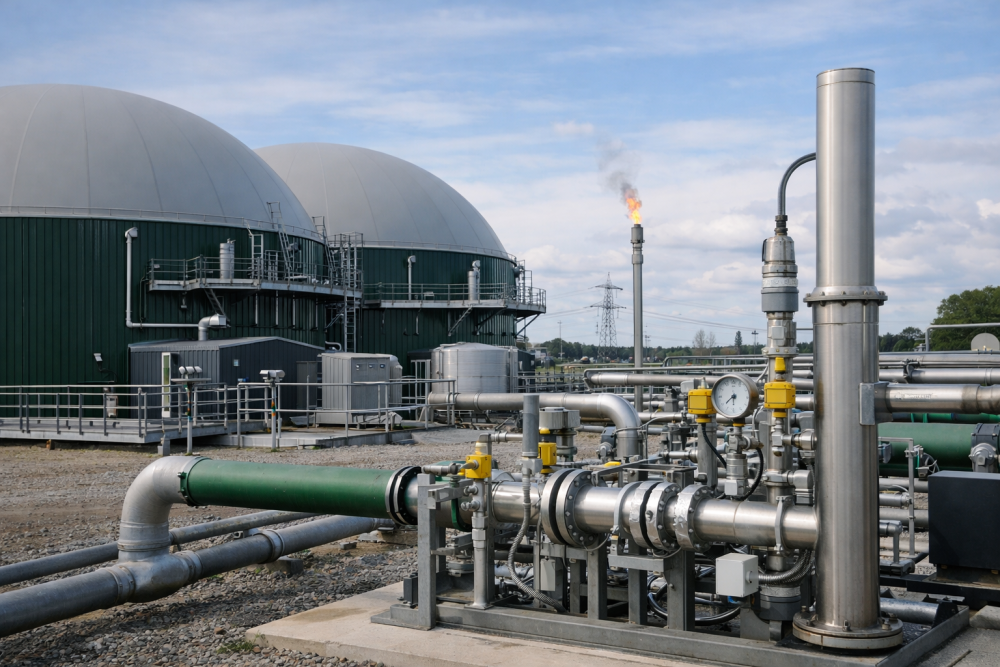
Biomethane is a renewable gas produced from organic waste, agricultural residues, or food by-products through anaerobic digestion. Once upgraded, it is chemically comparable to natural gas and can be injected directly into existing gas grids. This compatibility enables industrial users to reduce emissions without requiring equipment retrofitting or altering production processes.
Lifecycle emissions from biomethane are significantly lower than those from fossil natural gas. Depending on feedstock and production methods, biomethane can deliver greenhouse gas reductions of up to 80 to 90%. When produced from waste streams, it can also contribute to circular economy objectives by diverting organic material from landfills and reducing methane leakage.
In this agreement, biomethane is injected into the UK national gas grid rather than physically delivered to PepsiCo facilities. The use of certificates ensures that an equivalent volume of renewable gas is produced and supplied to the system, enabling verified emissions reductions associated with gas consumption.
Supporting PepsiCo’s Net-Zero Strategy
The biomethane deal supports PepsiCo’s global climate strategy, which includes a commitment to achieve net zero emissions across its value chain by 2040. In the UK, where natural gas remains a key energy source for manufacturing sites, renewable gas offers a practical pathway to address Scope 1 emissions linked to fuel use.
By securing a long-term biomethane supply, PepsiCo reduces exposure to fossil gas price volatility while demonstrating progress toward its climate goals. The agreement also sends a demand signal to the renewable gas market, encouraging further investment in low-carbon alternatives for industrial heat.
For multinational companies with complex supply chains, such contracts are increasingly seen as necessary complements to energy efficiency measures and renewable electricity procurement. While electrification and heat pumps may play a larger role in the long term, biomethane provides an immediate option for emissions reductions using existing infrastructure.
ENGIE’s Role in Scaling Renewable Gas
For ENGIE, the agreement strengthens its position as a provider of low-carbon energy solutions for industrial customers. The company has expanded its biomethane portfolio in recent years, investing in anaerobic digestion facilities and renewable gas production across Europe and the UK.
Long-term offtake agreements such as this one are critical for the economics of biomethane projects. Revenue certainty helps developers secure financing, supporting the construction and operation of new facilities. As policy support mechanisms evolve, corporate demand is expected to play a growing role in sustaining renewable gas deployment.
ENGIE’s approach reflects a broader strategy focused on balancing renewable electricity, greenhouse gases, and energy services. For industrial clients, this integrated model can simplify the transition to lower-carbon energy systems while maintaining reliability and operational continuity.
Alignment with UK Energy and Climate Policy
The agreement also aligns with UK climate and energy policy objectives. Biomethane has been identified by the UK government as a strategic component of the country’s net-zero pathway, particularly for hard-to-abate sectors that depend on high-temperature heat.
Support mechanisms such as the Green Gas Support Scheme have helped stimulate biomethane production by providing incentives for anaerobic digestion projects. However, long-term growth of the sector increasingly depends on private-sector demand from companies seeking to decarbonise gas use beyond regulatory compliance.
As the UK seeks to reduce emissions from buildings and industry, renewable gas is viewed as a complementary solution alongside electrification, hydrogen, and energy efficiency measures. Corporate contracts like the ENGIE–PepsiCo agreement illustrate how market-based mechanisms can accelerate progress while public policy continues to evolve.
Market-based instruments and transparency
The use of biomethane certificates mirrors established approaches in renewable electricity markets, such as guarantees of origin. These instruments allow companies to credibly claim emissions reductions while renewable supply scales up across the system.
Ensuring transparency and robust verification is essential as demand for biomethane certificates increases. Clear accounting frameworks and independent certification help maintain trust in claims made by corporate buyers and prevent double-counting of emissions reductions.
As scrutiny of corporate climate disclosures intensifies, companies are under pressure to demonstrate that renewable energy claims are backed by credible and traceable mechanisms.
Implications for Industrial Energy Transitions
The ENGIE–PepsiCo biomethane agreement highlights a broader shift in how industrial companies approach decarbonization. Rather than waiting for fully transformative technologies, many are adopting available solutions that deliver immediate emissions reductions while preserving flexibility for future change.
For sectors reliant on gas, biomethane offers a bridge between today’s fossil-based systems and longer-term alternatives. As renewable gas supply expands and costs evolve, similar long-term contracts are likely to become more common across manufacturing, food processing, and other energy-intensive industries.
In the near term, such agreements provide a practical pathway for companies to align operational realities with net zero ambitions, supporting measurable progress in the transition to a lower-carbon economy.
Source: esgnews.com

Mentioned in this article...
More related content

OMV Warns Rigid Recycling Rules May Slow Plastics Innovation
Wind and Solar Overtake Fossil Fuels in EU Power Generation
OpenAI Outlines Strategy to Control Rising Data Centre Energy Costs