Egypt Signs $18 Billion Renewable Energy Agreements to Accelerate Power Transition

Cut through the green tape
We don't push agendas. At Net Zero Compare, we cut through the hype and fear to deliver the straightforward facts you need for making informed decisions on green products and services. Whether motivated by compliance, customer demands, or a real passion for the environment, you’re welcome here. We provide reliable information. Why you seek it is not our concern.
Egypt has signed renewable energy agreements valued at approximately $18 billion, representing one of the country’s most significant clean energy investment initiatives to date. Announced on January 11, the agreements cover a series of large-scale solar and wind projects that are expected to be developed and commissioned progressively by 2030, according to government statements cited by Reuters.
The deals reflect Egypt’s efforts to accelerate its energy transition while responding to rising electricity demand driven by population growth, industrial expansion, and economic development. They also come amid increasing pressure on public finances and foreign currency reserves, reinforcing the government’s focus on reducing fuel imports and maximizing domestic energy resources.
Solar and Wind at the Core of the Strategy
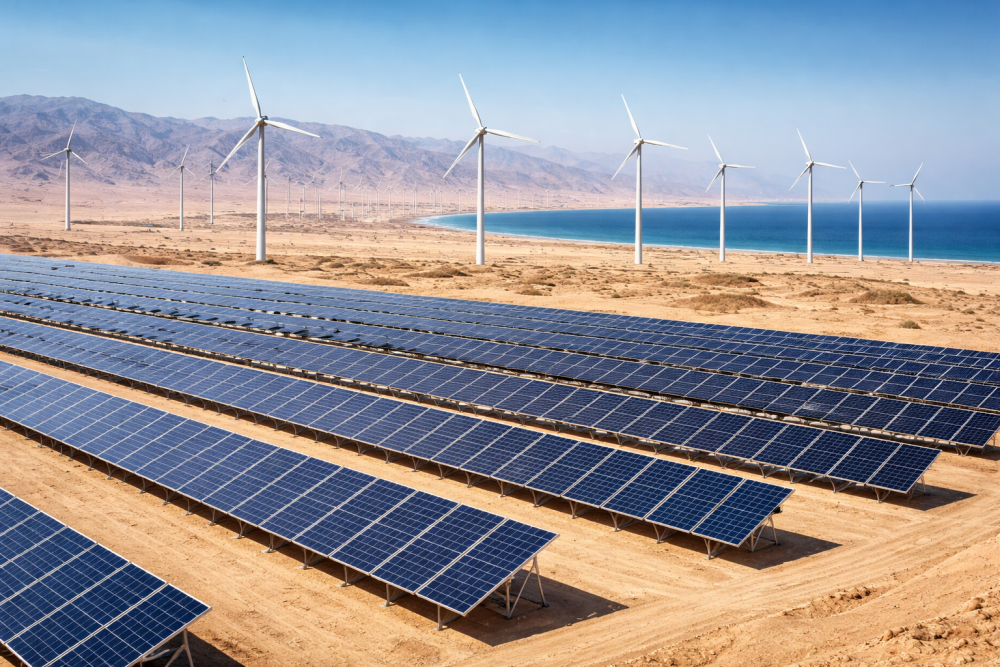
The newly signed agreements focus primarily on utility-scale solar photovoltaic and onshore wind projects. Development is expected to concentrate in regions with strong natural resource potential, including desert areas with high solar irradiation and the Red Sea corridor, which is known for consistent wind speeds.
Although individual project capacities have not been fully disclosed, officials indicated that the combined developments will add several gigawatts of renewable capacity to the national grid over the coming years. This would significantly expand Egypt’s existing renewable portfolio, which already includes flagship projects such as the Benban Solar Park and multiple wind farms near the Gulf of Suez.
Aligning with National Energy Targets
Egypt has set a target for renewable energy to account for 42% of electricity generation by 2030. At present, renewables contribute roughly one-fifth of total power generation, with natural gas remaining the dominant source.
Closing this gap will require sustained investment not only in generation assets, but also in transmission infrastructure, grid management systems, and energy storage. The newly announced agreements are expected to be central to achieving these targets, provided projects reach financial close and construction proceeds on schedule.
Energy Security and Economic Implications
Beyond emissions reductions, the expansion of renewable energy is closely tied to Egypt’s energy security objectives. Additional solar and wind capacity can reduce the need for gas-fired generation during peak demand periods, freeing up natural gas for export as liquefied natural gas.
This dynamic is particularly important for Egypt, which has positioned itself as a key LNG supplier to regional and global markets. By displacing domestic gas consumption with renewables, the country can increase export revenues while insulating its power sector from global fuel price volatility.
Enabling Green Hydrogen and Exports
Renewable energy development is also a foundation for Egypt’s ambitions in green hydrogen and green ammonia production. Low-cost, large-scale clean electricity is a prerequisite for producing hydrogen through electrolysis at competitive prices.
Egypt has already signed multiple memorandums of understanding with international partners to explore hydrogen projects in its economic zones. The new renewable energy agreements are expected to support these plans by ensuring a sufficient clean power supply, potentially enabling Egypt to become a major exporter of low-carbon fuels to Europe and other markets.
Investment Appeal and Ongoing Challenges
For international developers and investors, Egypt offers a combination of strong renewable resources, a large domestic electricity market, and strategic proximity to Europe, the Middle East, and Africa. Government-backed power purchase agreements and long-term policy targets have helped attract foreign participation.
However, challenges remain. Grid congestion, the pace of transmission upgrades, currency risks, and financing conditions continue to influence project timelines. Ensuring regulatory clarity and maintaining investor confidence will be critical to translating announced agreements into operational assets.
Outlook Toward 2030
If successfully implemented, the $18 billion renewable energy agreements could substantially reshape Egypt’s power sector by the end of the decade. The projects would help lower the carbon intensity of electricity generation, strengthen energy security, and support the development of new clean energy industries.
As emerging economies worldwide grapple with balancing economic growth, affordability, and decarbonization, Egypt’s renewable expansion strategy is likely to attract close attention from policymakers, investors, and regional peers.
Source: www.reuters.com

Mentioned in this article...
Organizations
More related content

OMV Warns Rigid Recycling Rules May Slow Plastics Innovation
Wind and Solar Overtake Fossil Fuels in EU Power Generation
OpenAI Outlines Strategy to Control Rising Data Centre Energy Costs