Clean Energy and Supply Chains: Can Renewables Replace Fossil Fuels in the Power Sector?

Cut through the green tape
We don't push agendas. At Net Zero Compare, we cut through the hype and fear to deliver the straightforward facts you need for making informed decisions on green products and services. Whether motivated by compliance, customer demands, or a real passion for the environment, you’re welcome here. We provide reliable information. Why you seek it is not our concern.
Decarbonising supply chains increasingly depends on how electricity is generated. From manufacturing and mining to data centres and logistics, power consumption represents a major share of corporate emissions. The central question facing policymakers and businesses is whether clean energy can fully replace fossil fuels in the power sector quickly enough to support net-zero targets.
According to an analysis published by Climate Change News, renewable energy technologies are advancing at a pace that was difficult to imagine a decade ago. Solar and wind are now among the cheapest sources of new electricity generation in many regions. However, replacing fossil fuels entirely involves more than just installing turbines and panels. It requires systemic changes across grids, supply chains, and policy frameworks.
Rapid Growth, Uneven Deployment
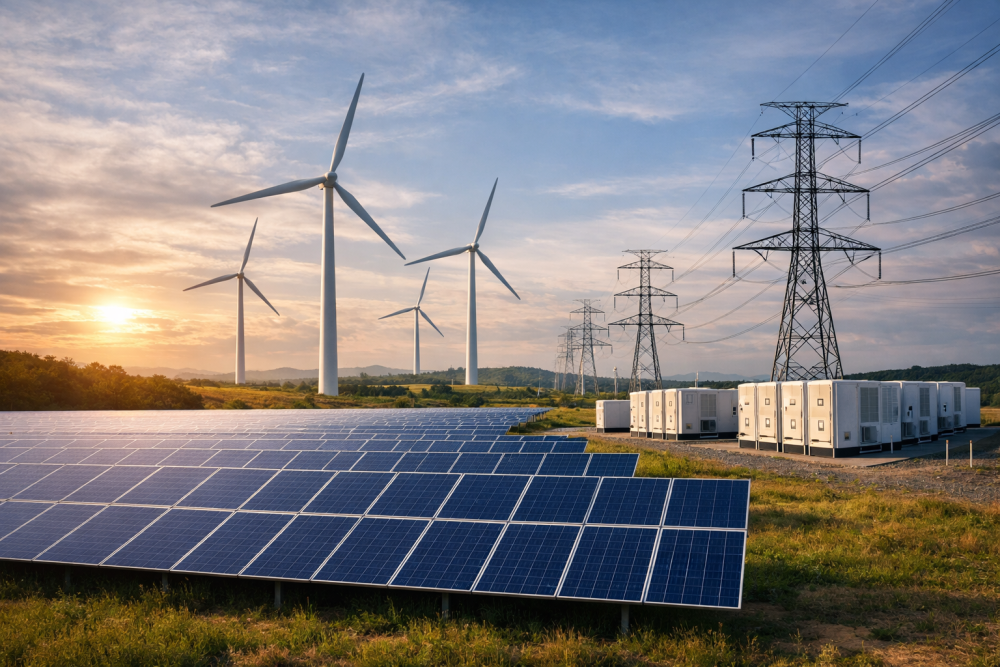
Globally, renewable electricity capacity continues to expand year on year. Solar photovoltaic installations have surged, driven by falling costs, improved efficiency, and supportive policies in major markets such as China, the European Union, and the United States. Wind power, both onshore and offshore, is also scaling rapidly, particularly in Europe and parts of Asia.
Despite this progress, fossil fuels still dominate global electricity generation. Coal, gas, and oil remain deeply embedded in many national energy systems, especially in regions where demand is rising fastest. In emerging economies, electricity consumption is growing alongside industrialisation, urbanisation, and population growth. In these contexts, fossil fuels often appear attractive due to existing infrastructure, domestic reserves, or concerns about energy security.
Grid Reliability and Flexibility Challenges
One of the main obstacles to fully replacing fossil fuels is grid stability. Solar and wind are variable by nature, producing electricity only when the sun shines or the wind blows. Managing this variability requires flexible power systems, including energy storage, demand response, interconnections between regions, and backup generation.
Battery storage is expanding quickly, with costs falling sharply over the past decade. Large-scale batteries can now provide short-term balancing services, helping grids cope with daily fluctuations in renewable output. However, long-duration storage solutions, capable of supporting power systems over days or weeks, remain limited and expensive.
In many countries, gas-fired power plants continue to play a balancing role, filling gaps when renewable generation is low. While gas emits less carbon dioxide than coal, it still contributes significantly to climate change. Replacing this role with low-carbon alternatives is one of the most complex technical and economic challenges in the energy transition.
Supply Chain Implications for Clean Energy
Clean energy itself depends on global supply chains. Solar panels, wind turbines, batteries, and grid infrastructure require large quantities of steel, copper, aluminium, lithium, cobalt, and rare earth elements. Extracting, processing, and transporting these materials carries environmental and social risks, including emissions, water use, and labour concerns.
As demand for clean technologies grows, pressure on these supply chains is intensifying. Concentration of mineral processing in a small number of countries raises concerns about geopolitical risk and price volatility. For companies seeking to decarbonise their operations, access to clean electricity may increasingly depend on the resilience and sustainability of upstream supply chains.
This creates a feedback loop. Clean energy is essential for low-carbon supply chains, but building clean energy systems also requires careful management of their own environmental footprint. Transparency, responsible sourcing, and recycling of critical materials are becoming strategic priorities for energy developers and industrial users alike.
Corporate Demand and Power Purchase Agreements
Large companies are playing a growing role in accelerating renewable deployment through corporate power purchase agreements, or PPAs. By signing long-term contracts for renewable electricity, businesses can secure clean power at predictable prices while enabling new projects to be built.
Tech companies, manufacturers, and retailers are among the most active buyers of renewable electricity. For firms with global supply chains, access to clean power is increasingly a factor in supplier selection and location decisions. However, corporate demand alone cannot transform power systems without supportive regulation, grid investment, and clear market rules.
Policy frameworks remain decisive
Government policy remains the single most important factor in determining whether clean energy can replace fossil fuels at scale. Carbon pricing, renewable energy targets, grid reform, and permitting processes all shape investment decisions.
In regions where fossil fuel subsidies persist, renewables often struggle to compete on a level playing field. Conversely, where policies clearly signal a long-term shift away from coal and gas, investment in clean energy accelerates. Recent policy packages in the European Union and the United States aim to address not only generation but also manufacturing and supply chain resilience.
However, political uncertainty continues to slow progress in some markets. Delays in permitting, grid connections, and regulatory reform can add years to project timelines, undermining climate goals and increasing costs for consumers.
Implications for Net-Zero Supply Chains
For companies with net-zero commitments, the pace of power sector decarbonization will strongly influence what is achievable. In regions where clean electricity is scarce, reducing Scope 2 and Scope 3 emissions remains challenging, regardless of corporate ambition.
In the near term, a mix of solutions is likely to persist. Renewable energy will continue to expand rapidly, fossil fuels will decline gradually, and transitional technologies such as storage, demand management, and limited gas use will bridge the gap. Over the longer term, fully decarbonised power systems are technically feasible, but they require sustained investment, policy alignment, and international cooperation.
Clean energy can replace fossil fuels in the power sector, but the transition is not automatic. For supply chains, the key question is not whether the shift will happen, but how quickly and how equitably it will unfold across different regions of the world.
Source: www.climatechangenews.com

Mentioned in this article...
More related content

OMV Warns Rigid Recycling Rules May Slow Plastics Innovation
Wind and Solar Overtake Fossil Fuels in EU Power Generation
OpenAI Outlines Strategy to Control Rising Data Centre Energy Costs