Atlantic Project Awards 2025 Highlight Blue-Economy Innovation and Cooperation in the Atlantic Region

Cut through the green tape
We don't push agendas. At Net Zero Compare, we cut through the hype and fear to deliver the straightforward facts you need for making informed decisions on green products and services. Whether motivated by compliance, customer demands, or a real passion for the environment, you’re welcome here. We provide reliable information. Why you seek it is not our concern.
The 12th Atlantic Stakeholder Platform Conference, held on 13 November 2025 in Galway, Ireland, brought together more than one hundred representatives from public authorities, research organisations, industry and civil society from Europe’s Atlantic regions. Centred on the theme “Tides of Cooperation: The Atlantic Strategy as a Catalyst for the European Ocean Pact”, the event highlighted how coordinated action across the Atlantic basin can strengthen innovation, sustainability and economic resilience.
A central feature of the conference was the Atlantic Project Awards 2025, an annual programme acknowledging excellence in initiatives aligned with the EU’s Atlantic Action Plan 2.0. The awards recognise projects that contribute to sustainable growth in the blue economy while supporting climate goals, coastal resilience and economic development across the region. Five projects were honoured this year, reflecting priorities such as marine renewable energy, port innovation, coastal ecosystems, skills development and international cooperation.
Marine Renewable Energy
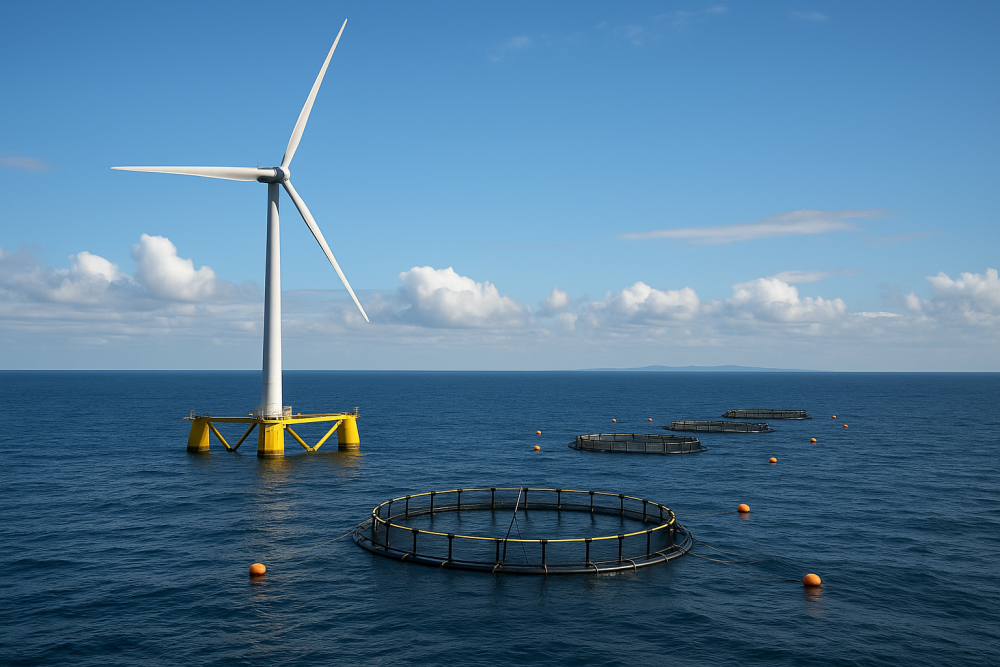
The AquaWind project received the award in the Marine Renewable Energy category. Led from the Canary Islands, AquaWind is testing an innovative multi-use offshore platform that integrates floating wind energy generation with aquaculture production. The prototype combines a floating wind turbine with a specially designed aquaculture cage and digital monitoring systems that track environmental conditions and fish health. This model demonstrates how shared use of marine space can enhance efficiency, reduce environmental impact and support both clean energy production and sustainable food systems. The approach is aligned with wider EU objectives for multi-use offshore infrastructure.
Blue Skills and Ocean Literacy
The award for Blue Skills and Ocean Literacy went to the WIN-BIG project. The initiative works across European sea basins to strengthen capacity-building, improve equal opportunities and reduce skills gaps in blue economy sectors. With a particular focus on advancing the role of women in areas such as offshore renewable energy, marine robotics, blue bioeconomy and coastal tourism, the project addresses persistent under-representation in the maritime workforce. By developing dedicated training tools, research insights and cooperation networks, WIN-BIG supports inclusive growth and a more diverse skills pipeline for emerging ocean-related industries.
Atlantic Ports
In the Atlantic Ports category, the SMARTDEC project was recognised for its efforts to transform ports into energy-transition hubs. The project aims to accelerate the adoption of cleaner fuels, alternative-energy solutions and energy-efficient port operations across the Atlantic region. SMARTDEC promotes collaboration between research institutions, port authorities and industry partners to modernise port infrastructure and establish smart clusters capable of supporting maritime decarbonisation. Its work highlights the pivotal role ports can play in the shift toward low-emission shipping and coastal logistics.
Healthy Oceans and Resilient Coasts
The MARINNONET project received the award for Healthy Oceans and Resilient Coasts. The initiative focuses on strengthening international cooperation between marine researchers, biotechnology companies and regional stakeholders. MARINNONET fosters innovation in marine biotechnology while supporting the sustainable use of ocean resources. Its efforts contribute to coastal resilience and the development of environmentally responsible technologies that can support local economies while protecting marine ecosystems.
International Cooperation
The International Cooperation award was presented to the OKEANO Coordination and Support Action. Coordinated by the Irish Marine Institute, OKEANO supports the All-Atlantic Ocean Research and Innovation Alliance, a multiregional partnership bringing together organisations from Europe, Africa and the Americas. Through coordination activities, knowledge exchange and shared research agendas, OKEANO strengthens global cooperation in marine science and innovation. Its recognition underscores the importance of international partnerships for addressing ocean challenges and advancing sustainable development.
Implications for Sustainability and the Net-Zero Transition
The 2025 award-winners reflect a set of strategic trends shaping Europe’s blue economy and its contribution to climate goals.
First, multi-use offshore systems such as AquaWind’s floating wind-aquaculture platform offer a more efficient and lower-impact approach to marine spatial planning. By maximising the use of available sea space, they improve the economic case for renewable energy while adding value through food production. This aligns with European targets to expand offshore renewable energy capacity while minimising environmental pressures.
Second, ports are rapidly evolving into central hubs of the energy transition. Projects like SMARTDEC demonstrate how port electrification, energy-efficiency technologies and infrastructure for alternative fuels can reduce emissions from maritime transport. Given the significant climate footprint of global shipping, such innovations are essential for meeting net-zero objectives.
Third, the blue economy requires a skilled and diverse workforce capable of supporting rapid technological change. WIN-BIG highlights the importance of gender-balanced training strategies and expanded access to specialised education in ocean-related fields. By promoting inclusion, the project strengthens innovation capacity and enhances the long-term resilience of blue-economy sectors.
Fourth, cooperation remains a foundational component of sustainable ocean management. MARINNONET and OKEANO illustrate how networks that span regions and continents are essential for sharing scientific data, harmonising innovation pathways and developing resilient coastal systems. As climate impacts intensify, these networks provide frameworks for collaborative solutions.
What Industry and Policy Stakeholders Should Know
For clean-energy developers, the multi-use concept showcased by AquaWind may influence future regulatory approaches and investment strategies for offshore energy. Policymakers may increasingly encourage projects that combine multiple economic activities within a single maritime footprint.
For port authorities and logistics companies, the recognition of SMARTDEC signals growing support for port decarbonisation initiatives. Funding, partnerships and regulatory incentives are likely to accelerate infrastructure upgrades across the Atlantic seaboard.
For training providers and blue-economy institutions, the focus on skills and gender inclusion highlights a priority area for European funding, workforce planning and capacity-building strategies.
For researchers, innovators and coastal regions, MARINNONET and OKEANO reflect the growing value of cross-border and intercontinental cooperation. Projects that integrate scientific collaboration with local development and sustainability objectives are increasingly competitive in European programmes.
Looking Ahead
The Atlantic Project Awards 2025 illustrate the growing momentum behind sustainable maritime development and the broader European Ocean Pact. By recognising projects that combine innovation, environmental stewardship and cooperation, the awards highlight pathways toward a resilient and low-carbon blue economy.
Scaling these initiatives will require sustained investment, regulatory support and coordination across national and regional authorities. With Europe increasing its focus on offshore renewable energy, port decarbonisation, marine biotechnology and workforce development, the Atlantic region stands to play a central role in the continent’s net-zero transition.
Source: cinea.ec.europa.eu

Mentioned in this article...
Glossary terms
More related content
OMV Warns Rigid Recycling Rules May Slow Plastics Innovation
Wind and Solar Overtake Fossil Fuels in EU Power Generation
OpenAI Outlines Strategy to Control Rising Data Centre Energy Costs