Why Extended Producer Responsibility is Gaining Momentum in Global Sustainability Policy

Cut through the green tape
We don't push agendas. At Net Zero Compare, we cut through the hype and fear to deliver the straightforward facts you need for making informed decisions on green products and services. Whether motivated by compliance, customer demands, or a real passion for the environment, you’re welcome here. We provide reliable information. Why you seek it is not our concern.
Extended producer responsibility, commonly known as EPR, is emerging as a central policy tool in efforts to reduce waste, improve recycling outcomes, and support the shift toward a circular economy. A recent analysis published by the World Economic Forum argues that governments and industries have strong reasons to be optimistic about EPR’s growing role in sustainability and net-zero strategies.
EPR policies require producers to take responsibility for the end-of-life management of the products they place on the market. This responsibility can be financial, operational, or both. In practice, it often means that companies fund or manage the collection, recycling, or disposal of packaging, electronics, batteries, textiles, or other regulated products once consumers discard them.
A Shift in Responsibility and Incentives
Traditionally, waste management costs have been borne largely by municipalities and taxpayers. EPR shifts those costs upstream to producers, aligning economic incentives with environmental outcomes. When producers are responsible for disposal and recycling, they are more likely to design products that are easier to reuse, repair, or recycle.
The World Economic Forum notes that this incentive structure is a key reason why EPR has gained traction across Europe, parts of Asia, and increasingly in North America. More than 40 countries now operate some form of EPR scheme for packaging alone, with many expanding coverage to electronics, vehicles, and emerging waste streams such as textiles.
For policymakers, EPR offers a mechanism to reduce public waste management costs while improving recycling rates and material recovery. For companies, it creates a clear regulatory signal that product design choices have downstream financial and environmental consequences.
Evidence from Existing EPR Schemes
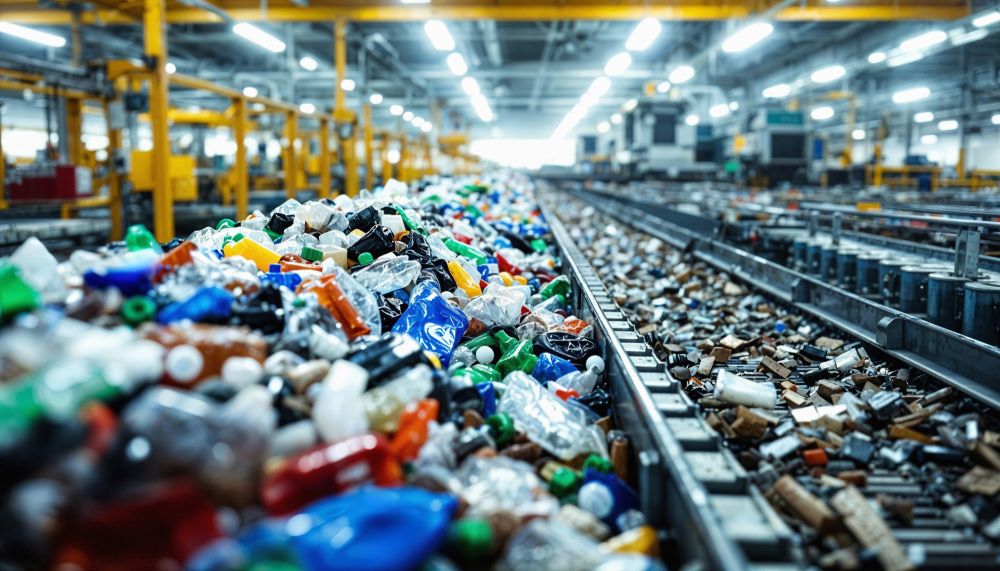
Data from mature EPR systems suggest that the approach can deliver measurable results. In several European Union countries, packaging EPR schemes have contributed to recycling rates exceeding 60% for paper, glass, and metals. In some jurisdictions, fees are modulated based on recyclability, rewarding producers who use simpler materials or avoid problematic additives.
Electronics EPR schemes have also improved the collection of valuable and hazardous materials. By formalising take-back systems, these programmes reduce illegal dumping and informal recycling, which can pose serious environmental and health risks.
The article highlights that while results vary widely by design and enforcement, well-structured EPR systems tend to outperform voluntary recycling initiatives. Mandatory participation, clear targets, and transparent governance are critical factors.
Relevance to Net-Zero and Resource Security
EPR is increasingly being framed not only as a waste policy, but also as a climate and resource strategy. Recycling materials such as aluminium, steel, and plastics typically requires far less energy than producing them from virgin resources. By increasing recycling rates and reducing waste, EPR can contribute to lower lifecycle emissions.
In addition, EPR supports material security. As supply chains face geopolitical uncertainty and growing demand for critical materials, improving domestic recovery of metals and polymers becomes strategically important. EPR schemes can help build the infrastructure and market confidence needed to scale secondary materials.
For companies with net-zero targets, EPR costs and reporting requirements are becoming part of Scope 3 considerations. Producers must increasingly account for downstream impacts, reinforcing the connection between product stewardship and climate strategy.
Challenges and Uneven Implementation
Despite growing optimism, the World Economic Forum analysis acknowledges that EPR is not a silver bullet. Poorly designed schemes can create administrative complexity without delivering environmental benefits. In some regions, fragmented regulations and inconsistent definitions increase compliance costs for multinational companies.
Another challenge is ensuring that EPR fees are set at levels that genuinely influence behaviour. If fees are too low or not differentiated by material choice, producers may treat them as a minor cost of doing business rather than an incentive to redesign products.
Transparency is also a concern. Effective EPR systems require robust data on material flows, recycling outcomes, and financial management. Without oversight, there is a risk that funds collected from producers are not fully reinvested in waste reduction and recycling infrastructure.
Implications for Industry
For manufacturers, brand owners, and retailers, the expansion of EPR means that end-of-life considerations can no longer be treated as peripheral issues. Companies operating across multiple markets must track evolving regulations, adapt packaging and product design, and engage with producer responsibility organisations.
Some companies are responding by investing in recyclable materials, reducing packaging volumes, or piloting reuse models. Others are integrating EPR costs into product pricing and long-term planning. The Forum suggests that early engagement can turn compliance into a competitive advantage, particularly as consumers and investors increasingly scrutinise waste and circularity performance.
Outlook for Policy and Markets
The World Economic Forum concludes that EPR is likely to expand in scope and ambition over the coming decade. New product categories such as textiles and furniture are already being considered in several jurisdictions. Digital tracking, eco-modulated fees, and stronger enforcement mechanisms are also expected to improve performance.
For governments pursuing net-zero and circular economy goals, EPR offers a policy framework that links environmental outcomes with market incentives. While challenges remain, the growing body of evidence suggests that, when well designed, EPR can play a meaningful role in reducing waste, cutting emissions, and reshaping how products are made and managed.
Source: www.weforum.org

Mentioned in this article...
More related content

OMV Warns Rigid Recycling Rules May Slow Plastics Innovation
Wind and Solar Overtake Fossil Fuels in EU Power Generation

OpenAI Outlines Strategy to Control Rising Data Centre Energy Costs