Trane Technologies Sets Out Circularity Impact Metrics to Track Resource Efficiency and Emissions Reductions

Cut through the green tape
We don't push agendas. At Net Zero Compare, we cut through the hype and fear to deliver the straightforward facts you need for making informed decisions on green products and services. Whether motivated by compliance, customer demands, or a real passion for the environment, you’re welcome here. We provide reliable information. Why you seek it is not our concern.
Trane Technologies has outlined a detailed framework of circularity impact metrics designed to quantify how circular economy practices contribute to emissions reduction, resource efficiency, and long-term sustainability performance. The approach reflects growing pressure on industrial companies to move beyond high-level commitments and demonstrate measurable progress toward net-zero and material circularity goals.
The metrics, described by the company as “impact-oriented,” aim to capture the environmental value created by designing products for durability, reuse, remanufacturing, and recycling. Rather than focusing solely on operational efficiency, the framework extends across product lifecycles, from raw material sourcing to end-of-life recovery.
Measuring Circularity Beyond Recycling Rates
Trane Technologies’ circularity metrics go beyond traditional indicators such as recycling percentages. The company emphasises measuring outcomes that directly affect emissions and resource consumption. This includes tracking the amount of virgin material avoided through recycled or reused inputs, as well as the emissions reductions associated with extended product lifetimes.
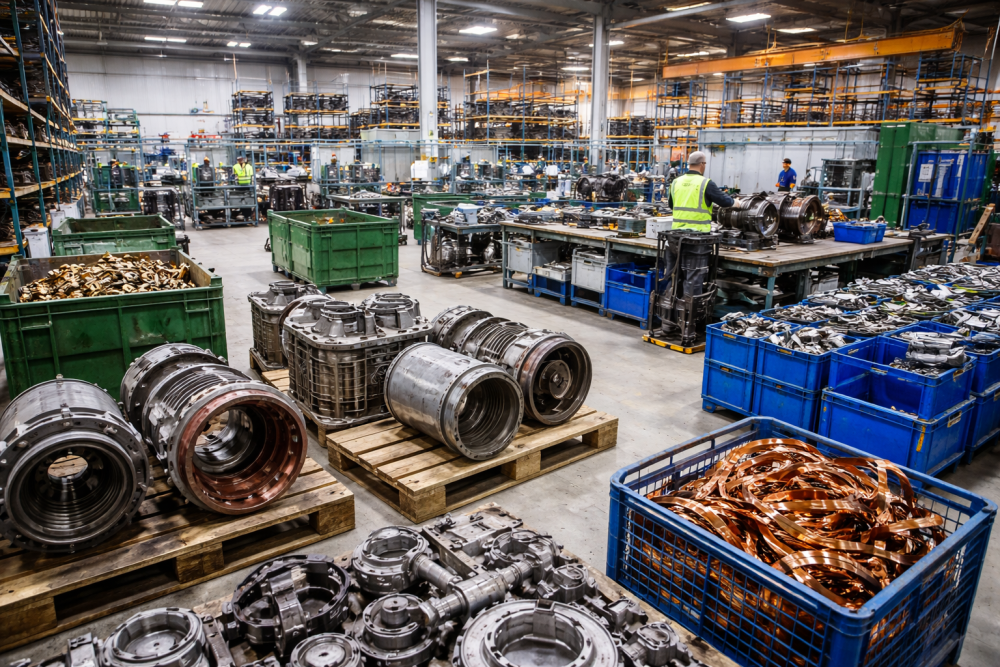
According to the framework, one key indicator is “material circularity impact,” which assesses how much new material demand is displaced through circular design and sourcing decisions. This is particularly relevant in energy-intensive sectors such as heating, ventilation, air conditioning, and refrigeration, where metals and specialised components account for a significant share of embedded emissions.
Another metric focuses on product longevity. By quantifying the climate benefit of keeping equipment in service for longer through refurbishment or remanufacturing, the company aims to link design decisions directly to avoided emissions over time.
Linking Circular Design to Climate Targets
The company’s circularity metrics are closely aligned with its climate strategy. Trane Technologies has set science-based targets that include both operational emissions and value chain emissions. Circularity is positioned as a lever to address Scope 3 emissions, which often represent the majority of a manufacturing company’s carbon footprint.
By using impact metrics, the company seeks to demonstrate how circular practices reduce emissions associated with raw material extraction, processing, and manufacturing. For example, remanufacturing components typically requires significantly less energy than producing new parts, leading to measurable reductions in upstream emissions.
The framework also supports internal decision-making by enabling comparisons between linear and circular options. This enables product teams to evaluate trade-offs among cost, performance, and environmental impact using a consistent set of indicators.
Practical Implications for Industry
The approach adopted by Trane Technologies reflects a broader shift in how companies operationalise circular economy strategies. As regulatory requirements and investor scrutiny increase, organisations are under pressure to provide credible, comparable data on sustainability performance.
Circularity impact metrics can help companies demonstrate compliance with emerging reporting standards related to resource use, lifecycle emissions, and product sustainability. They also support engagement with customers who are increasingly seeking lower-carbon and more resource-efficient solutions.
For industrial manufacturers, the framework highlights the importance of integrating circularity into core business processes rather than treating it as a standalone sustainability initiative. This includes embedding circular design principles into product development, establishing take-back or refurbishment programmes, and working with suppliers to increase the availability of recycled and low-impact materials.
Data, Transparency, and Continuous Improvement
A key challenge in implementing circularity metrics is data availability, particularly across complex global supply chains. Trane Technologies acknowledges the need for improved data collection and collaboration with suppliers and partners to ensure accurate measurement.
The company positions its metrics as evolving tools that will be refined as methodologies mature and data quality improves. This reflects a broader industry recognition that circularity measurement is still developing and requires continuous learning and adaptation.
By publishing its approach, Trane Technologies contributes to ongoing discussions around the standardisation of circular economy metrics. Greater alignment across industries could improve comparability and support the scaling of circular practices.
Circularity as a Net-Zero Enabler
While circularity alone cannot deliver net zero, the company frames it as a critical enabler alongside energy efficiency, renewable energy, and low-carbon technologies. By reducing material demand and extending product lifecycles, circular strategies can lower emissions that are otherwise difficult to eliminate.
As companies face tighter climate targets and resource constraints, impact-based circularity metrics are likely to play an increasingly important role in guiding investment decisions and demonstrating real-world progress.
Source: sustainabilitymag.com

Mentioned in this article...
Organizations
More related content

OMV Warns Rigid Recycling Rules May Slow Plastics Innovation
Wind and Solar Overtake Fossil Fuels in EU Power Generation
OpenAI Outlines Strategy to Control Rising Data Centre Energy Costs