The Global Race to End Deforestation: Progress, Pitfalls, and What Comes Next

Cut through the green tape
We don't push agendas. At Net Zero Compare, we cut through the hype and fear to deliver the straightforward facts you need for making informed decisions on green products and services. Whether motivated by compliance, customer demands, or a real passion for the environment, you’re welcome here. We provide reliable information. Why you seek it is not our concern.
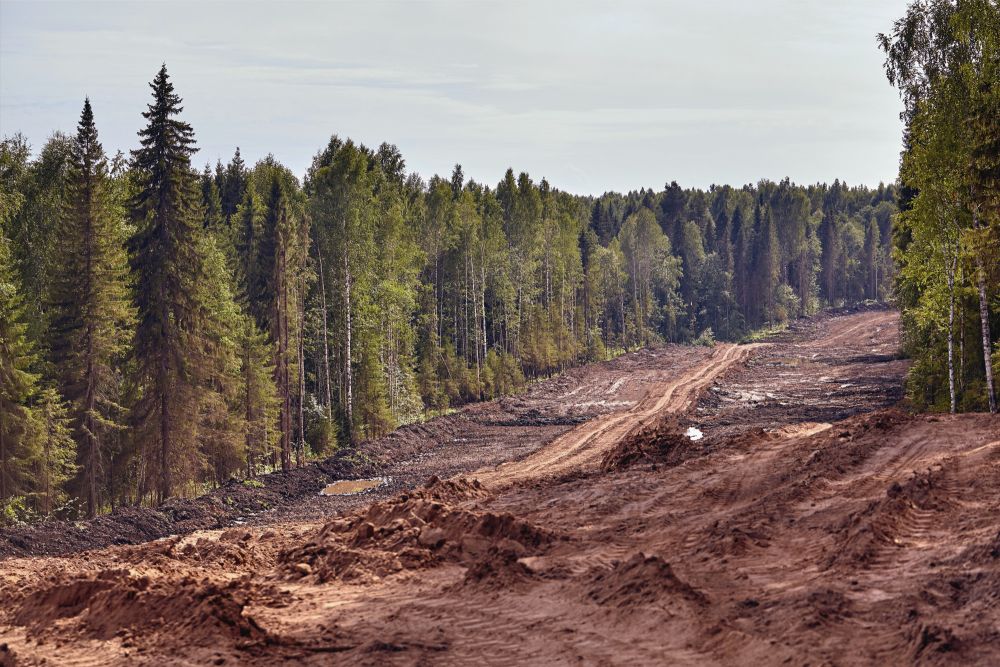
Deforestation remains one of the most persistent barriers to achieving global climate and biodiversity goals. Forest loss accounts for roughly 10% of global greenhouse gas emissions, undermines ecosystem services, and threatens the livelihoods of more than one billion people who depend directly on forests. Despite growing political and corporate commitments to halt deforestation, progress has been uneven, and recent data highlights both areas of momentum and significant structural weaknesses.
According to an analysis cited by the World Resources Institute, the world lost more than 16 million hectares of tree cover in 2023, including over 4 million hectares of primary tropical forest. While this represents a modest improvement compared to peak loss years earlier in the decade, the pace of reduction remains far below what is needed to meet the 2030 target of ending deforestation, endorsed by more than 140 countries at COP26.
Signs of Progress in Policy and Monitoring
One of the most tangible advances has been the expansion of deforestation-related regulation. The European Union has adopted the EU Deforestation Regulation, which will require companies placing commodities such as beef, soy, palm oil, cocoa, coffee, rubber, and wood on the EU market to demonstrate that their products are not linked to deforestation or forest degradation. The regulation introduces mandatory geolocation data and due diligence requirements, significantly raising expectations for supply chain transparency.
In parallel, satellite monitoring and data platforms have improved governments’ and companies’ ability to detect forest loss in near real time. Tools such as Global Forest Watch have lowered the cost of monitoring and increased accountability, enabling civil society and investors to track deforestation risks more systematically. Several tropical countries, including Brazil and Indonesia, have also strengthened enforcement capacity using digital land registries and satellite data, contributing to localized reductions in illegal deforestation.
Corporate commitments have also expanded. Hundreds of multinational companies have pledged to eliminate deforestation from their supply chains, often as part of broader net-zero strategies. Financial institutions are increasingly integrating deforestation risk into lending and investment decisions, reflecting growing recognition that forest loss creates material financial and reputational risks.
Persistent Gaps Between Commitments and Outcomes
Despite these developments, deforestation rates remain stubbornly high in many regions. Agricultural expansion continues to be the dominant driver, particularly for cattle grazing and commodity crops. Weak land tenure systems, limited enforcement capacity, and conflicting economic incentives often undermine policy implementation, especially in frontier regions where governance is fragile.
A key challenge identified by experts is the overreliance on voluntary commitments without sufficient accountability. Many corporate pledges lack clear timelines, standardized metrics, or consequences for non-compliance. Smaller suppliers and producers, particularly in developing countries, frequently lack the technical and financial resources needed to comply with emerging regulations, raising concerns about market exclusion rather than systemic transformation.
There is also a growing recognition that deforestation cannot be addressed solely through supply chain controls. Infrastructure development, mining, and illegal logging continue to drive forest loss in parallel with agricultural expansion. In some cases, gains in one region are offset by the displacement of deforestation to another, a phenomenon known as leakage.
Implications for Climate and Net-Zero Strategies
From a climate perspective, continued deforestation directly undermines national and corporate net-zero targets. Nature-based solutions, including forest conservation and restoration, are often included in decarbonization pathways, but their credibility depends on demonstrable, long-term forest protection. Failure to curb deforestation increases pressure on already challenging emissions reduction pathways in energy, industry, and transport.
For businesses, deforestation regulation is rapidly becoming a compliance and risk management issue rather than a voluntary sustainability consideration. Companies operating in affected supply chains face growing legal, operational, and reputational risks if they cannot demonstrate deforestation-free sourcing. At the same time, there are emerging opportunities for firms that invest early in traceability systems, supplier engagement, and landscape-level approaches.
What Comes Next
Experts increasingly argue that the next phase of anti-deforestation efforts must focus on implementation, not just ambition. This includes scaling up financial support for smallholders, strengthening land tenure rights for Indigenous peoples and local communities, and aligning agricultural productivity gains with forest protection. Evidence consistently shows that Indigenous-managed lands experience significantly lower deforestation rates, highlighting the importance of inclusive governance models.
International cooperation will also be critical. Producer countries need predictable, long-term finance to support sustainable land use transitions, while consumer markets must ensure that regulations are implemented in ways that avoid unintended social and economic impacts. Multilateral institutions and development banks have a role to play in de-risking investment in sustainable agriculture and forest conservation.
Ending deforestation by 2030 remains technically possible but politically and economically challenging. The gap between commitments and outcomes underscores the need for stronger enforcement, better incentives, and deeper collaboration across governments, companies, financiers, and communities. Without accelerated action, forest loss will continue to erode climate progress and biodiversity resilience, with consequences that extend far beyond forest frontiers.
Source: www.forbes.com

Mentioned in this article...
Organizations
Glossary terms
Policies
More related content

OMV Warns Rigid Recycling Rules May Slow Plastics Innovation

Wind and Solar Overtake Fossil Fuels in EU Power Generation

OpenAI Outlines Strategy to Control Rising Data Centre Energy Costs