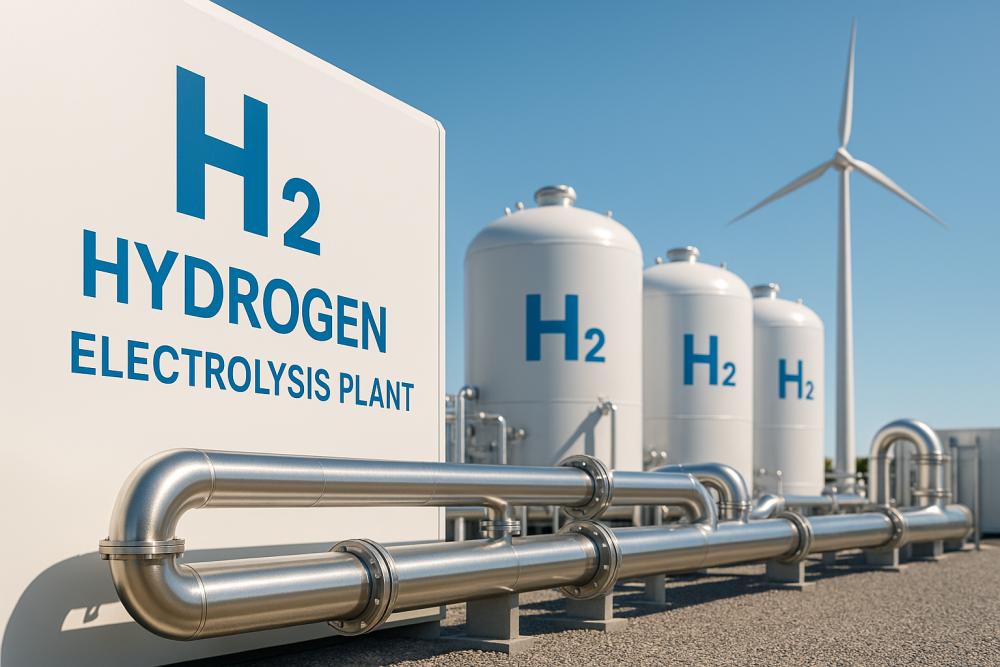
New Study Identifies Pathways to More Efficient and Affordable Hydrogen Gas Production

Cut through the green tape
We don't push agendas. At Net Zero Compare, we cut through the hype and fear to deliver the straightforward facts you need for making informed decisions on green products and services. Whether motivated by compliance, customer demands, or a real passion for the environment, you’re welcome here. We provide reliable information. Why you seek it is not our concern.
Hydrogen continues to gain relevance as governments and industries search for scalable solutions to reduce emissions in hard-to-abate sectors. Steelmaking, ammonia production, heavy mobility and long-duration energy storage are among the applications where hydrogen is positioned as a key alternative to fossil fuels. Yet despite rising demand forecasts, green hydrogen remains cost-constrained, largely due to electricity intensity and equipment performance limitations.
A newly published study offers fresh insights into how technological breakthroughs could improve both efficiency and affordability, helping close the gap with conventional hydrogen production pathways.
Advances in Catalytic Materials
A central focus of the research is the development of next-generation catalysts for electrolysis. Catalysts determine how efficiently water molecules split into hydrogen and oxygen. According to the study, new nickel-based and transition metal alloy catalysts can operate at lower voltage while maintaining stability. Lower voltage reduces electricity consumption per kilogram of hydrogen produced.
These improvements also help decrease dependence on precious metals, allowing for lower-cost material inputs and greater resilience in supply chains.
Enhanced Electrolyser System Design
Beyond catalysts, system-level engineering plays a significant role in improving performance. The study models how internal fluid dynamics, gas separation design and thermal distribution can be optimised to reduce resistive losses and boost long-term operational stability.
Reconfiguring the arrangement of key electrolyser components improves gas purity and limits cross-mixing risks. Enhanced stability and durability are particularly important for large-scale commercial deployment, where equipment must maintain high utilisation rates for decades.
Operational Flexibility for Renewable Integration
As renewable electricity becomes the main power source for green hydrogen, flexible operation is increasingly valuable. The study highlights that next-generation electrolysers can potentially ramp up and down without significant efficiency penalties. This allows operators to produce hydrogen when renewable electricity prices are lower, improving project economics.
Flexibility also supports grid balancing and enables hydrogen systems to complement intermittent solar and wind generation.
Cost, Sustainability and Safety Benefits
The identified technological pathways provide benefits beyond operational efficiency. More durable catalysts can extend equipment lifetimes and reduce maintenance costs. Lower electricity requirements help cut both emissions and operating expenses. Improved system design minimises gas mixing risks and enhances overall safety, a key consideration as hydrogen facilities scale globally.
These performance gains contribute to more attractive business cases for industries evaluating fuel switching and low-carbon feedstocks.
Commercialisation Pathways and Pilot Programmes
While the innovations remain in early development, the study outlines clear steps toward real-world validation. Pilot trials planned for 2025 and 2026 aim to test catalyst performance under industrial conditions. Multi-megawatt demonstrations will evaluate integrated system designs and operational flexibility.
Success in these programmes could accelerate market adoption, aligning with national hydrogen strategies seeking rapid cost reductions through the late 2020s and early 2030s.
Implications for Industry and Policy
The findings carry implications for multiple stakeholders. Manufacturers may integrate the new materials and design concepts into advanced electrolyser products. Renewable developers can explore closer coupling of production assets and hydrogen facilities. Heavy industry operators may gain access to lower-cost clean hydrogen, making decarbonisation strategies more feasible.
For policymakers, the study provides evidence-based guidance on where targeted incentives or R&D support could deliver the highest impact.
Outlook
Although further testing is required, the study presents an optimistic view of hydrogen’s future cost trajectory. A combination of advanced catalysts, redesigned system architecture and operational flexibility could make green hydrogen considerably more competitive by the end of the decade. These developments are expected to support wider climate objectives and strengthen the role of hydrogen as a foundational element of global energy transitions.
Source: fuelcellsworks.com

Mentioned in this article...
More related content

OMV Warns Rigid Recycling Rules May Slow Plastics Innovation

Wind and Solar Overtake Fossil Fuels in EU Power Generation
OpenAI Outlines Strategy to Control Rising Data Centre Energy Costs