

Available ESG Monitoring Features
Missing ESG Monitoring Features
Pricing
Starting Price
Options
- Monthly Subscription
Available Since
Deployment Options
Good Option For
Deep dive
Core Features
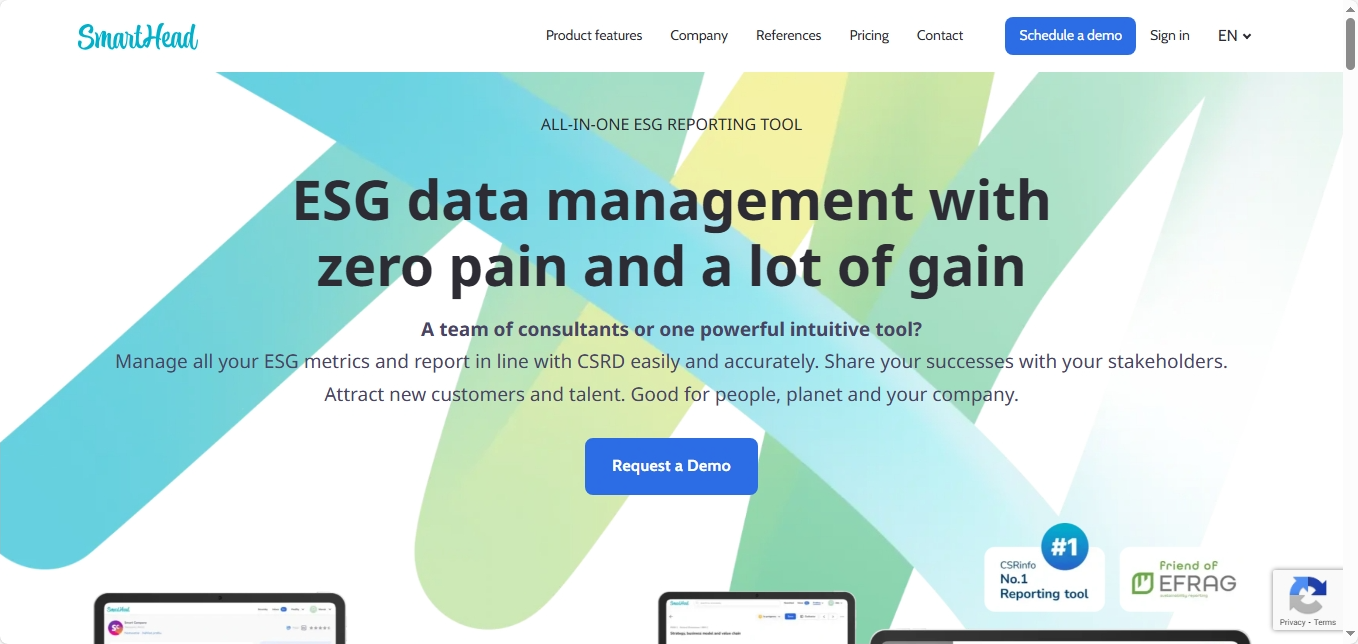
SmartHead’s approach combines structured ESG data management with reporting and stakeholder engagement workflows. Some of its main features are:
ESRS & CSRD Support — Implements full ESRS framework to guide data collection and reporting in line with CSRD requirements.
Double Materiality Assessment — Built-in six-step process for identifying and documenting material sustainability topics.
GHG Calculator — Calculates greenhouse gas emissions per predefined standards, with modes for SMEs and larger companies.
Team Collaboration — Role-based access and task management for coordinated ESG data workflows.
Data Visualisation — Visualises ESG data points in multiple formats to support insights and decisions.
Reporting Output — Generates audit-ready reports, including XBRL-tagged exports suitable for regulatory compliance.
Closing Insights
SmartHead emerged as a response to the growing regulatory and stakeholder demand for consistent, auditable ESG disclosures. Built around recognised sustainability reporting frameworks and double materiality principles, SmartHead positions itself as a tool that helps organisations navigate complex ESG data workflows while remaining transparent and structured in their reporting processes.
Compared with other ESG tools, SmartHead places distinct focus on structured ESG reporting compliance and audit-readiness. Its feature set supports predefined disclosures, narrative documentation, and collaboration, elements that organisations preparing CSRD or ESRS reports typically require. Documentation on the platform highlights predefined data structures, integrated guidance, and attached documentation features for audit contexts.
For potential users, SmartHead may appeal if compliance and structured reporting are priorities. The platform’s built-in guidance and workflows aim to reduce manual error and support collaboration. Subscription fees vary depending on features and scale, while integrations and templates help align organisational data with reporting requirements. Advisory support appears embedded within documentation and guidance features.