Shanghai Unveils Food Tech Strategy to Accelerate Cultivated Meat and Sustainable Proteins

Cut through the green tape
We don't push agendas. At Net Zero Compare, we cut through the hype and fear to deliver the straightforward facts you need for making informed decisions on green products and services. Whether motivated by compliance, customer demands, or a real passion for the environment, you’re welcome here. We provide reliable information. Why you seek it is not our concern.
Shanghai has taken a significant step toward reshaping its food system by formally outlining a strategy to support novel food technologies, with a particular focus on cultivated meat and other sustainable protein sources. The initiative aligns food innovation with broader climate, resource efficiency, and industrial policy goals, reflecting China’s growing interest in reducing the environmental footprint of food production while strengthening long-term food security.
The policy framework, released by the Shanghai Municipal Government, identifies alternative proteins and food biotechnology as priority areas for scientific research, pilot production, and industrial development. It forms part of Shanghai’s wider ambition to build globally competitive advanced manufacturing and life sciences clusters, while supporting national objectives related to carbon reduction and resource efficiency.
Cultivated Meat Enters the Policy Agenda
One of the most notable elements of the plan is the explicit inclusion of cultivated meat, also known as lab-grown or cell-cultured meat. While China has previously funded research into cellular agriculture, this marks one of the clearest signals yet that a major Chinese city sees the technology as strategically important.
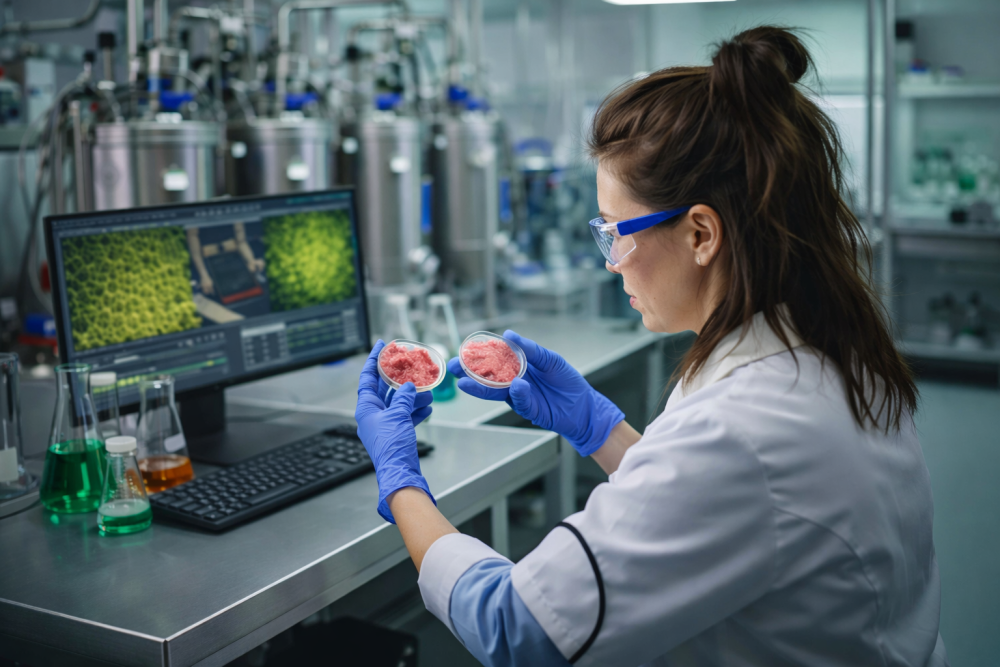
Cultivated meat is produced by growing animal cells in controlled environments rather than raising and slaughtering livestock. Proponents argue that, if powered by low-carbon energy and scaled efficiently, it could significantly reduce land use, water consumption, and greenhouse gas emissions compared with conventional meat production. These potential benefits have made cultivated meat a topic of increasing interest for governments seeking to balance protein demand with climate commitments.
Shanghai’s plan does not set immediate targets for commercial sales but focuses on enabling conditions. These include support for research institutions, early-stage companies, and shared infrastructure such as pilot laboratories and testing facilities. The emphasis suggests a phased approach, prioritising technological readiness, safety, and regulatory clarity before large-scale market deployment.
Regulatory and Safety Groundwork
A key challenge for cultivated meat globally is regulation. Few jurisdictions have approved products for consumer sale, and clear safety frameworks are essential to move from laboratory to market. Shanghai’s strategy highlights the development of technical standards, risk assessment systems, and food safety evaluation mechanisms for novel foods.
This focus is likely intended to support alignment with national regulators and to reduce uncertainty for companies investing in the sector. For food technology developers, predictable approval pathways can be as important as funding, particularly for capital-intensive processes such as cell cultivation and bioreactor scale-up.
The policy also encourages collaboration between regulators, research bodies, and industry, aiming to ensure that standards keep pace with technological development. For international companies looking to enter the Chinese market in the future, local regulatory pilots in Shanghai could provide valuable reference points.
Beyond Cultivated meat: a broader protein transition
While cultivated meat has drawn significant attention, Shanghai’s plan covers a wider range of sustainable protein technologies. These include plant-based proteins, precision fermentation, and novel ingredients designed to improve nutrition and functionality while reducing environmental impact.
Plant-based proteins are already more established in China than cultivated meat, and the city aims to support further innovation in texture, taste, and nutritional performance. Precision fermentation, which uses microorganisms to produce specific proteins or fats, is highlighted as a complementary pathway with applications in both food and industrial biotechnology.
By supporting multiple technological approaches, Shanghai appears to be hedging against uncertainty over which solutions will scale fastest or gain the strongest consumer acceptance. This diversified strategy also reflects the complexity of reducing emissions across the food system, where no single technology is likely to be sufficient on its own.
Climate and Resource Implications
Food production is a major contributor to global greenhouse gas emissions, land degradation, and water stress. Livestock farming in particular is associated with high methane emissions and extensive land use. For China, which must feed a large population with limited arable land, alternative proteins are increasingly viewed through the lens of strategic resilience as well as sustainability.
Shanghai’s food tech roadmap links novel proteins with broader low-carbon development goals. Although the policy does not quantify expected emissions reductions, it positions food innovation alongside clean energy, advanced materials, and smart manufacturing as pillars of the city’s green industrial transformation.
If cultivated meat and fermentation-based proteins can be produced using renewable electricity and efficient inputs, they could contribute to long-term decarbonization efforts. However, experts caution that real-world impacts will depend heavily on energy sources, supply chain design, and consumer adoption.
Implications for Industry and Investors
For startups and established food companies, Shanghai’s policy sends a clear signal of public sector support. Access to research funding, pilot facilities, and local partnerships could lower barriers to entry and accelerate development timelines. For investors, the strategy reduces some of the policy risk associated with emerging food technologies in China.
Internationally, the move places Shanghai alongside cities such as Singapore and regions in the United States and Europe that are actively shaping alternative protein ecosystems. While China has not yet approved cultivated meat for sale, local initiatives like this could influence national policy over time.
A long-term transformation
Shanghai’s novel food tech plan does not promise rapid commercialisation or immediate climate gains. Instead, it reflects a long-term approach focused on building scientific capacity, regulatory readiness, and industrial foundations. For the net-zero transition, this measured strategy may prove essential, given the complexity and scale of transforming how protein is produced and consumed.
As global demand for protein continues to rise, initiatives like Shanghai’s highlight how food systems are becoming an increasingly important frontier in climate and sustainability policy.
Source: www.greenqueen.com.hk

Mentioned in this article...
More related content

OMV Warns Rigid Recycling Rules May Slow Plastics Innovation

Wind and Solar Overtake Fossil Fuels in EU Power Generation
OpenAI Outlines Strategy to Control Rising Data Centre Energy Costs