Norway Nears Full Electrification of New Car Sales as EVs Dominate 2025 Market

Cut through the green tape
We don't push agendas. At Net Zero Compare, we cut through the hype and fear to deliver the straightforward facts you need for making informed decisions on green products and services. Whether motivated by compliance, customer demands, or a real passion for the environment, you’re welcome here. We provide reliable information. Why you seek it is not our concern.
Norway is approaching a historic turning point in road transport. Electric vehicles are set to account for almost all new passenger car sales in 2025, according to data reported by ESG News and national transport authorities. If confirmed by year-end figures, the country would become the first in the world to effectively eliminate internal combustion engine vehicles from the new car market without a formal ban.
This outcome is the result of long-term policy consistency rather than sudden regulatory shifts. For more than three decades, Norway has aligned fiscal policy, infrastructure investment, and climate objectives to encourage zero-emission vehicles. While many countries have announced future targets for electrification, Norway is demonstrating what full-scale implementation looks like in practice.
EV Market Dominance Backed by Data
Electric vehicles already dominate Norway’s automotive market. In 2024, battery electric vehicles represented more than 80% of new passenger car registrations. Early 2025 data suggests that this share has risen even further, pushing internal combustion engine models to the margins of the market.
The remaining sales consist mainly of plug-in hybrids and a small number of conventional vehicles, often purchased for specific use cases such as remote regions or specialized commercial needs. Diesel and petrol-only cars are now rare in showrooms, marking a dramatic shift from just a decade ago.
This transition has occurred while overall car ownership remains stable, suggesting that electrification has replaced existing technologies rather than reduced mobility demand.
Policy Framework Driving Adoption
Norway’s success is rooted in a comprehensive incentive structure. Electric vehicles benefit from exemptions from value-added tax and registration taxes, which are high costs for conventional vehicles. These measures have made many EV models price-competitive or cheaper than petrol and diesel alternatives.
In addition, EV drivers have enjoyed practical benefits such as reduced toll road fees, access to bus lanes in some cities, and lower parking costs. While certain incentives have been gradually scaled back as adoption increased, the overall cost advantage of electric vehicles remains clear.
Crucially, these policies have been stable and predictable, giving consumers and manufacturers confidence to invest. Unlike markets where incentives fluctuate with political cycles, Norway’s cross-party consensus on climate and transport policy has ensured continuity.
Infrastructure as a Foundation
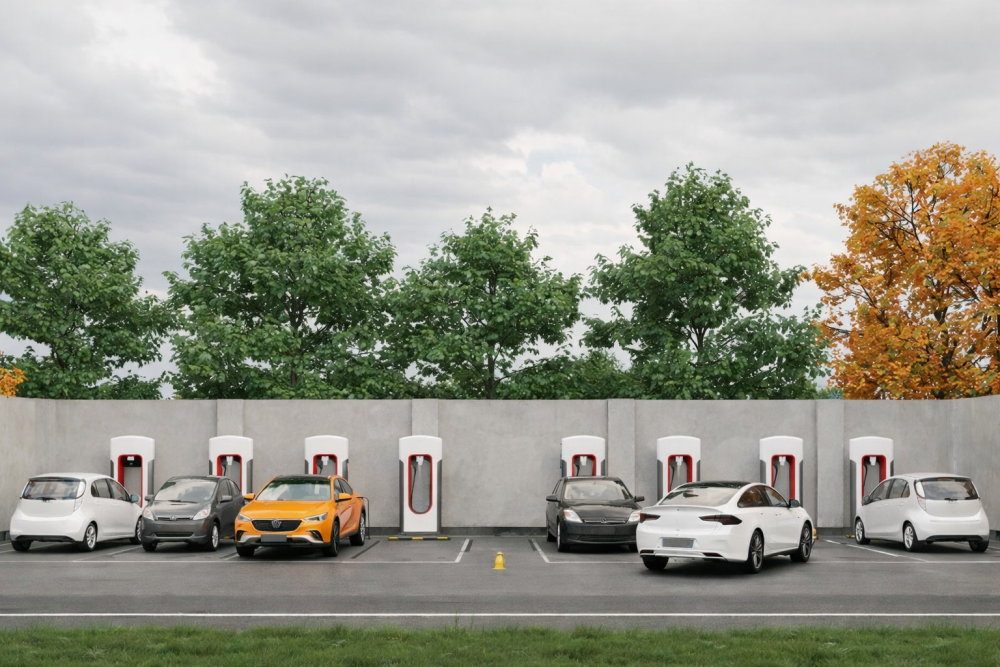
Charging infrastructure has been a critical enabler of mass adoption. Norway has invested heavily in public fast-charging networks along highways, in urban centers, and in rural areas. This has helped address range anxiety, particularly during harsh winter conditions when battery performance can be reduced.
Most Norwegian households also have access to home charging, supported by building standards and workplace charging programs. Together, these factors have normalized EV use across income groups and geographic regions.
For grid operators, the growth in EV charging has required careful planning but has not resulted in major disruptions. Smart charging solutions and off-peak incentives have helped integrate electric mobility into the broader energy system.
Climate and Energy Implications
Transport accounts for a significant share of Norway’s domestic emissions, despite the country’s low-carbon electricity mix dominated by hydropower. Electrifying passenger vehicles, therefore, plays a key role in meeting national climate targets and reducing urban air pollution.
While Norway is a major oil and gas exporter, domestic energy use is increasingly decarbonised. The contrast between export-oriented fossil fuel production and domestic climate leadership has attracted international attention, but policymakers argue that emissions reductions at home are essential regardless of export markets.
From a lifecycle perspective, the climate benefits of EVs in Norway are amplified by clean electricity. This makes each new electric car substantially lower in emissions than its fossil-fueled equivalent over its operating life.
Lessons for Other Markets
Norway’s experience offers important lessons for governments and industry stakeholders elsewhere. First, incentives matter most when they are simple, generous, and long-lasting. Second, infrastructure investment must keep pace with vehicle adoption to maintain public confidence. Third, policy credibility is as important as policy ambition.
However, Norway’s model is not universally transferable. High public revenues, strong institutions, and widespread access to renewable electricity have facilitated the transition. Countries with different fiscal and energy profiles may need alternative approaches to achieve similar outcomes.
Even so, Norway provides a real-world benchmark for what rapid transport electrification can look like when policy, markets, and consumers move in the same direction.
Outlook Beyond 2025
As electric vehicles become the default choice, Norwegian policymakers are shifting focus toward heavy transport, maritime electrification, and broader mobility planning. The next phase of decarbonisation will likely be more complex, requiring solutions beyond passenger cars.
Still, the near-total electrification of new car sales represents a defining milestone. It signals that electric mobility has moved beyond early adoption and into full market maturity, offering a powerful reference point for global net-zero strategies.
Source: esgnews.com

Mentioned in this article...
More related content

OMV Warns Rigid Recycling Rules May Slow Plastics Innovation
Wind and Solar Overtake Fossil Fuels in EU Power Generation
OpenAI Outlines Strategy to Control Rising Data Centre Energy Costs