Northern Ireland Sets Out Vision for Climate-Resilient Agriculture at Oxford Farming Conference

Cut through the green tape
We don't push agendas. At Net Zero Compare, we cut through the hype and fear to deliver the straightforward facts you need for making informed decisions on green products and services. Whether motivated by compliance, customer demands, or a real passion for the environment, you’re welcome here. We provide reliable information. Why you seek it is not our concern.
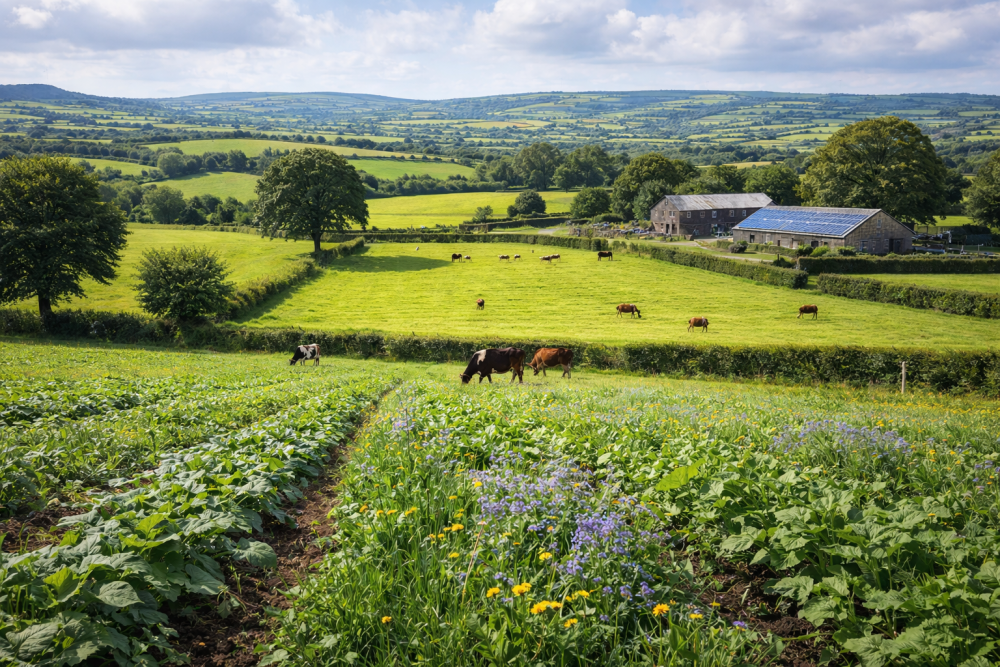
Northern Ireland is seeking to place climate resilience at the core of its agricultural policy, linking environmental performance with long-term economic viability for farmers. Speaking at the Oxford Farming Conference, Andrew Muir set out how farming systems must adapt to climate change while continuing to deliver food production and rural employment.
The minister stressed that climate impacts are already being felt across the sector. Increased rainfall, flooding, soil saturation, and periods of drought are affecting crop performance, grass growth, animal welfare, and farm infrastructure. These pressures, he argued, make resilience a necessity rather than an optional policy ambition.
Aligning Productivity with Emissions Reduction
A central message of the address was that productivity and sustainability should be treated as complementary objectives. Rather than viewing climate action as a constraint, the vision frames efficiency improvements as a route to stronger farm businesses. Lower emissions intensity, reduced input use, and improved resource management are presented as ways to protect margins while meeting environmental targets.
This approach aligns with Northern Ireland’s wider climate commitments, including legally binding emissions reduction goals. Agriculture, as a major source of emissions in the region, is expected to play a meaningful role in delivering progress, but the emphasis is on smarter production rather than simple output reduction.
Soil Health and Land Management
Soil health was highlighted as a foundation of climate-resilient farming. Well-managed soils improve water infiltration and storage, reduce runoff, and support higher productivity over time. Practices such as cover cropping, reduced tillage, and more targeted fertiliser use were cited as practical measures that can benefit both farm performance and the environment.
The strategy links soil protection directly to water quality and biodiversity outcomes. Reducing nutrient losses and erosion is seen as essential not only for compliance with environmental standards but also for maintaining the long-term productive capacity of agricultural land.
Innovation, data, and Advisory Support
Another key pillar of the vision is the role of innovation and knowledge transfer. The minister emphasised the need for closer collaboration between farmers, researchers, and advisers to ensure climate-smart practices are grounded in real-world conditions. On-farm trials, demonstration projects, and peer-to-peer learning are expected to play an important role.
Digital tools and farm data are also expected to become increasingly important. Measuring inputs, outputs, and emissions more accurately can help farmers identify efficiency gains, support compliance with supply chain requirements, and demonstrate progress to policymakers and customers.
Investment and Farm-Level Infrastructure
Public investment is positioned as a catalyst for change, particularly where upfront costs are a barrier to adoption. Support for modern slurry storage, low-emission spreading equipment, energy-efficient buildings, and precision technologies is intended to deliver both environmental and productivity benefits.
The Department of Agriculture, Environment and Rural Affairs (DAERA) is expected to focus funding on measures that produce measurable outcomes. Renewable energy generation on farms, including solar installations and anaerobic digestion, was also highlighted as a way to reduce energy costs and emissions while increasing resilience to volatile fuel prices.
Livestock Efficiency Rather Than Contraction
Livestock farming remains central to Northern Ireland’s agricultural economy, and the minister made clear that maintaining a strong livestock sector is a priority. Rather than targeting herd reductions, the strategy focuses on efficiency improvements such as better breeding, improved animal health, and optimised feeding regimes.
These measures can reduce emissions per unit of output while supporting farm profitability. Improved performance, lower veterinary costs, and more efficient feed use are presented as win-win outcomes for farmers and climate objectives alike.
Nature, Water, and Public Trust
Environmental protection was framed as essential to maintaining public confidence in the agricultural sector. Poor water quality, habitat loss, and visible pollution incidents undermine trust and can lead to tighter regulation. By integrating farming policy with nature restoration goals, the vision aims to deliver benefits such as flood mitigation, biodiversity recovery, and more stable production systems.
The approach recognises that healthy ecosystems provide services that directly support agriculture, from pollination to natural water management. Protecting these systems is therefore positioned as an investment in long-term resilience rather than a regulatory burden.
Supporting Farmers Through the Transition
The social and economic dimensions of change were also emphasised. Farm incomes, generational renewal, and rural community viability are presented as critical considerations. The minister stressed that farmers need clarity, long-term policy signals, and practical support to invest with confidence.
Rather than imposing rapid or unrealistic change, the vision calls for a managed transition that recognises the diversity of farming systems across Northern Ireland. Engagement with farmers and industry stakeholders is positioned as essential to ensuring policies are workable and effective.
Implications for the Food System
For agribusinesses, processors, and retailers, the message is that sustainability performance will increasingly shape market access. Climate resilience, emissions intensity, and environmental credentials are becoming integral to supply chain requirements. By supporting early action, policymakers aim to help Northern Ireland’s producers remain competitive in domestic and export markets.
Overall, the vision presented at the Oxford Farming Conference positions agriculture as a central part of Northern Ireland’s response to climate change. By focusing on efficiency, innovation, and environmental stewardship, the strategy seeks to build a sector capable of withstanding climate pressures while contributing to net-zero objectives.
Source: www.daera-ni.gov.uk

Mentioned in this article...
More related content

OMV Warns Rigid Recycling Rules May Slow Plastics Innovation
Wind and Solar Overtake Fossil Fuels in EU Power Generation
OpenAI Outlines Strategy to Control Rising Data Centre Energy Costs