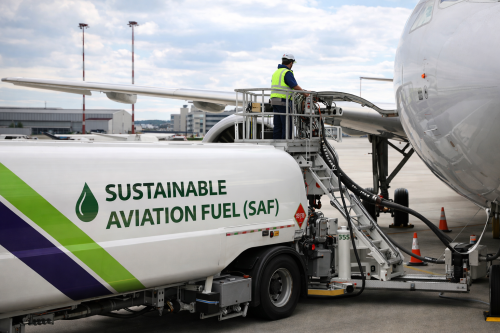
Maersk Eyes Expanded Ethanol Use to Cut China Reliance and Drive Shipping Decarbonisation

Cut through the green tape
We don't push agendas. At Net Zero Compare, we cut through the hype and fear to deliver the straightforward facts you need for making informed decisions on green products and services. Whether motivated by compliance, customer demands, or a real passion for the environment, you’re welcome here. We provide reliable information. Why you seek it is not our concern.
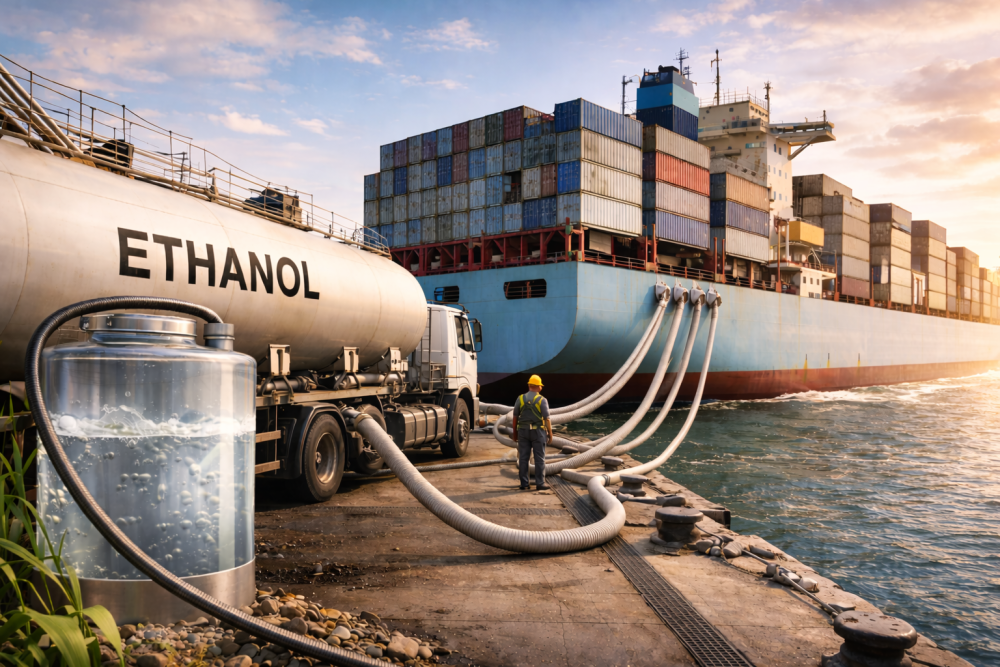
A.P. Moller – Maersk is exploring a broader role for ethanol as a marine fuel as part of its long-term decarbonisation strategy. The initiative is intended to complement the company’s existing investments in green methanol while reducing reliance on a clean fuel supply chain that is currently concentrated in China.
Maersk chief executive Vincent Clerc has indicated that the transition to low-emission fuels must deliver economic benefits across multiple regions if it is to gain lasting political and regulatory support. According to the company, diversifying fuel sources is becoming as important as reducing emissions, particularly as shipping companies commit capital to new vessels and fuel infrastructure with operational lifetimes measured in decades.
Why Ethanol Is Gaining Attention
Ethanol is already produced at a large scale, mainly in the United States and Brazil, and has a well-established global trade network. This contrasts with green methanol, whose production capacity is still limited and heavily concentrated in a small number of countries, including China.
For shipping operators, ethanol offers several potential advantages. It can be produced from renewable feedstocks, it is liquid at ambient temperature, and it can be blended with methanol or used in adapted dual-fuel engines. These characteristics could allow shipowners to access cleaner fuels sooner, without waiting for entirely new global supply chains to mature.
Maersk has already conducted fuel trials using blends of ethanol and methanol on one of its dual-fuel container vessels. Early results suggest that ethanol can be integrated without major technical barriers, opening the door to higher blend ratios and potentially standalone ethanol use in the future.
Reducing Geopolitical Risk in the Energy Transition
Beyond technical considerations, Maersk’s interest in ethanol reflects growing concern about geopolitical exposure in clean fuel markets. China has invested heavily in renewable energy and electrofuel production and is expected to be a dominant supplier of green methanol in the coming years.
While this capacity is critical for global decarbonisation, heavy dependence on a single region creates strategic risk for international shipping. Fuel price volatility, export controls, or geopolitical tensions could disrupt supply, undermining confidence in long-term investment decisions.
By sourcing ethanol from major agricultural economies in the Americas, Maersk believes the energy transition could become more balanced. A wider distribution of production benefits could also make it easier to secure international agreement on emissions regulation, carbon pricing, and fuel standards.
Ethanol’s Climate Credentials and Limitations
The climate impact of ethanol depends heavily on how it is produced. Ethanol derived from sustainably managed feedstocks and renewable energy can deliver meaningful emissions reductions compared with conventional marine fuels. However, ethanol produced using fossil-based energy or associated with land-use change can significantly reduce or even negate climate benefits.
For maritime use, sustainability certification and lifecycle emissions accounting will be critical. Shipping companies, regulators, and fuel suppliers will need to ensure that ethanol used as a marine fuel aligns with credible net-zero pathways and does not create new environmental or social risks.
These concerns mirror broader debates around biofuels in aviation and road transport, where sustainability criteria have become central to policy design. In shipping, similar frameworks are expected to emerge as alternative fuels move from pilot projects to commercial scale.
Implications for the Shipping Industry
Shipping accounts for roughly three percent of global greenhouse gas emissions, making it one of the hardest sectors to decarbonise. Heavy fuel oil remains dominant due to its low cost and high energy density, but regulatory pressure is increasing.
Maersk has committed to net-zero operations by 2040 and has ordered a growing fleet of dual-fuel vessels capable of running on methanol and other alternatives. Ethanol could add flexibility to this strategy, allowing operators to switch between fuels depending on availability, price, and regulatory requirements.
If ethanol adoption expands, it could also influence ship design, engine manufacturing, and port infrastructure. Bunkering facilities, safety standards, and crew training would need to evolve to support wider use of ethanol at scale.
Policy and Regulatory Context
The push for alternative fuels is closely linked to ongoing discussions at the International Maritime Organization, which is responsible for setting global emissions standards for shipping. While the IMO has adopted a long-term emissions reduction strategy, agreement on concrete market-based measures has been slow.
Some countries and industry groups have resisted global carbon levies or fuel mandates, citing cost and competitiveness concerns. Advocates argue that diversified fuel supply chains, including biofuels such as ethanol, could help address these concerns by spreading economic opportunities more evenly across regions.
Maersk’s approach suggests that fuel diversity may become a key enabler of stronger international regulation, rather than a barrier to it.
Market Outlook and Next Steps
Ethanol is unlikely to replace green methanol or other future fuels such as ammonia or synthetic e-fuels on its own. Instead, it is emerging as part of a multi-fuel transition strategy, where different options coexist and mature at different speeds.
Scaling ethanol for marine use will require investment, clear sustainability standards, and regulatory certainty. If these conditions are met, ethanol could help bridge the gap between today’s fossil-based shipping system and a fully net-zero maritime sector.
For Maersk, the move reflects a pragmatic view of decarbonisation, one that recognises both climate urgency and the realities of global trade, politics, and infrastructure. As fuel choices expand, the shipping industry’s path to net zero is likely to become more complex, but also more resilient.
Source: www.reuters.com

Mentioned in this article...
More related content

OMV Warns Rigid Recycling Rules May Slow Plastics Innovation
Wind and Solar Overtake Fossil Fuels in EU Power Generation
OpenAI Outlines Strategy to Control Rising Data Centre Energy Costs