

Available Climate Risk Management Features
Missing Climate Risk Management Features
Pricing
Starting Price
Options
Available Since
Deployment Options
Good Option For
Deep dive
Core Features
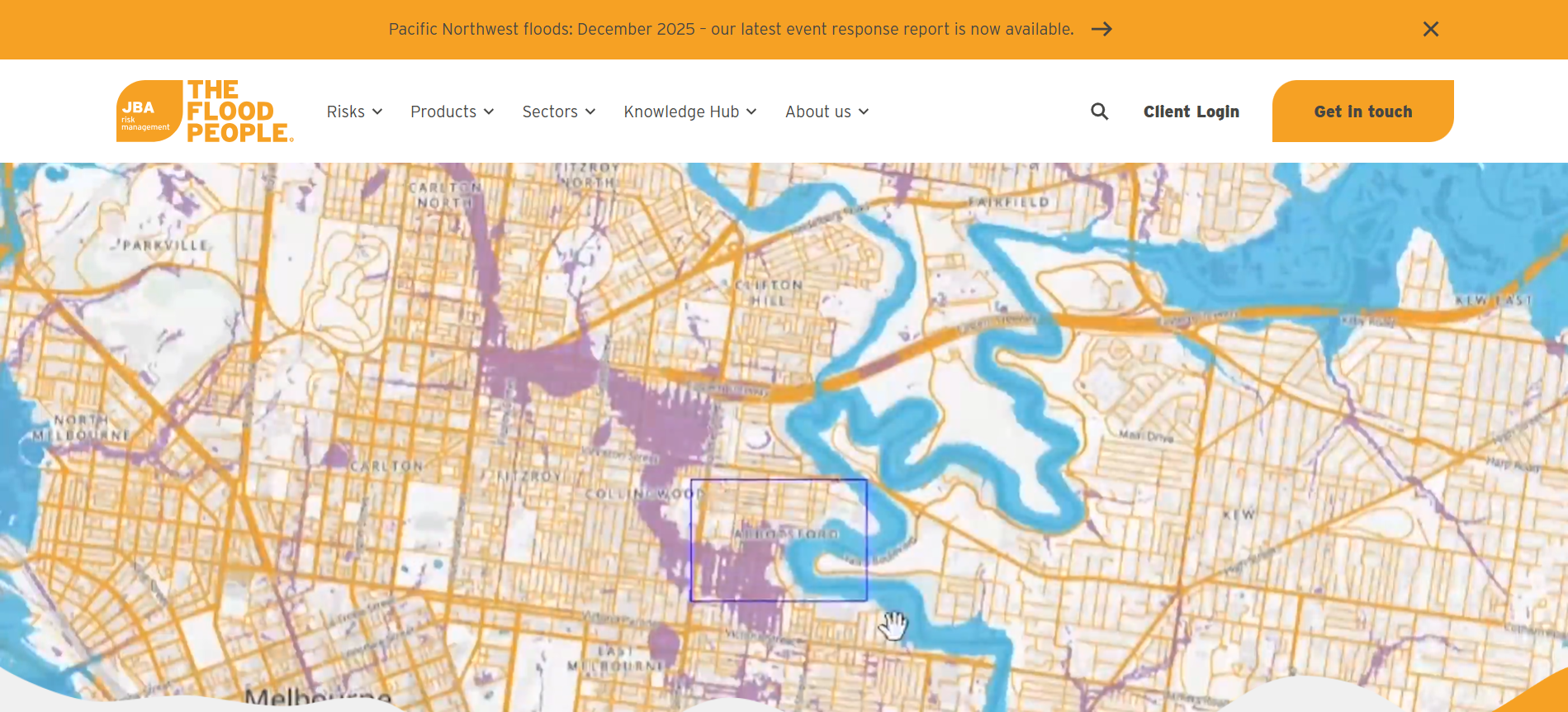
Flood Hazard & Risk Modelling: JBA develops high-resolution flood maps and probabilistic models that quantify flood hazard and risk across geographies.
Asset & Portfolio-Level Risk Assessment: The platform supports assessment of flood exposure for individual assets, infrastructure networks and investment portfolios.
Climate Scenario-Based Analysis: JBA incorporates climate change scenarios to model how flood risk may evolve under different future conditions.
Geospatial Mapping & Visualisation: Advanced GIS-based outputs enable users to visualise flood extents, depths and probabilities spatially.
Data Products & Risk Analytics: JBA delivers structured datasets, model outputs and analytics designed for integration into risk workflows.
Plans & Pricing
JBA operates under a commercial, enterprise-focused pricing model.
Pricing is not publicly disclosed and typically depends on:
Geographic coverage
Type and resolution of flood models
Asset count and portfolio scope
Use case (insurance, finance, public sector)
Integrations
JBA is designed as a data and analytics provider, with integrations focused on downstream risk systems.
Based on public information, integrations include:
APIs and data feeds
For the ingestion of flood risk data into insurance, financial and risk platforms.Integration with GIS and catastrophe modelling tools
Commonly used alongside catastrophe models and geospatial analytics systems.
Customers & Use Cases
JBA is used by:
Insurance and reinsurance companies
Banks and asset managers
Infrastructure owners and operators
Public sector and local authorities
Use cases include flood underwriting, climate stress testing, infrastructure resilience planning and regulatory risk analysis.
Closing Insights
From a Net Zero Compare perspective, JBA Risk Management should be positioned as a Flood & Physical Climate Risk Modelling platform, not as ESG software or carbon accounting software. Its strength lies in deep technical modelling of flood hazards, making it a critical input for climate risk assessments and resilience planning.