Holcim Expands Circular Construction Strategy With Three New Recycling Deals

Cut through the green tape
We don't push agendas. At Net Zero Compare, we cut through the hype and fear to deliver the straightforward facts you need for making informed decisions on green products and services. Whether motivated by compliance, customer demands, or a real passion for the environment, you’re welcome here. We provide reliable information. Why you seek it is not our concern.
Holcim has announced three new acquisitions aimed at strengthening its circular construction portfolio and increasing the availability of recycled building materials across key markets. The deals, reported on 2 December 2025, reflect both rising global demand for low-carbon construction inputs and tightening regulatory frameworks that incentivise reuse, waste recovery, and emissions reductions in the built environment.
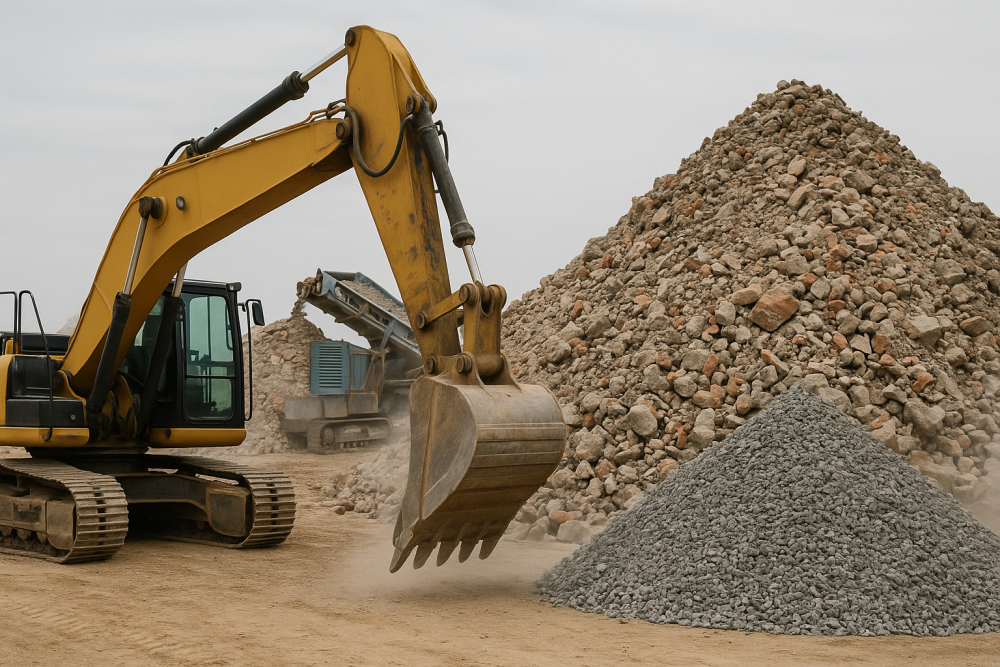
The company has been expanding its dismantling, sorting, and material recovery capabilities as part of a wider shift from linear to circular construction systems. This approach is built on reprocessing demolition waste into certified materials that can replace carbon-intensive virgin aggregates and support the production of low-carbon cement, concrete, and prefabricated components. With construction and demolition waste representing one of the largest global waste streams, regulators have increasingly targeted this sector to reduce landfill reliance and lifecycle emissions.
Expansion of European Recycling Footprint
Two of the newly announced deals target European markets where demand for circular materials has grown steadily due to EU waste laws, national green building standards, and carbon pricing frameworks. By adding regional recycling specialists to its portfolio, Holcim is increasing its access to high-quality concrete and aggregate recovery pipelines. These recovered materials are used to produce recycled aggregates that meet structural specifications and support the company’s ECOPact and ECOPlanet low-carbon product lines.
Industry data suggest that European demand for certified recycled aggregates has increased significantly over the past five years, with public infrastructure projects in particular integrating minimum recycled content requirements. Cities such as Paris, Zurich, and Amsterdam have incorporated circularity targets into public procurement, creating consistent markets for secondary materials. Holcim’s acquisition strategy appears aligned with these developments and positions the company to respond to growing volume commitments.
Strengthening North American Circular Solutions
The third deal focuses on North America, where state-level recycling mandates, corporate net-zero strategies, and voluntary green building certifications have all stimulated interest in construction material reuse. The United States has lagged behind Europe in establishing uniform requirements for demolition materials recovery, but rapid growth in sustainable construction markets and upcoming updates to municipal waste regulations are pushing the sector toward higher recycling rates.
Holcim aims to scale regional processing hubs to supply recycled aggregates to both ready mix operations and local contractors. The company has previously highlighted that recycling concrete can cut lifecycle emissions significantly compared to the use of virgin aggregates, particularly when integrated within short transport distances.
Implications for Decarbonisation Strategies
The acquisitions align with Holcim’s broader sustainability pathway, which includes increasing the use of recycled content, accelerating low-carbon cement production, and expanding carbon capture technologies. Circular material strategies are increasingly viewed as a critical component of decarbonisation because they reduce the extraction of raw materials, lower transportation emissions, and support low-clinker cement formulations.
Regulatory pressure is expected to intensify. The European Union is preparing additional guidance under the Circular Economy Action Plan, while several member states are implementing national mandates for construction waste recovery rates above 70%. In the United States, states such as California, Washington, and Colorado are advancing embodied carbon policies that encourage or require the use of low-carbon and recycled materials in public projects.
Analysts note that companies with established recycling networks will be better positioned to comply with evolving rules and capture emerging markets for secondary materials. The recent deals signal Holcim’s intention to expand its circular infrastructure ahead of anticipated policy shifts, enabling the company to supply consistent volumes of recycled inputs as demand increases.
Market Outlook
The global market for recycled building materials is projected to grow considerably through 2035, driven by construction sector decarbonisation and wider acceptance of recycled aggregates in structural applications. Innovations in sorting, crushing, and certification technologies have also reduced variability in material quality, enhancing confidence among engineering and construction firms.
Holcim’s acquisitions reflect this transition and indicate a strategic focus on integrating circularity across its operations. By scaling regional recycling capabilities, the company aims to reduce embodied emissions in cement and concrete while supporting the broader market shift toward low-carbon construction solutions.
Source: www.reuters.com

Mentioned in this article...
Organizations
More related content
OMV Warns Rigid Recycling Rules May Slow Plastics Innovation
Wind and Solar Overtake Fossil Fuels in EU Power Generation
OpenAI Outlines Strategy to Control Rising Data Centre Energy Costs