Heidelberg Materials Trials Low-Carbon Concrete in Greenwich Construction Pilot

Cut through the green tape
We don't push agendas. At Net Zero Compare, we cut through the hype and fear to deliver the straightforward facts you need for making informed decisions on green products and services. Whether motivated by compliance, customer demands, or a real passion for the environment, you’re welcome here. We provide reliable information. Why you seek it is not our concern.
Cement and concrete production are responsible for an estimated seven to 8% of global carbon dioxide emissions, largely due to the energy required to produce clinker, the key binding component of cement. As demand for buildings and infrastructure continues to grow in urban areas, reducing the carbon intensity of construction materials has become a priority for governments, developers, and material suppliers.
While long term decarbonisation pathways for cement rely heavily on technologies such as carbon capture and storage, these solutions are not yet widely deployed. In the near term, reducing the amount of clinker used in cement and concrete offers one of the most effective ways to cut emissions without waiting for major technological breakthroughs.
The Greenwich Low-Carbon Concrete trial
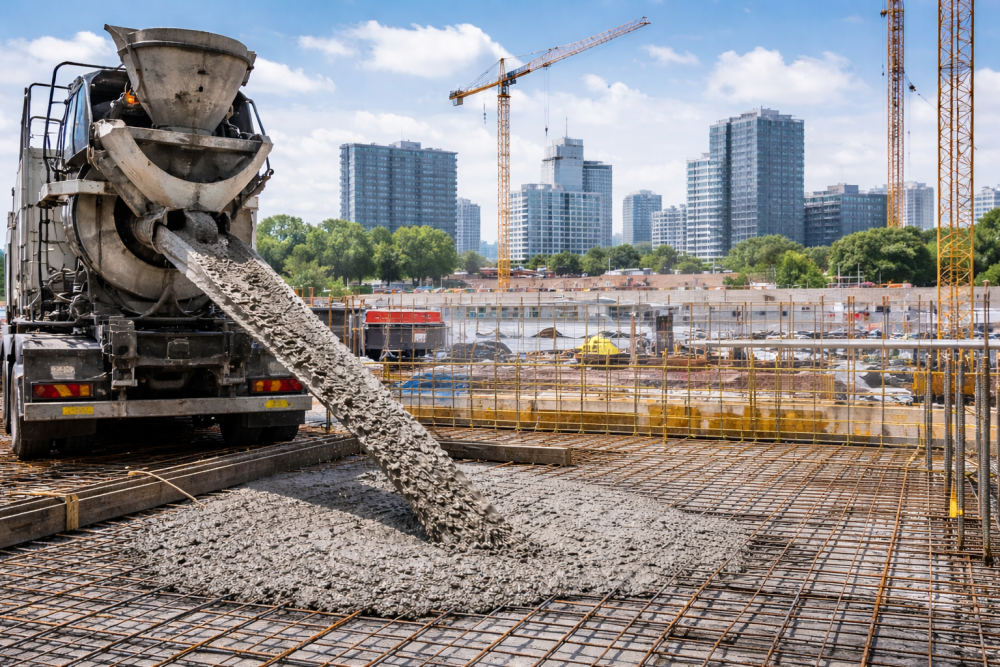
Against this backdrop, Heidelberg Materials has begun a pilot project in Greenwich, London, to test a new low-carbon concrete mix at a live construction site. The trial focuses on replacing a proportion of conventional Portland cement clinker with supplementary cementitious materials that have a lower lifecycle carbon footprint.
According to the company, the concrete used in the pilot delivers a reduction in embodied carbon of more than 30% compared with standard concrete mixes commonly used in similar applications. The trial allows engineers and contractors to assess how the material performs during mixing, pouring, curing, and structural use under everyday site conditions.
Testing Performance Under Real Site Conditions
One of the main barriers to wider adoption of low-carbon concrete has been concern about consistency, durability, and compatibility with existing construction practices. Laboratory results alone are often not sufficient to reassure specifiers and contractors, particularly on complex or safety-critical projects.
By deploying the material in a live build, the Greenwich trial provides practical evidence on workability, strength development, and finish quality. This approach is intended to demonstrate that emissions reductions can be achieved without compromising performance or requiring major changes to construction processes.
Implications for Local Authorities and Developers
The trial is particularly relevant for local authorities and developers operating in London, where embodied carbon is increasingly addressed through planning policy. Several London boroughs now require whole-life carbon assessments as part of major development applications, placing greater emphasis on material choices at the design stage.
Low-carbon concrete products that can demonstrate verified emissions reductions offer a practical tool for meeting these requirements. They also support broader corporate and public sector climate commitments, many of which include interim targets well before 2050.
Industry Collaboration and Supply Chain Readiness
The Greenwich project highlights the importance of collaboration across the construction value chain. Successful use of low-carbon concrete depends on early engagement between material suppliers, structural engineers, contractors, and clients to ensure specifications reflect both performance and carbon objectives.
In many cases, clinker substitution can be achieved with minimal design changes, but this requires clear communication and confidence in material standards. Trials such as this help build familiarity and trust, supporting wider market uptake.
A Step Within a Broader Decarbonisation Strategy
Heidelberg Materials has positioned the trial as part of a broader effort to reduce the carbon intensity of its products in line with its global net-zero strategy. Product innovation, including lower carbon cement and concrete blends, is seen as a complement to longer-term investments in alternative fuels, process efficiency, and carbon capture technologies.
While a single pilot will not transform the sector, cumulative emissions savings from widespread adoption of lower carbon materials could be substantial. Incremental reductions delivered at scale can play a meaningful role in closing the gap between current emissions trajectories and climate targets.
Informing Future Standards and Market Adoption
Demonstration projects also contribute valuable data to support the development of clearer standards and reporting frameworks for embodied carbon. As demand grows for transparent and comparable carbon information, evidence from real projects helps inform certification schemes, procurement criteria, and building regulations.
If the Greenwich trial proves successful, Heidelberg Materials has indicated that the concrete mix could be made available more widely across UK projects. This would align with a broader shift in the construction sector toward practical, near-term actions that reduce emissions today, rather than relying solely on future technologies.
Source: www.businessgreen.com

Mentioned in this article...
Organizations
More related content

OMV Warns Rigid Recycling Rules May Slow Plastics Innovation
Wind and Solar Overtake Fossil Fuels in EU Power Generation
OpenAI Outlines Strategy to Control Rising Data Centre Energy Costs