Greenwashing Claims Face Growing Legal Defeat as Courts Tighten Climate Accountability

Cut through the green tape
We don't push agendas. At Net Zero Compare, we cut through the hype and fear to deliver the straightforward facts you need for making informed decisions on green products and services. Whether motivated by compliance, customer demands, or a real passion for the environment, you’re welcome here. We provide reliable information. Why you seek it is not our concern.
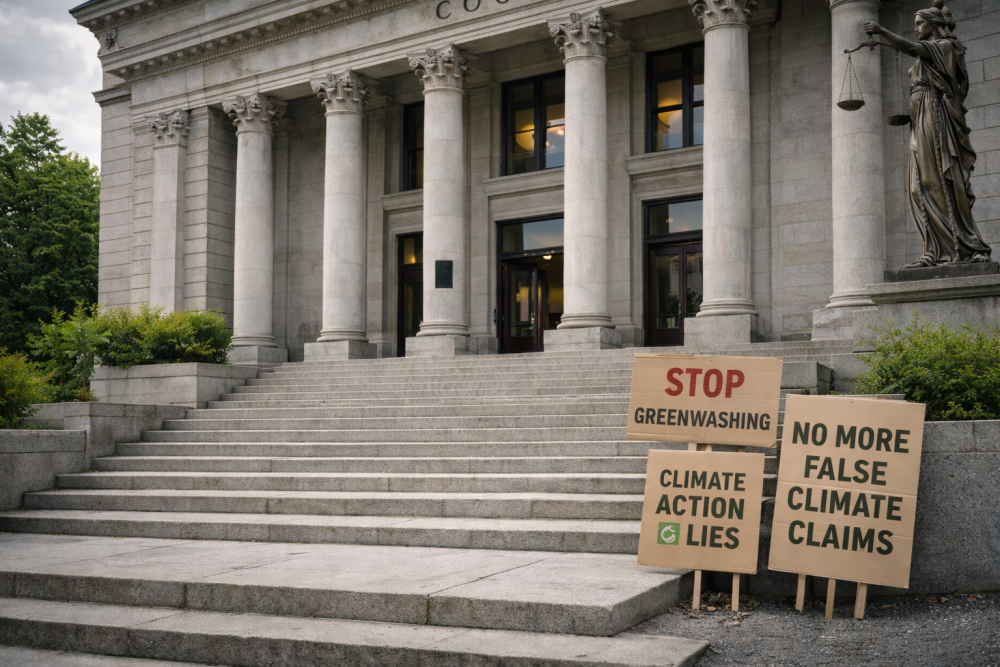
A series of legal rulings during 2025 has significantly strengthened the legal position against corporate greenwashing, establishing that false or exaggerated environmental claims can breach consumer protection, advertising, and financial disclosure laws. According to reporting by The Guardian, courts and regulators across Europe, North America, and parts of Asia delivered decisions that clarify how climate-related claims are assessed and enforced.
These cases collectively signal a shift from voluntary sustainability messaging toward enforceable standards. Companies are increasingly expected to substantiate claims about carbon neutrality, net-zero targets, sustainable sourcing, and environmental benefits with verifiable evidence. Failure to do so is now more likely to result in legal penalties, mandatory corrections, or reputational damage.
Courts Clarify What Constitutes Greenwashing
In several landmark rulings, judges concluded that broad or vague environmental statements can mislead consumers when they lack clear definitions, timelines, or credible transition plans. Claims such as “carbon neutral,” “net-zero,” or “climate positive” were scrutinized closely, especially where companies relied heavily on offsets or future technological solutions without demonstrating current emissions reductions.
In Europe, national courts applied existing consumer protection rules to sustainability marketing, finding that environmental claims must meet the same standards of accuracy and transparency as price or performance statements. Judges emphasized that climate-related assertions are material to consumer decision-making and therefore fall squarely within the scope of misleading advertising laws.
Regulators also took enforcement action against companies that framed incremental efficiency improvements as transformative climate solutions. In multiple cases, authorities ruled that selectively highlighting positive initiatives while omitting continued reliance on fossil fuels or high-emissions activities amounted to deceptive communication.
Implications for Net-Zero Strategies
The rulings have direct consequences for corporate net-zero strategies. Courts increasingly expect companies to distinguish between absolute emissions reductions and offset-based approaches. Overreliance on offsets, particularly those with uncertain permanence or verification, was criticized in several judgments.
Judges and regulators also questioned the credibility of long-term targets without short- and medium-term milestones. Companies that publicized 2040 or 2050 net-zero goals but lacked detailed transition pathways were found to be at risk of misleading stakeholders.
For sustainability and compliance teams, the message is clear. Net-zero commitments must be supported by documented transition plans, governance structures, capital expenditure alignment, and transparent reporting. Climate claims are no longer treated as aspirational branding statements but as representations that can be legally tested.
Expanding Regulatory Alignment
Legal momentum against greenwashing aligns with regulatory developments already underway. The European Union’s tightening of sustainability disclosure rules and product marketing standards has created a framework that courts are now reinforcing through case law. Consumer authorities have increasingly coordinated with financial regulators, recognizing that environmental claims influence both purchasing and investment decisions.
In the United Kingdom, regulators have issued guidance clarifying how environmental claims should be made, emphasizing clarity, comparability, and evidence. Similar principles are emerging in other jurisdictions, reducing the scope for companies to rely on inconsistent interpretations across markets.
In the United States, regulators have also signaled a tougher stance. While enforcement mechanisms differ, courts have begun to entertain lawsuits alleging that misleading climate claims violate unfair competition and securities laws, particularly when environmental performance is linked to financial valuation.
Risk Exposure for Companies and Investors
For companies, the legal risks associated with greenwashing now extend beyond fines. Courts have ordered corrective advertising, public retractions, and changes to product labeling. In some cases, litigation costs and reputational harm outweighed the financial penalties themselves.
Investors are also paying closer attention. Legal findings that sustainability claims were misleading can trigger reassessments of corporate governance, risk management, and long-term viability. Asset managers increasingly view robust climate disclosure as a proxy for management quality and regulatory preparedness.
Insurance providers and lenders have begun factoring greenwashing risk into underwriting and financing decisions. Companies with weak controls around sustainability communication may face higher premiums or restricted access to capital.
Practical Lessons for Sustainability Leaders
The outcomes of 2025’s greenwashing cases provide clear guidance for businesses operating in sustainability-focused markets. Environmental claims should be precise, supported by data, and updated regularly. Marketing teams must work closely with sustainability, legal, and finance departments to ensure consistency across reports, advertisements, and investor communications.
Companies are also advised to avoid absolute claims unless they can be comprehensively demonstrated. Where uncertainty exists, transparency is critical. Explaining assumptions, limitations, and dependencies is increasingly viewed as a safeguard rather than a weakness.
As climate litigation continues to expand, greenwashing is no longer a reputational issue alone. It is a legal and financial risk that companies must manage with the same rigor applied to other forms of regulatory compliance.
Source: www.theguardian.com

Mentioned in this article...
Glossary terms
More related content

OMV Warns Rigid Recycling Rules May Slow Plastics Innovation

Wind and Solar Overtake Fossil Fuels in EU Power Generation

OpenAI Outlines Strategy to Control Rising Data Centre Energy Costs