Google Backs 3,500 Tonne Carbon Removal Pilot Using Ocean-Based Technology

Cut through the green tape
We don't push agendas. At Net Zero Compare, we cut through the hype and fear to deliver the straightforward facts you need for making informed decisions on green products and services. Whether motivated by compliance, customer demands, or a real passion for the environment, you’re welcome here. We provide reliable information. Why you seek it is not our concern.
As global climate targets tighten, many companies are confronting the reality that emissions reductions alone may not be sufficient to reach net-zero. Even with aggressive efficiency measures and renewable energy adoption, residual emissions are expected to remain in sectors such as aviation, heavy industry, and complex supply chains. Carbon removal is increasingly viewed as a necessary complement to emissions reduction rather than a replacement.
Google’s latest agreement reflects this evolving thinking. The company has committed to purchasing verified carbon removal credits from an early-stage ocean-based project capable of removing 3,500 tonnes of carbon dioxide. While small in absolute terms, the project is designed to test a novel approach, improve scientific understanding, and help establish credible pathways for future scale-up.
How Electrochemical Ocean Carbon Removal Works
The technology developed by Ebb Carbon focuses on seawater rather than ambient air. Oceans already play a critical role in regulating the climate system by absorbing roughly 25% of global carbon dioxide emissions each year. However, this process contributes to ocean acidification, a threat to marine ecosystems.
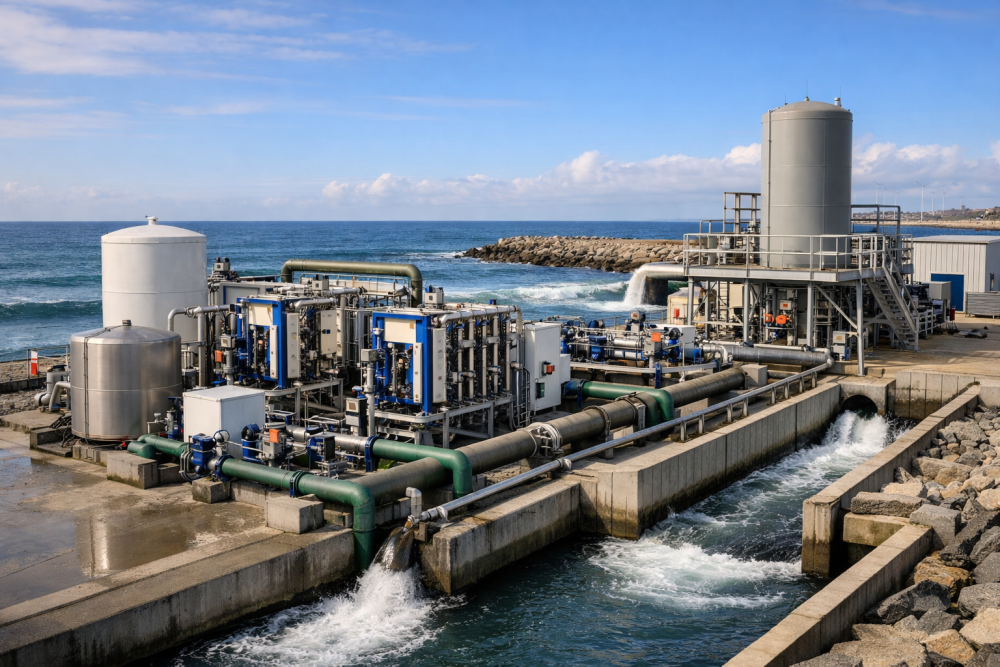
The electrochemical system circulates seawater through a reactor powered by electricity. Inside the reactor, an electric current separates acidic and alkaline components of the water. Carbon dioxide is released from the acidic stream, captured, and prepared for permanent storage. The alkaline stream is then returned to the ocean, where it can help the ocean absorb additional CO2 from the atmosphere over time.
According to project developers, the process does not rely on chemical additives and can be powered by renewable electricity. This design aims to minimize environmental impacts while supporting durable carbon removal.
Scale, Eosts, and Early-Stage Limitations
Google’s agreement covers the removal of 3,500 tonnes of CO2, a volume that underscores the early stage of most carbon removal technologies. Current global emissions exceed 35 billion tonnes annually, making it clear that today’s removal projects operate far below the scale required for material climate impact.
Costs also remain high. Many emerging carbon removal solutions are priced at several hundred dollars per tonne, reflecting capital-intensive infrastructure, limited deployment, and evolving verification methods. Corporate buyers willing to engage at this stage play a crucial role in enabling learning, cost reductions, and technological refinement.
Google has emphasized that carbon removal purchases are intended to address residual emissions after reductions, not to offset continued pollution. The company continues to prioritize renewable energy procurement, operational efficiency, and supply chain decarbonization as its primary climate strategies.
Environmental Safeguards and Verification Challenges
Ocean-based carbon removal presents both promise and complexity. While the ocean’s scale offers significant theoretical potential, altering seawater chemistry raises legitimate environmental concerns. Ensuring that projects do not harm marine life or disrupt local ecosystems is essential for long-term viability and public acceptance.
Another key challenge is measurement, reporting, and verification. Demonstrating that removed carbon is real, additional, and permanent is more difficult for ocean systems than for point-source capture. Carbon flows occur over long timescales and across large areas, requiring robust scientific models and continuous monitoring.
Developers, buyers, and independent experts are working to establish credible standards that address these challenges. Transparent reporting and third-party verification are increasingly seen as non-negotiable elements of responsible carbon removal.
Implications for Policy and Corporate Climate Strategies
The project comes as governments and regulators explore how carbon removal should be integrated into national climate frameworks. Many net-zero strategies now assume some level of carbon dioxide removal to balance residual emissions. At the same time, policymakers are cautious about overreliance on future removal at the expense of near-term emissions cuts.
For companies, the practical lesson is that carbon removal should be approached carefully and transparently. Early participation can support innovation, but claims must be proportionate to actual impact. Small pilot volumes should not be overstated, and clear distinctions between emissions reductions and removals are essential for credibility.
A signal Rather than a Solution
Google’s 3,500 tonne commitment does not materially change global emissions trajectories. Its importance lies in what it represents: a controlled experiment in deploying, measuring, and governing novel carbon removal technologies. Such pilots help identify technical limits, environmental risks, and realistic pathways to scale.
As more data emerges from projects like this, stakeholders will be better positioned to assess which carbon removal approaches can responsibly contribute to long-term climate goals. For now, ocean-based electrochemical removal remains a promising but experimental tool within a broader net-zero transition that must continue to prioritize deep and rapid emissions reductions.
Source: sustainabilitymag.com

Mentioned in this article...
Organizations
More related content

OMV Warns Rigid Recycling Rules May Slow Plastics Innovation

Wind and Solar Overtake Fossil Fuels in EU Power Generation

OpenAI Outlines Strategy to Control Rising Data Centre Energy Costs