Global Green Steel Markets in 2026 Face Rising Costs and Regulatory Divergence

Cut through the green tape
We don't push agendas. At Net Zero Compare, we cut through the hype and fear to deliver the straightforward facts you need for making informed decisions on green products and services. Whether motivated by compliance, customer demands, or a real passion for the environment, you’re welcome here. We provide reliable information. Why you seek it is not our concern.
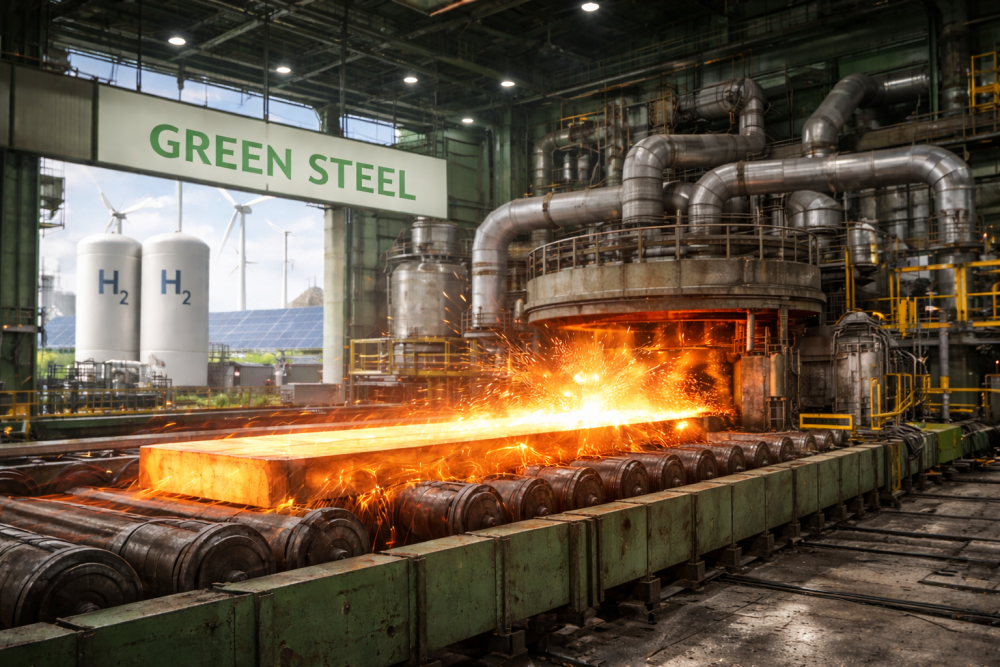
The global steel industry is approaching a turning point in 2026 as green steel production moves from pilot projects to early commercial scale. According to analysis published by EUROMETAL, regulatory frameworks, cost structures, and regional policy choices are creating a fragmented global market, with implications for producers, distributors, and downstream industrial users.
Green steel, typically defined as steel produced with significantly reduced carbon emissions using electric arc furnaces, recycled scrap, renewable electricity, or hydrogen-based direct reduced iron, is no longer a niche concept. However, it remains substantially more expensive than conventional blast furnace steel, and the pace of adoption differs widely across regions.
Europe Leads on Regulation, Not Cost Competitiveness
Europe is positioned as the most regulated green steel market in 2026. The combination of the EU Emissions Trading System, the Carbon Border Adjustment Mechanism, and tightening industrial decarbonisation targets is forcing producers to accelerate low-carbon investments. EU steelmakers are under mounting pressure to demonstrate emissions reductions across Scope 1 and Scope 2 emissions, with growing scrutiny of Scope 3 impacts from downstream buyers.
Despite strong policy signals, cost remains a major barrier. Green steel premiums in Europe are still expected to range from 20% to more than 50% above those of conventional steel, depending on the production route and energy prices. High electricity costs, constrained availability of green hydrogen, and limited scrap supply continue to challenge competitiveness.
Public support mechanisms, including contracts for difference and state aid approvals for hydrogen-based steelmaking, are helping to de-risk investments. However, these instruments are unevenly distributed across member states, reinforcing concerns about internal market distortions and uneven industrial transition within Europe.
Asia Prioritises Scale and Flexibility
In contrast, Asian steel markets are pursuing more flexible transition strategies. China, Japan, and South Korea are investing heavily in efficiency improvements, carbon capture technologies, and expanded scrap usage, rather than the rapid replacement of blast furnaces. While green steel projects exist, particularly in Japan and South Korea, policy frameworks remain less prescriptive than in Europe.
China’s focus remains on capacity management and emissions intensity reductions rather than absolute cuts. As a result, large-scale green steel exports from Asia remain limited in 2026, but production costs are generally lower due to cheaper energy, integrated supply chains, and state-backed financing.
This divergence raises concerns for European distributors and manufacturers that face higher input costs while competing with imported steel produced under less stringent climate rules, despite the introduction of border carbon adjustments.
The Americas Adopt a Market-Driven Transition
North and South America occupy an intermediate position. In the United States, green steel adoption is being driven primarily by corporate demand rather than federal regulation. Automotive, construction, and technology companies are increasingly committing to low-carbon materials in procurement strategies, creating niche but growing demand for certified green steel.
The availability of relatively low-cost renewable electricity and natural gas in parts of the U.S. supports electric arc furnace production and gradual decarbonisation. However, the absence of a nationwide carbon price or binding emissions limits slows broader transformation.
In Latin America, particularly Brazil, steelmakers benefit from access to renewable energy and high-quality iron ore, offering long-term potential for competitive green steel production. Investment decisions in 2026 remain cautious, however, due to policy uncertainty and infrastructure constraints.
Certification and Transparency Remain Unresolved
A key challenge across all regions is the lack of harmonised standards for defining and certifying green steel. Multiple methodologies exist to calculate emissions intensity, creating confusion for buyers and limiting cross-border comparability.
Distributors and industrial customers increasingly demand verified environmental product declarations and lifecycle emissions data. Yet the absence of globally recognised benchmarks complicates procurement decisions and risks greenwashing accusations. In 2026, industry groups and policymakers are expected to intensify efforts to align definitions, but full convergence remains unlikely in the short term.
Implications for Industrial Buyers and Distributors
For steel distributors and downstream industries, the emerging green steel landscape introduces both risk and opportunity. Companies operating in Europe face higher material costs but also benefit from clearer regulatory direction and growing customer willingness to pay premiums for low-carbon products.
Globally active firms must navigate fragmented markets, balancing cost competitiveness against sustainability commitments. Long-term supply contracts, diversified sourcing strategies, and closer collaboration with producers are becoming essential tools to manage price volatility and regulatory exposure.
As 2026 unfolds, green steel is no longer an experimental concept but a strategic factor shaping industrial competitiveness. However, the pace and cost of transition remain deeply uneven, reinforcing regional divergence in global steel markets.
Source: eurometal.net

Mentioned in this article...
Organizations
Glossary terms
More related content
OMV Warns Rigid Recycling Rules May Slow Plastics Innovation
Wind and Solar Overtake Fossil Fuels in EU Power Generation
OpenAI Outlines Strategy to Control Rising Data Centre Energy Costs