Global Cement Producers Launch New Phase of Low Carbon Clinker Trials in 2025

Cut through the green tape
We don't push agendas. At Net Zero Compare, we cut through the hype and fear to deliver the straightforward facts you need for making informed decisions on green products and services. Whether motivated by compliance, customer demands, or a real passion for the environment, you’re welcome here. We provide reliable information. Why you seek it is not our concern.
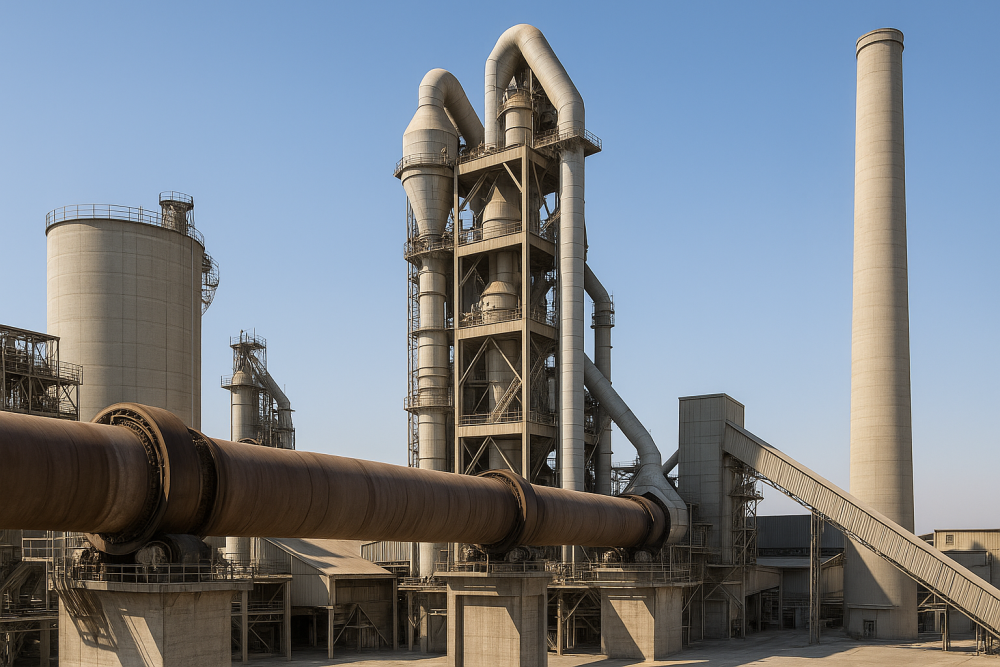
Cement producers across multiple regions have now launched their 2025 low-carbon clinker trials, marking a key transition from laboratory development to industrial implementation. The initiative builds on plans first outlined in 2023, when manufacturers signalled their intent to explore alternative clinker chemistries capable of significantly reducing CO₂ emissions.
Two years later, many of those early-stage concepts are now being tested in real production environments, supported by improved process modelling, optimised raw material blends, and maturing kiln technologies. This year’s trials represent the most coordinated industry effort to date to reduce clinker-related emissions, which account for the majority of the cement sector’s carbon footprint.
Why Low Carbon Clinker Matters in 2025
Clinker production remains one of the hardest industrial processes to decarbonise because emissions result both from fuel combustion and from the calcination of limestone. As governments and private sector buyers strengthen embodied carbon requirements, low-carbon clinker is emerging as a central pathway to achieving near-term reductions.
The 2025 trials focus on several promising solutions:
Reduced clinker-to-cement ratios, supported by supplementary cementitious materials such as calcined clays and natural pozzolans.
Belite-rich and alternative clinker phases that require lower kiln temperatures and produce fewer calcination emissions.
Improved kiln efficiency systems, including digital optimisation and expanded use of renewables and waste-derived fuels.
These trials aim to validate production stability, performance consistency, and cost feasibility at an industrial scale.
Industry Momentum Has Accelerated Since 2023
The pace of innovation has increased since initial announcements were made in 2023. Several producers have already upgraded pilot lines, completed feasibility studies, or secured government-backed funding for decarbonisation projects. The difference in 2025 is that trials are no longer theoretical; they are underway in full operational settings.
Manufacturers also report increased confidence in alternative feedstocks, especially clay-based materials, due to improved calcination technologies. Meanwhile, the industry is preparing for future integration with carbon capture technologies by reducing the volume of CO₂ emitted per tonne of clinker, making future capture systems more manageable and cost-effective.
Regulatory and Market Forces Supporting 2025 Deployment
The launch of trials this year coincides with a tighter global regulatory landscape. Governments are expanding mandatory climate disclosures, updating building codes, and introducing procurement incentives that favour low-carbon construction materials.
The European Union is advancing the implementation of the Carbon Border Adjustment Mechanism, increasing the competitiveness of lower-emissions clinker and cement.
North American and Asian markets are rolling out new low embodied carbon procurement rules for public infrastructure.
Major private developers are increasingly specifying low-carbon cement options for large-scale projects.
These trends have created a supportive environment for the 2025 trials, increasing both the urgency and commercial relevance of low-carbon clinker technologies.
Supply Chain Implications for Construction and Infrastructure
The move toward low-carbon clinker is likely to reshape supply chains, technical standards, and material specifications. Certification bodies are evaluating how to incorporate emerging clinker types, while construction companies are preparing for performance variations that may arise with new formulations.
Equipment suppliers and technology developers stand to benefit from retrofitting projects, new kiln components, and digital monitoring systems capable of ensuring consistent low-carbon output. If the 2025 trials prove successful, the industry could accelerate adoption before the decade ends, influencing material availability and procurement decisions across global infrastructure markets.
Looking Ahead: Pathway to Commercialisation
The outcomes of the 2025 trials will determine how quickly low-carbon clinker can enter mainstream production. Manufacturers are expected to release performance and emission data later this year, offering clearer insight into scalability and durability.
If results confirm expectations, low-carbon clinker could become a major contributor to the cement sector’s decarbonisation pathway, alongside energy efficiency improvements and carbon capture deployment. The combination of these approaches is essential for the sector to meet net-zero targets, especially as construction demand continues to rise in emerging and developed markets.
Key Takeaway for Stakeholders
Low-carbon clinker trials that began as early-stage plans in 2023 have now entered implementation in 2025. This marks a pivotal moment for cement decarbonisation, signalling that the industry is shifting from research to real-world transformation. The outcomes of this year’s trials will influence global material standards, investment strategies, and the pace of emissions reductions across the built environment.
Source: www.globalcement.com

Mentioned in this article...
Glossary terms
More related content

OMV Warns Rigid Recycling Rules May Slow Plastics Innovation
Wind and Solar Overtake Fossil Fuels in EU Power Generation
OpenAI Outlines Strategy to Control Rising Data Centre Energy Costs