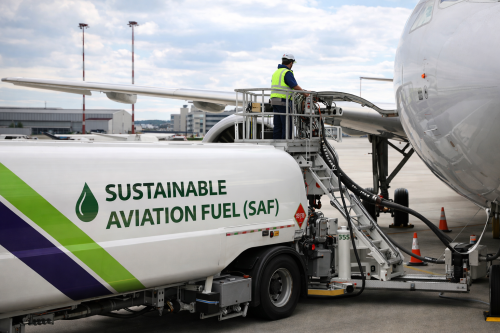
Formula E Advances Sustainability Agenda at 2026 Mexico City E-Prix

Cut through the green tape
We don't push agendas. At Net Zero Compare, we cut through the hype and fear to deliver the straightforward facts you need for making informed decisions on green products and services. Whether motivated by compliance, customer demands, or a real passion for the environment, you’re welcome here. We provide reliable information. Why you seek it is not our concern.
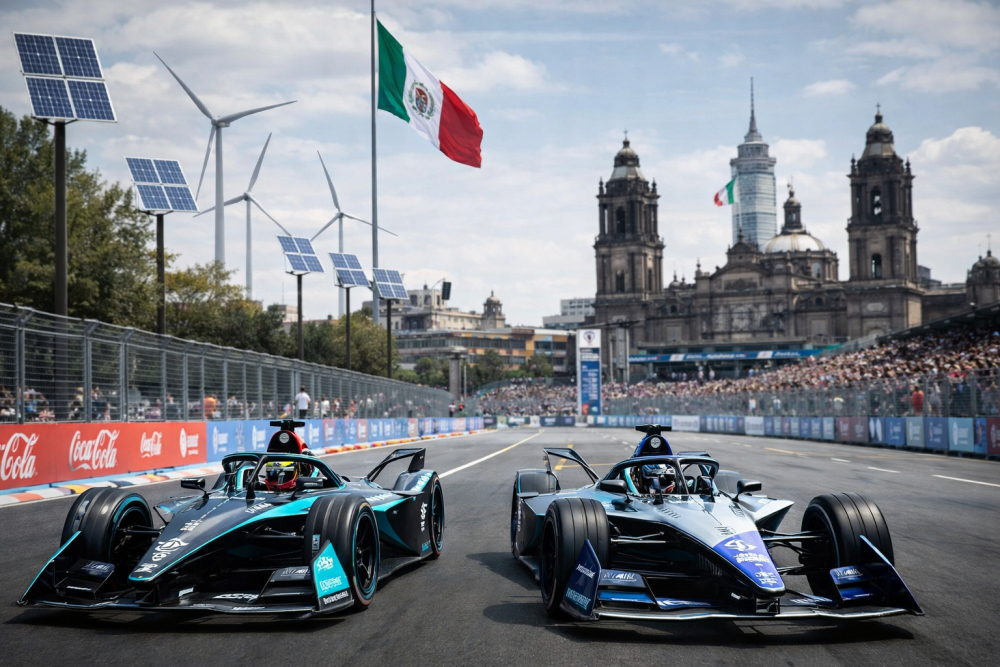
The upcoming 2026 Mexico City E-Prix is being positioned as a flagship example of how international sporting events can integrate sustainability into operations, energy use, and community engagement. Organised under the umbrella of Formula E, the race highlights how electric motorsport can support broader net-zero objectives while maintaining global audience appeal.
According to reporting by the Times of India, the championship’s sustainability programme for the Mexico City round focuses on reducing emissions, promoting renewable energy, and leaving a positive social and environmental legacy in the host city. These measures align with Formula E’s long-standing positioning as a laboratory for electric mobility and climate-conscious event delivery.
Renewable Energy and Low-Carbon Race Operations
A core element of Formula E’s sustainability strategy is its approach to energy use. The championship operates using electricity generated from renewable sources, including solar and other clean energy systems, rather than relying on diesel generators traditionally used in motorsport. For the Mexico City E-Prix, race infrastructure such as paddocks, broadcast facilities, and hospitality areas are expected to be powered through a combination of renewable energy and high-efficiency battery storage systems.
This approach is designed to significantly reduce scope 1 and scope 2 emissions associated with event operations. Formula E has previously reported that its race events are net-zero carbon since inception, achieved through emissions reduction measures and the use of verified carbon credits for residual emissions. The Mexico City race continues this model, demonstrating how large-scale events can function without fossil fuel-based power generation.
Electric Racing as a Mobility Showcase
The Mexico City E-Prix will take place at the Mexico City E-Prix, a venue that allows the championship to engage directly with urban audiences. Formula E cars are fully electric, with technology that has steadily improved race-to-race efficiency, regeneration capacity, and power output.
The current generation of cars is capable of regenerating a substantial proportion of the energy required to complete a race through braking alone. This technology has direct relevance for the wider electric vehicle market, where advances in energy efficiency and battery management are critical to reducing lifecycle emissions and accelerating adoption.
For policymakers and industry stakeholders, Formula E’s technology pathway illustrates how motorsport can act as a real-world testing environment for innovations that later reach commercial road vehicles.
Sustainable Logistics and Materials
Beyond the race cars themselves, Formula E is applying sustainability principles across logistics and materials management. Freight movements are increasingly optimised to reduce emissions, with a growing emphasis on sea freight over air freight where feasible. The championship also works with suppliers to minimise single-use plastics and to increase recycling and reuse of materials across race weekends.
At the Mexico City event, organisers are expected to implement waste reduction strategies, including on-site recycling, composting initiatives, and the use of reusable or biodegradable food and beverage packaging. These measures reflect a broader shift within global sports towards circular economy practices.
Community Engagement and Social Impact
Formula E places strong emphasis on linking sustainability with social outcomes. In Mexico City, community engagement programmes are planned to promote environmental education, road safety, and awareness of electric mobility. Initiatives such as school outreach and fan engagement zones are used to communicate climate and energy topics in accessible ways.
The championship also aims to deliver economic benefits to host cities while minimising environmental disruption. Temporary circuit infrastructure is designed to be installed and removed with minimal long-term impact, an important consideration for densely populated urban locations.
Governance, Transparency, and Reporting
From a governance perspective, Formula E positions sustainability as a core business function rather than a marketing add-on. The organisation publishes regular sustainability updates and aligns its reporting with recognised international frameworks. This transparency is increasingly important for sponsors, broadcasters, and host cities that face growing scrutiny over the environmental impact of major events.
For cities like Mexico City, hosting an event with a defined sustainability framework can support broader climate strategies, particularly in areas such as air quality, public transport promotion, and clean energy visibility.
Implications for Industry and Policymakers
The Mexico City E-Prix illustrates how sustainability can be embedded into event planning, energy systems, and stakeholder engagement at scale. For industries beyond motorsport, the lessons are practical. Renewable energy-powered temporary infrastructure, low-emission logistics, and transparent carbon accounting are approaches that can be adapted to conferences, festivals, and other large gatherings.
For policymakers, Formula E’s model provides evidence that ambitious environmental standards are compatible with international events and economic activity. As cities compete to host global sporting events, sustainability performance is increasingly becoming a deciding factor alongside financial and logistical considerations.
As the 2026 Mexico City E-Prix approaches, Formula E’s sustainability measures will be closely watched by climate, energy, and transport stakeholders. The event reinforces the idea that sport can play a functional role in the transition to a low-carbon economy, not only through messaging, but through demonstrable operational change.
Source: timesofindia.indiatimes.com

Mentioned in this article...
More related content

OMV Warns Rigid Recycling Rules May Slow Plastics Innovation
Wind and Solar Overtake Fossil Fuels in EU Power Generation
OpenAI Outlines Strategy to Control Rising Data Centre Energy Costs