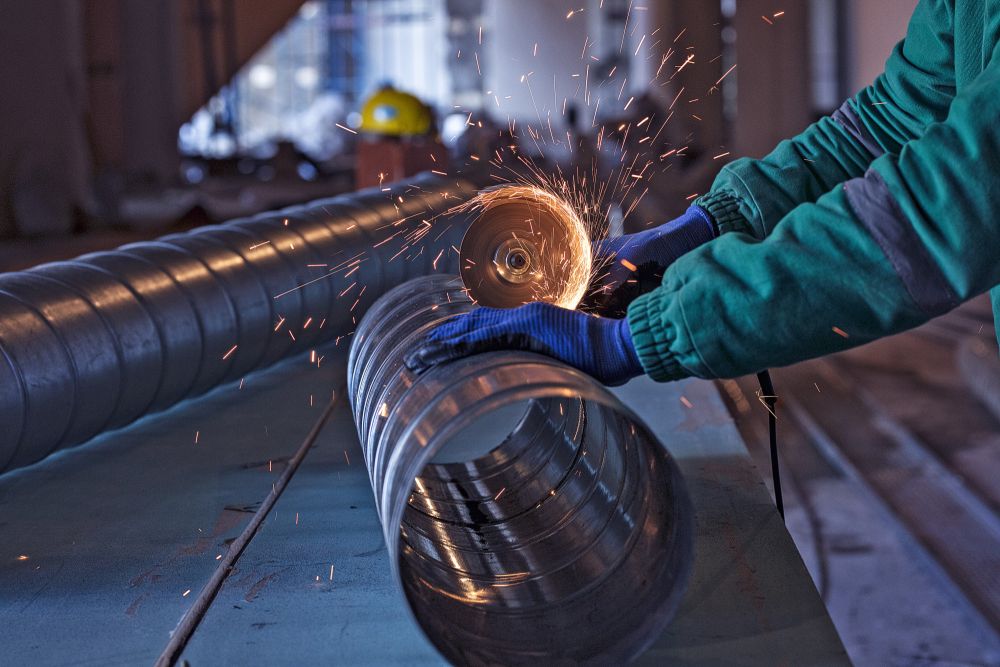
Europe Funds Steel Decarbonization, but Industrial Progress Remains Slow

Cut through the green tape
We don't push agendas. At Net Zero Compare, we cut through the hype and fear to deliver the straightforward facts you need for making informed decisions on green products and services. Whether motivated by compliance, customer demands, or a real passion for the environment, you’re welcome here. We provide reliable information. Why you seek it is not our concern.
Steelmaking is one of Europe’s most carbon-intensive industrial activities, accounting for approximately 5% of the EU's total greenhouse gas emissions. Most of these emissions originate from coal-based blast furnaces, which currently dominate production. As the European Union pursues climate neutrality by mid-century, decarbonizing steel has become a strategic priority for climate, industrial, and economic policy.
In response, the European Commission and national governments have mobilized unprecedented levels of public funding to accelerate the transition to low-emissions steel production. Programmes such as the EU Innovation Fund and state aid frameworks have channelled billions of euros into pilot and demonstration projects across the continent.
Billions in Public Funding, Limited Industrial Transformation
Public support has helped unlock early investment in breakthrough technologies, including hydrogen-based direct reduced iron, electrification of processes, and carbon capture and storage. Several large-scale demonstration plants are now under development, signalling political commitment to industrial decarbonization.
However, most European steel production continues to rely on conventional blast furnace routes. The gap between funded pilot projects and full industrial deployment remains wide. Many projects remain confined to early stages, with limited capacity compared to the overall scale of Europe’s steel output.
Cost Pressures Remain the Primary Barrier
The most significant obstacle to rapid progress is cost. Producing steel with green hydrogen or carbon capture is substantially more expensive than traditional coal-based methods. While subsidies can reduce upfront capital expenditure, operating costs remain high due to electricity prices, hydrogen costs, and technology risk.
Steelmakers are hesitant to commit to irreversible investments without long-term certainty that low-carbon steel will be economically viable. This uncertainty is particularly acute in a globally competitive market where European producers face competition from regions with lower energy prices and weaker climate constraints.
Industry Commitments and Delayed Decisions
Major producers such as ArcelorMittal and Thyssenkrupp have announced ambitious decarbonization roadmaps. These include plans to gradually replace coal-fired blast furnaces with hydrogen-ready direct reduction plants and electric arc furnaces.
Despite these announcements, final investment decisions are often delayed. Many projects depend on continued public funding, regulatory clarity, and assurances around future energy and hydrogen supply. As a result, timelines for full conversion frequently stretch into the 2030s or beyond.
Hydrogen Supply and Infrastructure Gaps
Hydrogen is widely viewed as a cornerstone of near-zero-emissions steelmaking, but Europe’s hydrogen economy remains underdeveloped. Current production of green hydrogen is limited, and infrastructure for transport, storage, and distribution is still emerging.
Without guaranteed access to large volumes of affordable hydrogen, steelmakers face significant operational risks. Delays in hydrogen infrastructure development directly translate into slower progress on steel decarbonization.
Electricity Prices and Competitiveness Concerns
Low-carbon steelmaking processes are far more electricity-intensive than traditional routes. Europe’s industrial electricity prices remain higher and more volatile than those in many competing regions, raising concerns about long-term competitiveness.
Industry groups warn that without targeted energy price support or structural reform of power markets, Europe risks carbon leakage, where steel production shifts abroad rather than decarbonizes domestically.
Carbon Pricing Helps, but Is Not Enough
The EU Emissions Trading System has strengthened incentives to reduce emissions by increasing the cost of carbon-intensive production. However, free allocation of allowances continues to cushion existing producers, reducing immediate pressure to transform.
The upcoming Carbon Border Adjustment Mechanism is expected to improve competitiveness for low-carbon European steel, but its full impact will only materialize gradually. Many companies argue that clearer policy signals beyond 2030 are essential before committing to large-scale transformation.
Weak Demand Signals for Green Steel
On the demand side, progress remains uneven. While automakers, construction firms, and appliance manufacturers have expressed interest in low-carbon steel, binding procurement requirements are still limited.
Without long-term offtake agreements that guarantee premium prices, steelmakers struggle to justify higher production costs. Current demand for green steel is largely confined to niche markets rather than mainstream industrial use.
Implications for the Broader Energy Transition
Steel is a foundational material for wind turbines, electric vehicles, grids, and infrastructure needed for the energy transition. Slow progress in decarbonizing steel risks embedding emissions across multiple clean energy value chains.
Europe’s experience illustrates a broader lesson for industrial decarbonization. Public funding alone is insufficient. Achieving scale requires coordinated energy policy, infrastructure investment, carbon pricing, and demand-side regulation. Without this integrated approach, even well-funded climate strategies may fall short of the pace required to meet climate targets.
Source: www.sustainableviews.com

Mentioned in this article...
Organizations
Glossary terms
More related content
OMV Warns Rigid Recycling Rules May Slow Plastics Innovation
Wind and Solar Overtake Fossil Fuels in EU Power Generation
OpenAI Outlines Strategy to Control Rising Data Centre Energy Costs