EU to Introduce “Made in Europe” Rules for Green Technology in Public Procurement from 2026

Cut through the green tape
We don't push agendas. At Net Zero Compare, we cut through the hype and fear to deliver the straightforward facts you need for making informed decisions on green products and services. Whether motivated by compliance, customer demands, or a real passion for the environment, you’re welcome here. We provide reliable information. Why you seek it is not our concern.
The European Union is preparing to introduce new public procurement rules that would favour European-made green technologies, marking a significant shift in how public authorities purchase clean energy equipment. According to a proposal seen by Reuters, the measures are expected to take effect from 2026 and form part of the bloc’s broader strategy to strengthen industrial resilience while accelerating the transition to net-zero emissions.
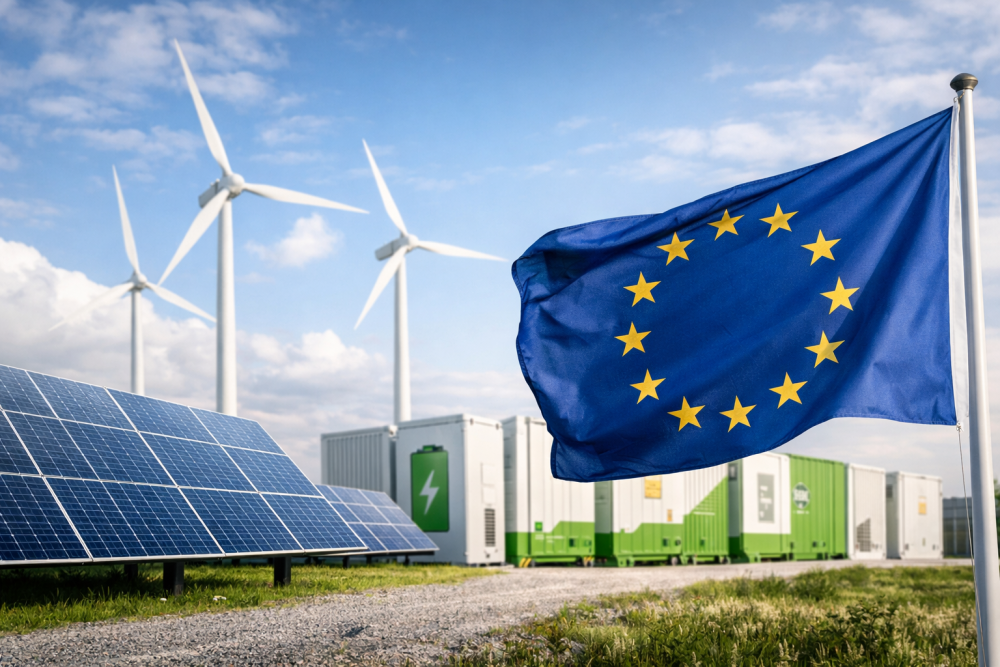
Under the planned framework, public buyers across EU member states would be encouraged, and in some cases required, to give preference to clean technologies produced within Europe when awarding contracts. The rules would apply to a wide range of strategic sectors, including renewable energy, energy storage, heat pumps, electrolyzers, grid infrastructure, and other technologies considered essential to achieving the EU’s climate and energy objectives.
The initiative reflects growing concern in Brussels about Europe’s reliance on imported clean technologies, particularly from China, at a time when global competition over green industrial leadership is intensifying. EU policymakers argue that while open trade remains important, excessive dependence on a small number of foreign suppliers poses risks to energy security, supply chain stability, and long-term climate goals.
Strengthening Europe’s Clean Tech Supply Chains
The proposed procurement rules align closely with the EU’s Net-Zero Industry Act, which seeks to expand domestic manufacturing capacity for low-carbon technologies. Public procurement represents a powerful policy lever, as governments and public bodies account for roughly 14% of EU GDP through purchasing decisions.
By using procurement criteria that go beyond price alone, the European Commission aims to stimulate demand for locally produced clean technologies and provide greater certainty for manufacturers investing in European production facilities. In practice, this could mean awarding additional points in tenders for technologies manufactured in the EU, or requiring minimum European content thresholds for certain strategic projects.
The proposal also includes sustainability and resilience criteria, such as supply chain diversification, lifecycle emissions, and environmental performance. These elements are intended to ensure that procurement decisions support not only industrial competitiveness but also broader climate and environmental objectives.
Implications for Renewable Energy and Infrastructure Projects
If adopted, the new rules could have far-reaching implications for renewable energy deployment across Europe. Public authorities are major buyers of clean technologies for public buildings, transport systems, district heating networks, and energy infrastructure projects.
For example, municipalities installing solar panels on public buildings or deploying battery storage systems could be required to prioritise European suppliers where available. Similarly, large-scale public investments in grid expansion or hydrogen infrastructure may increasingly favour equipment manufactured within the EU.
Supporters of the initiative argue that this approach will help prevent Europe from repeating past mistakes seen in other sectors, where domestic industries were undercut by cheaper imports and subsequently hollowed out. By contrast, critics warn that restricting procurement choices could increase costs or slow deployment if European production capacity is not yet sufficient to meet demand.
Balancing Trade Rules and Industrial Policy
One of the key challenges for the EU will be ensuring that the new procurement rules comply with international trade obligations. The bloc is a signatory to the World Trade Organization’s Government Procurement Agreement, which limits discrimination against foreign suppliers in public tenders.
According to Reuters, EU officials are exploring ways to design the rules so they remain legally defensible, focusing on resilience, sustainability, and security criteria rather than explicit nationality requirements. This approach mirrors similar policies adopted by other major economies, including the United States, which has used domestic content requirements to support clean energy manufacturing.
The EU has increasingly framed its industrial strategy around the concept of “open strategic autonomy”, seeking to remain open to global trade while reducing critical dependencies. Clean technology has emerged as a priority area within this framework, alongside semiconductors, pharmaceuticals, and critical raw materials.
Impact on Industry and Investment Decisions
For European clean tech manufacturers, the proposed procurement rules could provide a significant boost. Guaranteed or preferred access to public contracts may improve revenue visibility and encourage further investment in European production capacity.
At the same time, non-European suppliers operating in the EU market may face pressure to localise manufacturing to remain competitive in public tenders. This could lead to new factories, joint ventures, or technology partnerships within Europe, supporting job creation and skills development.
However, industry groups have cautioned that procurement reform alone will not be sufficient to rebuild Europe’s clean tech manufacturing base. They argue that it must be accompanied by faster permitting, access to finance, affordable energy prices, and supportive state aid frameworks.
Next Steps and Legislative Process
The procurement proposal is expected to be formally presented by the European Commission later this year, with negotiations involving the European Parliament and EU member states to follow. If approved, the new rules would be phased in from 2026, giving public authorities and suppliers time to adapt.
As the EU races to meet its 2030 climate targets and reduce emissions across its economy, the outcome of this policy debate will play a crucial role in shaping how quickly and sustainably clean technologies are deployed. The procurement rules underline a growing recognition that climate policy, industrial strategy, and economic security are increasingly intertwined in Europe’s net-zero transition.
Source: www.reuters.com

Mentioned in this article...
Organizations
Glossary terms
Policies
More related content

OMV Warns Rigid Recycling Rules May Slow Plastics Innovation
Wind and Solar Overtake Fossil Fuels in EU Power Generation
OpenAI Outlines Strategy to Control Rising Data Centre Energy Costs