EU Considers Relaxing Industrial Pollution and Waste Reporting Rules

Cut through the green tape
We don't push agendas. At Net Zero Compare, we cut through the hype and fear to deliver the straightforward facts you need for making informed decisions on green products and services. Whether motivated by compliance, customer demands, or a real passion for the environment, you’re welcome here. We provide reliable information. Why you seek it is not our concern.
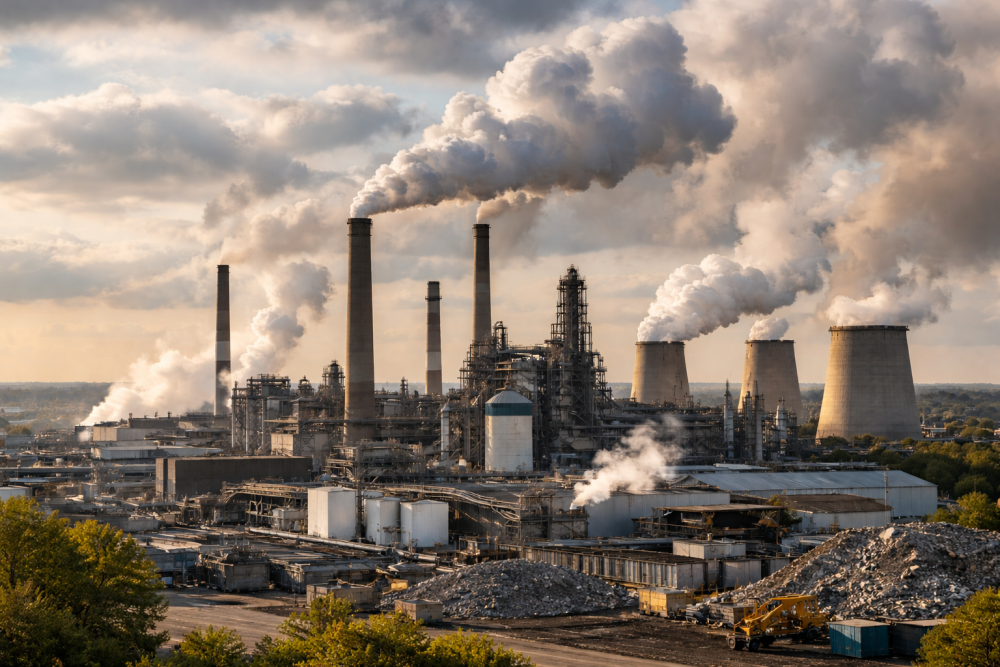
The European Commission is considering changes that would relax certain industrial pollution and waste reporting requirements, according to recent policy discussions cited by ESG News. The proposal forms part of the EU’s wider regulatory simplification agenda, aimed at improving competitiveness and easing administrative pressure on companies operating within the bloc.
At the centre of the discussion is how to balance streamlined reporting with the need to maintain robust environmental oversight. Industrial emissions and waste data play a critical role in tracking pollution levels, enforcing compliance, and informing progress toward climate and environmental targets. Any adjustment to reporting frameworks, therefore, has implications not only for industry costs but also for regulatory credibility and public trust.
Background to the Proposed Changes
The EU has developed an extensive body of environmental reporting rules over the past two decades. Key instruments include the Industrial Emissions Directive, the European Pollutant Release and Transfer Register, and various waste reporting obligations under EU environmental law. Together, these systems require thousands of industrial facilities to submit regular data on emissions to air, water, and soil, as well as waste generation and treatment.
Businesses, particularly small and medium-sized enterprises, have long argued that overlapping reporting requirements create unnecessary complexity and cost. The Commission has acknowledged these concerns as part of its “better regulation” agenda, which seeks to reduce red tape without weakening policy outcomes.
According to ESG News, the Commission is now examining whether some reporting thresholds could be raised, whether the frequency of submissions could be reduced for lower-risk facilities, and whether digitalisation could replace certain detailed reporting obligations. The stated objective is to focus regulatory attention on the highest-emitting installations while reducing administrative workload elsewhere.
Implications for Industry
For industrial operators, especially in energy-intensive sectors such as chemicals, cement, metals, and waste management, the potential relaxation could translate into lower compliance costs and fewer reporting hours. Companies operating across multiple EU member states often face inconsistent interpretations of reporting rules, so any harmonisation or simplification could also improve regulatory certainty.
However, large corporates subject to investor scrutiny and sustainability disclosure requirements may see limited benefit. Many already collect detailed emissions and waste data to meet obligations under the Corporate Sustainability Reporting Directive and voluntary ESG frameworks. For these firms, regulatory simplification may have more impact on operational efficiency than on overall data collection practices.
Supply chains could also be affected. Less detailed regulatory reporting may increase the importance of private data requests from customers seeking assurance on environmental performance. This could shift reporting burdens rather than eliminate them, particularly for suppliers in high-risk sectors.
Environmental and Transparency Concerns
Environmental organisations have expressed caution over any move that reduces the scope or quality of pollution data. Publicly accessible emissions and waste registers are widely used by researchers, civil society groups, and local authorities to monitor environmental impacts and identify non-compliance.
Critics argue that relaxing reporting requirements risks undermining transparency at a time when the EU is positioning itself as a global leader on climate and environmental governance. Reliable data is essential not only for enforcement, but also for tracking progress toward the EU’s 2030 climate targets and its 2050 climate neutrality goal.
There are also concerns about cumulative effects. While individual changes may appear minor, together they could weaken the evidence base needed to design and adjust environmental policy. Reduced data granularity may make it harder to detect emerging pollution hotspots or assess the effectiveness of regulatory measures.
Link to Net-Zero and Industrial Policy
The debate takes place against a backdrop of growing pressure on European industry. High energy prices, global competition, and the need to invest in decarbonisation technologies have intensified calls for regulatory relief. The Commission has signalled that industrial competitiveness and climate ambition must advance together, rather than in opposition.
From a net-zero perspective, accurate emissions and waste data are fundamental. They underpin carbon pricing mechanisms, support the deployment of best available technologies, and enable benchmarking across sectors. Any relaxation of reporting requirements will therefore need to ensure that core datasets remain robust and comparable over time.
Some policymakers argue that smarter reporting, rather than less reporting, should be the objective. This could include better use of digital tools, automated data collection, and alignment between environmental and sustainability reporting systems. Such approaches could reduce administrative burden while preserving transparency and accountability.
Next Steps and Policy Outlook
The Commission is expected to consult with member states, industry representatives, and civil society before advancing any formal legislative proposals. Any changes to existing directives or regulations would require approval from the European Parliament and the Council, a process likely to attract significant scrutiny.
For businesses, the discussion signals a possible shift in how environmental compliance is managed in the coming years. Companies should monitor developments closely and consider how potential changes could affect internal data systems, compliance strategies, and stakeholder expectations.
For policymakers, the challenge will be to demonstrate that regulatory simplification does not equate to environmental backsliding. Maintaining confidence in the EU’s environmental data infrastructure will be essential as the bloc continues to pursue its climate and circular economy objectives.
Source: esgnews.com

Mentioned in this article...
Glossary terms
More related content

OMV Warns Rigid Recycling Rules May Slow Plastics Innovation
Wind and Solar Overtake Fossil Fuels in EU Power Generation
OpenAI Outlines Strategy to Control Rising Data Centre Energy Costs