EU Approves Second Year-Long Delay of Landmark Deforestation Law Amid Industry and Technical Challenges

Cut through the green tape
We don't push agendas. At Net Zero Compare, we cut through the hype and fear to deliver the straightforward facts you need for making informed decisions on green products and services. Whether motivated by compliance, customer demands, or a real passion for the environment, you’re welcome here. We provide reliable information. Why you seek it is not our concern.
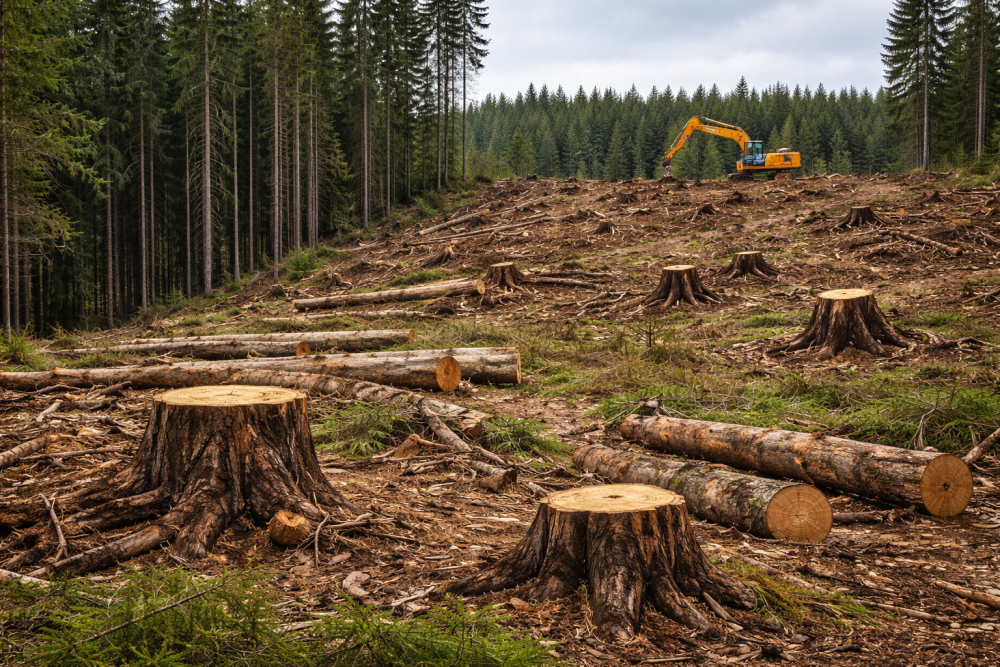
European Union countries have formally approved a proposal to delay the implementation of the EU’s anti-deforestation law by one year, pushing the main compliance deadlines to December 30, 2026, for large and medium-sized companies and to June 30, 2027, for smaller firms. The decision marks the second major postponement of one of the bloc’s most ambitious environmental regulations and underscores the difficulties of translating climate policy into enforceable supply chain rules.
The Regulation on Deforestation-free Products was adopted in 2023 as part of the European Green Deal. Its objective is to ensure that products sold in or exported from the EU are not linked to deforestation or forest degradation. The law covers a range of high-risk commodities, including palm oil, soy, cocoa, coffee, rubber, timber, and cattle products, along with many derived goods such as leather, chocolate, furniture, and paper. Companies placing these products on the EU market must prove that they were not produced on land deforested after December 31, 2020 and that production complied with relevant local laws.
The regulation was originally set to apply from the end of 2024. That timeline was first pushed back to December 2025 after concerns were raised by member states, companies, and trading partners. The newly approved delay extends the transition period by another year, reflecting persistent challenges around implementation and enforcement.
Why the EU Decided to Delay Again
EU officials and national governments cited technical and administrative readiness as key reasons for the delay. Central to the regulation is a digital due diligence system that requires companies to submit geolocation data and detailed supply chain information for every shipment of covered goods. Several member states argued that the IT systems needed to support this reporting at scale were not yet fully operational or tested.
Smaller companies were also highlighted as a particular concern. Many lack the internal resources, data systems, or supply chain visibility required to comply with complex traceability rules. Governments warned that enforcing the regulation too quickly could place disproportionate burdens on small and medium-sized enterprises and create legal uncertainty across the internal market.
In parallel, exporting countries and industry groups continued to lobby for more time. Major agricultural exporters raised concerns about the cost and complexity of providing precise geolocation data for millions of small farms. Some governments warned that the regulation could disrupt trade flows and disadvantage producers in developing countries that have limited access to digital tools, land registries, or certification systems.
Updated Compliance Timeline and Scope
Under the revised schedule, large and medium-sized companies will need to comply with all due diligence requirements by December 30, 2026. Micro and small enterprises are granted an additional six months, with obligations taking effect from June 30, 2027.
The delay does not change the core environmental objectives of the law, but EU institutions have also introduced limited adjustments aimed at simplifying compliance. These include streamlined obligations for downstream operators and clarification of reporting requirements for certain product categories. Some low-risk or marginal product uses have been excluded to reduce administrative complexity.
An additional review of the regulation’s implementation is planned for 2026, focusing on whether further technical improvements or proportionality adjustments are needed before full enforcement begins.
Mixed Reactions from Industry and Environmental Groups
Business groups broadly welcomed the additional time, arguing that it provides greater certainty and allows companies to invest in compliance systems in a more orderly way. For many firms, this includes mapping complex supply chains, working with suppliers to collect verified data, and integrating new reporting requirements into existing procurement systems.
Several exporting countries also reacted positively, saying the delay offers an opportunity to strengthen national traceability frameworks, improve data quality, and support smallholder farmers who would otherwise struggle to meet EU requirements.
Environmental organizations and some companies with advanced sustainability systems were more critical. They warned that repeated delays risk undermining the credibility of EU climate policy and weakening incentives for rapid action on deforestation. Critics argue that EU consumption remains a significant driver of global forest loss and that postponing enforcement allows damaging practices to continue unchecked.
Deforestation is a major source of global greenhouse gas emissions and biodiversity loss. EU assessments suggest that the regulation could significantly reduce the deforestation footprint of European imports once fully implemented, contributing to climate mitigation and conservation goals.
Implications for Businesses and Global Supply Chains
For companies operating in or exporting to the EU, the delay provides breathing room but also prolongs uncertainty. Firms must still prepare for strict traceability, risk assessment, and verification requirements, even if enforcement is further away. Businesses that use the extra time to build robust compliance systems may be better positioned as environmental scrutiny increases globally.
At the same time, shifting timelines may slow investment decisions, particularly in digital traceability tools and supplier engagement programs. This could affect financing and long-term planning across agricultural and forestry supply chains, especially in regions heavily reliant on EU markets.
The postponement highlights the complexity of implementing supply chain regulations at a global scale. Whether the EU can balance environmental ambition with practical enforcement will shape not only the future of the deforestation regulation but also the credibility of similar initiatives linked to climate, biodiversity, and human rights due diligence.
Source: www.reuters.com

Mentioned in this article...
Glossary terms
More related content

OMV Warns Rigid Recycling Rules May Slow Plastics Innovation
Wind and Solar Overtake Fossil Fuels in EU Power Generation

OpenAI Outlines Strategy to Control Rising Data Centre Energy Costs