EU Backs 100 Hydrogen Infrastructure Projects in €1.5 Trillion Cross-Border Energy Overhaul

Cut through the green tape
We don't push agendas. At Net Zero Compare, we cut through the hype and fear to deliver the straightforward facts you need for making informed decisions on green products and services. Whether motivated by compliance, customer demands, or a real passion for the environment, you’re welcome here. We provide reliable information. Why you seek it is not our concern.
The European Union has taken a major step toward scaling up its clean hydrogen economy by backing approximately 100 hydrogen-related infrastructure projects under a sweeping €1.5 trillion cross-border energy investment plan. The initiative, coordinated through the EU’s Trans-European Networks for Energy framework, is designed to modernize Europe’s energy system, reduce reliance on fossil fuels, and strengthen energy resilience across member states.
The hydrogen projects are part of a broader portfolio of energy investments that include electricity grids, offshore renewable connections, carbon dioxide transport networks, and energy storage. Together, these initiatives aim to address structural bottlenecks that have slowed the deployment of low-carbon energy at scale across Europe.
Hydrogen as a Cornerstone of EU Decarbonisation
Hydrogen has emerged as a central pillar of the EU’s climate and industrial strategies, particularly for sectors where direct electrification is difficult. Heavy industry, long-distance transport, chemicals, steelmaking, and fertilizer production are seen as key areas where renewable and low-carbon hydrogen can significantly reduce emissions.
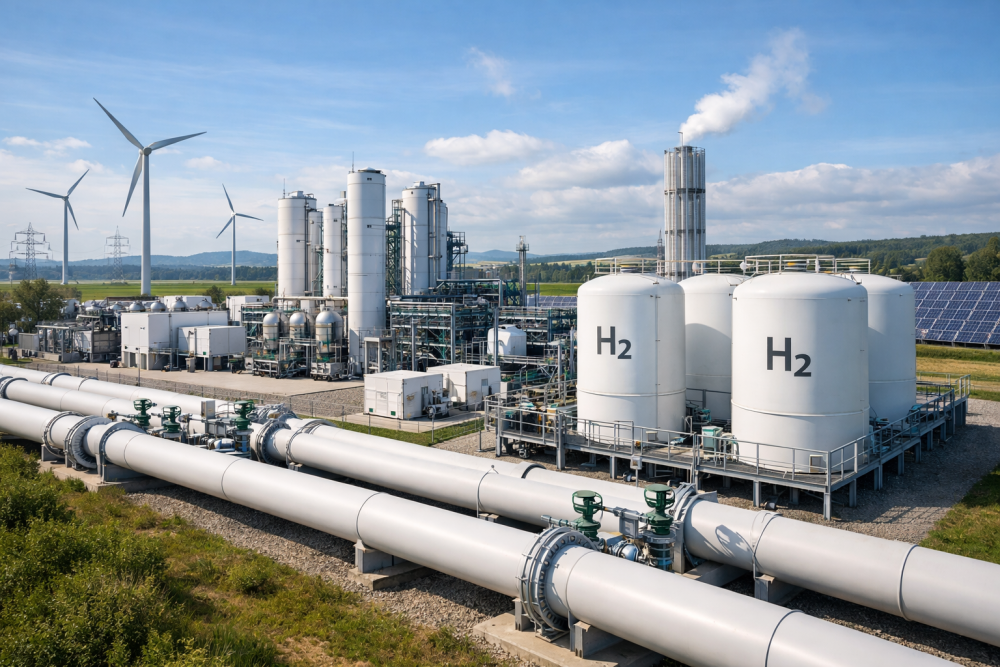
The approved projects focus on building a comprehensive hydrogen backbone across Europe. This includes new pipelines, the repurposing of existing gas infrastructure, cross-border interconnections, and large-scale storage facilities. By improving connectivity between hydrogen production hubs and industrial demand centers, the EU aims to create a functioning internal hydrogen market.
According to EU policy frameworks, most of the hydrogen supported under the plan is expected to be renewable, produced via electrolysis powered by wind and solar energy. Transitional low-carbon hydrogen may also play a limited role, particularly in early phases where renewable supply is still scaling.
Cross-Border Infrastructure to Reduce Fragmentation
A defining feature of the initiative is its emphasis on cross-border coordination. Energy infrastructure in Europe has historically developed along national lines, leading to fragmentation and inefficiencies. The new projects are designed to address this by linking national hydrogen networks into a pan-European system.
This approach is expected to reduce costs through economies of scale and improve security of supply by allowing hydrogen to flow where it is most needed. It also supports price convergence across regions, helping to prevent disparities that could undermine industrial competitiveness.
For countries with abundant renewable resources, such as those with strong offshore wind potential, the new infrastructure creates opportunities to become major exporters of green hydrogen. For industrialized regions with high energy demand, it provides access to cleaner fuels without requiring all production to be local.
Investment Scale and Funding Mechanisms
The €1.5 trillion figure reflects cumulative investment needs across Europe’s energy infrastructure by the 2040s, rather than a single funding package. The hydrogen projects are expected to leverage a mix of public and private financing, including EU funds, national budgets, and private capital.
Key instruments include the Connecting Europe Facility, the Innovation Fund, and national support schemes aligned with EU state aid rules. Projects designated as being of common interest or mutual interest benefit from streamlined permitting processes and improved access to financing.
By reducing regulatory and administrative barriers, the EU aims to shorten project development timelines, which have often been a major obstacle to infrastructure deployment.
Implications for Industry and Supply Chains
For European industry, the hydrogen infrastructure rollout could be transformative. Reliable access to hydrogen at scale is critical for companies planning to decarbonize production while remaining competitive globally.
Steelmakers, chemical producers, refineries, and logistics operators are among those expected to benefit most directly. The availability of cross-border hydrogen transport reduces the risk associated with investing in hydrogen-based technologies, such as direct reduced iron steelmaking or hydrogen-fueled industrial processes.
The initiative also has implications for equipment manufacturers and service providers. Electrolyzer producers, pipeline engineering firms, storage technology developers, and digital infrastructure providers are likely to see increased demand as projects move from planning to construction.
Energy Security and Geopolitical Considerations
Beyond climate objectives, the hydrogen infrastructure plan reflects lessons learned from recent energy supply disruptions. By diversifying energy sources and reducing dependence on imported fossil fuels, the EU aims to improve its strategic autonomy.
Hydrogen produced domestically from renewable electricity can help shield economies from volatile global fuel markets. Cross-border networks further enhance resilience by allowing supply to be rerouted during disruptions or peak demand periods.
The plan also positions the EU as a global leader in hydrogen standards and infrastructure development, potentially influencing international markets and trade flows as hydrogen becomes a more widely traded energy carrier.
Challenges and Next Steps
Despite strong policy backing, significant challenges remain. Scaling up renewable electricity generation fast enough to supply large volumes of green hydrogen is a critical constraint. Permitting delays, skills shortages, and supply chain bottlenecks could also slow progress.
Ensuring that hydrogen delivers genuine climate benefits will require strict sustainability criteria, transparent certification systems, and robust monitoring of emissions across the value chain.
Nevertheless, EU policymakers view the hydrogen infrastructure push as a necessary foundation for achieving climate neutrality by 2050. As projects advance from approval to implementation, the focus will shift to execution, cost control, and ensuring that hydrogen deployment aligns with broader energy system integration.
Source: fuelcellsworks.com

Mentioned in this article...
Glossary terms
More related content

OMV Warns Rigid Recycling Rules May Slow Plastics Innovation
Wind and Solar Overtake Fossil Fuels in EU Power Generation
OpenAI Outlines Strategy to Control Rising Data Centre Energy Costs