EU 2040 Climate Target Deal Signals Major Carbon Pricing Reforms from 2026

Cut through the green tape
We don't push agendas. At Net Zero Compare, we cut through the hype and fear to deliver the straightforward facts you need for making informed decisions on green products and services. Whether motivated by compliance, customer demands, or a real passion for the environment, you’re welcome here. We provide reliable information. Why you seek it is not our concern.
The European Union has reached a political agreement on an interim climate target for 2040, positioning it as a central milestone on the path to climate neutrality by 2050. The agreed objective aims for around a 90% reduction in net greenhouse gas emissions compared with 1990 levels, reinforcing the EU’s long-term commitment to deep decarbonization.
Although the deal does not immediately amend existing legislation, it establishes a firm reference point for future climate laws. In practice, this target will shape the next round of reforms to carbon pricing and climate regulation, particularly from 2026 onward, when key policy reviews and revisions are scheduled.
For policymakers, the 2040 target serves as a bridge between the legally binding 2030 target and the net-zero objective. For markets and industry, it provides a clearer long-term signal about the scale and speed of emissions reductions that will be required over the next two decades.
Implications for the EU Emissions Trading System
The most significant impact of the 2040 deal is expected to be felt through the EU Emissions Trading System. The ETS is already the cornerstone of EU climate policy, covering power generation, energy-intensive industry, aviation, and maritime transport. Aligning the system with a 90% emissions reduction by 2040 implies a substantial tightening of its overall emissions cap.
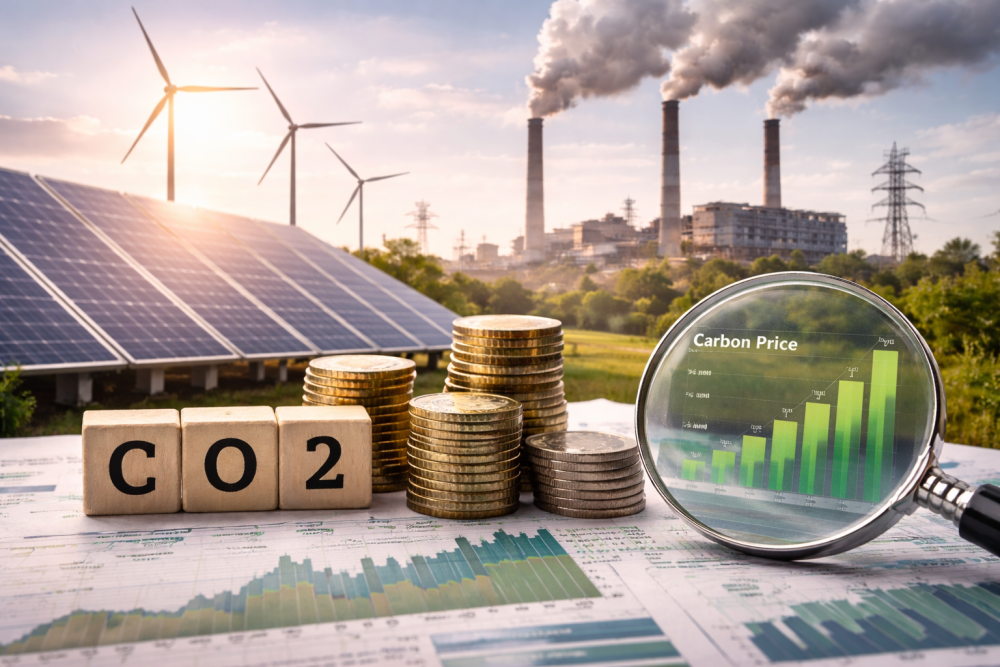
From 2026, when further ETS revisions are expected, this is likely to translate into a faster decline in the number of available allowances. A tighter cap would increase scarcity in the carbon market and place upward pressure on carbon prices, raising compliance costs for regulated entities.
For power producers, higher carbon prices strengthen the economic case for accelerating the phase-out of coal and other high-emitting fuels. For industrial sectors such as steel, cement, chemicals, and refining, the message is that incremental efficiency gains will no longer be sufficient, and bigger structural changes will be required.
Free Allocation and Carbon Leakage Protection
Another key area influenced by the 2040 target is the future of free allocation under the ETS. Free allowances have historically been used to protect EU industries from carbon leakage, where production shifts to regions with weaker climate policies. However, policymakers have consistently signalled that free allocation will be phased down over time.
The 2040 agreement reinforces this trajectory. As emissions reduction requirements become steeper, the continued use of free allowances becomes increasingly difficult to justify. Their gradual removal is closely linked to the implementation of the Carbon Border Adjustment Mechanism, which is designed to impose a carbon cost on certain imports entering the EU.
From an industry perspective, this means greater exposure to carbon pricing risks within the EU, combined with new compliance requirements for imports. Companies operating in global supply chains will need to factor these changes into procurement, pricing, and investment decisions.
Expansion of Carbon Pricing Beyond Heavy Industry
The 2040 target deal also strengthens the policy rationale for expanding carbon pricing beyond traditional ETS sectors. A separate emissions trading system for buildings and road transport is scheduled to start in 2027, with safeguards allowing for a delay if energy prices are exceptionally high.
A more ambitious long-term climate target increases the likelihood that this system will face tighter caps over time, resulting in stronger price signals for fuels used in heating and transport. While households are expected to be shielded through social support mechanisms, fuel suppliers and distributors will face growing regulatory and cost pressures.
For businesses in logistics, construction, and real estate, this reinforces the need to invest in electrification, energy efficiency, and low-carbon alternatives well ahead of regulatory deadlines.
Investment Signals and Market Expectations
Beyond regulation, the 2040 agreement plays an important role in shaping expectations across energy and financial markets. A credible long-term target supports higher projected carbon prices and reduces uncertainty about the direction of EU climate policy.
For investors, this improves the visibility of long-term returns on low-carbon assets such as renewable energy, grids, storage, and clean industrial technologies. For companies, it increases the risks associated with delaying decarbonization investments or relying on assets that may become stranded under tighter carbon constraints.
Many firms are expected to adjust internal carbon pricing assumptions, capital expenditure plans, and climate risk disclosures in response to the clearer post-2026 policy outlook.
Global and Trade Implications
The EU’s 2040 climate target also has implications beyond its borders. Stronger and more predictable carbon pricing increases pressure on trading partners to adopt comparable climate policies, particularly as border carbon measures become fully operational later in the decade.
Exporters to the EU will need to demonstrate the carbon intensity of their products and, in some cases, face additional costs if emissions are higher than EU benchmarks. This dynamic reinforces the EU’s role as a global standard-setter in climate policy and carbon markets.
Outlook for 2026 and Beyond
While the 2040 target deal does not introduce immediate legal changes, it clearly sets the stage for more ambitious carbon pricing reforms from 2026 onward. Tighter ETS caps, reduced free allocation, expanded coverage, and stronger price signals are all consistent with the trajectory implied by the agreement.
For energy companies, industrial operators, and investors, the message is increasingly clear. The cost of carbon in the EU is set to rise, and policy flexibility will diminish over time. Early action, strategic investment, and alignment with long-term decarbonization pathways will be essential to remain competitive in the next phase of EU climate policy.
Source: www.sustainableviews.com

Mentioned in this article...
Glossary terms
More related content

OMV Warns Rigid Recycling Rules May Slow Plastics Innovation
Wind and Solar Overtake Fossil Fuels in EU Power Generation
OpenAI Outlines Strategy to Control Rising Data Centre Energy Costs