Eni and BlackRock’s GIP Take Joint Control of Carbon Capture Business to Scale Low-Carbon Infrastructure

Cut through the green tape
We don't push agendas. At Net Zero Compare, we cut through the hype and fear to deliver the straightforward facts you need for making informed decisions on green products and services. Whether motivated by compliance, customer demands, or a real passion for the environment, you’re welcome here. We provide reliable information. Why you seek it is not our concern.
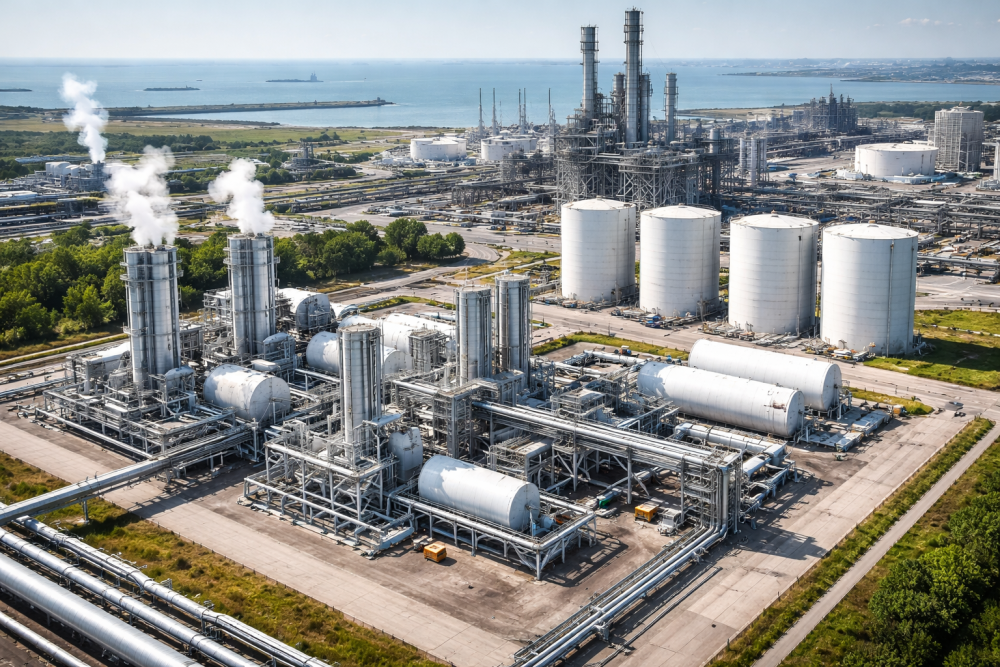
Italian energy group Eni and BlackRock’s Global Infrastructure Partners (GIP) have reached an agreement to take joint control of Eni’s carbon capture and storage (CCS) business, marking a significant step in the expansion of low-carbon infrastructure across Europe. The deal positions CCS as a central pillar of the energy transition, particularly for industries where emissions reductions remain technically challenging.
Under the agreement, Eni will retain a minority stake while GIP becomes a co-controlling partner. The new structure is designed to accelerate project development, attract long-term investment, and support the scaling of carbon capture solutions across multiple industrial sectors. Financial details of the transaction were not disclosed.
The move reflects a broader trend of energy companies partnering with infrastructure investors to share risk, unlock capital, and accelerate the deployment of climate technologies that require long-term investment horizons.
A Strategic Role for Carbon Capture
Carbon capture and storage is increasingly recognised as a necessary complement to renewable energy, particularly in sectors such as cement, steel, chemicals, and refining, where emissions are difficult to eliminate through electrification alone. According to the International Energy Agency, global CCS capacity must increase more than tenfold by 2030 to align with net-zero pathways.
Eni has been developing CCS projects primarily in Europe, with a focus on using depleted gas fields for the permanent storage of carbon dioxide. These projects are often designed as open-access hubs, enabling multiple industrial emitters to connect to shared transport and storage infrastructure. This approach can significantly reduce costs and lower barriers for industrial companies seeking to decarbonise.
By bringing in GIP as a partner, Eni aims to accelerate the rollout of these projects while maintaining operational expertise and technical oversight.
Infrastructure Investment Meets Energy Transition
Global Infrastructure Partners, now part of BlackRock, manages hundreds of billions of dollars in infrastructure assets worldwide. Its involvement signals growing confidence among institutional investors that carbon capture can deliver long-term, stable returns while supporting climate objectives.
Infrastructure investors are increasingly attracted to assets that combine predictable cash flows with policy-backed demand. Carbon capture projects, particularly those supported by government incentives or carbon pricing mechanisms, are increasingly viewed as fitting this profile.
The partnership is expected to strengthen the financial foundations of Eni’s CCS portfolio, enabling access to lower-cost capital and supporting the development of multiple large-scale projects over the coming years.
Implications for European Climate Policy
The deal comes at a time when European policymakers are placing greater emphasis on carbon management technologies as part of broader decarbonisation strategies. The European Union has identified CCS as essential for reaching climate neutrality by 2050, particularly for industrial clusters with limited alternatives.
Recent policy developments, including clearer rules for cross-border CO₂ transport and storage, are helping to reduce regulatory uncertainty and encourage private investment. The Eni–GIP partnership aligns with these policy directions, demonstrating how public frameworks and private capital can work together to accelerate climate solutions.
Strategic Outlook for Eni and the Energy Sector
For Eni, the transaction supports its broader strategy to transform into a diversified energy company while maintaining cash flow from existing assets. By separating and scaling its carbon capture business, the company aims to unlock value while contributing to decarbonisation efforts.
For the wider energy sector, the deal highlights a growing recognition that achieving net-zero will require a portfolio of solutions. Renewable energy, electrification, hydrogen, and carbon capture are increasingly viewed as complementary rather than competing pathways.
As industrial emissions remain one of the most challenging aspects of the energy transition, partnerships like the one between Eni and BlackRock’s GIP may become a defining feature of how climate infrastructure is financed and deployed in the coming decades.
Source: www.reuters.com

Mentioned in this article...
Organizations
More related content

OMV Warns Rigid Recycling Rules May Slow Plastics Innovation
Wind and Solar Overtake Fossil Fuels in EU Power Generation
OpenAI Outlines Strategy to Control Rising Data Centre Energy Costs