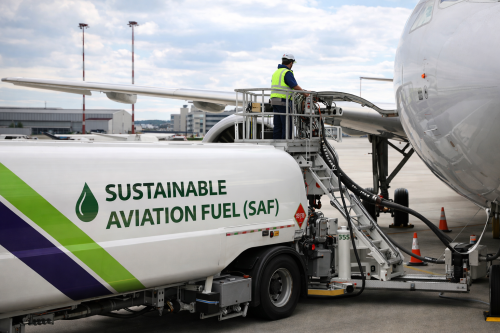
DHL Expands Low-Carbon Logistics to Support Waitrose Supply Chain Operations

Cut through the green tape
We don't push agendas. At Net Zero Compare, we cut through the hype and fear to deliver the straightforward facts you need for making informed decisions on green products and services. Whether motivated by compliance, customer demands, or a real passion for the environment, you’re welcome here. We provide reliable information. Why you seek it is not our concern.
Global logistics provider DHL has strengthened its support for the UK grocery retailer Waitrose, expanding low-carbon logistics solutions aimed at reducing emissions across Waitrose’s supply chain operations. The initiative highlights how large retailers and logistics providers are increasingly integrating sustainability objectives into core distribution and transport activities.
According to Sustainability Magazine, DHL is providing Waitrose with logistics services that prioritise emissions reduction, energy efficiency, and operational optimisation. Central to this collaboration is the use of electric vehicles and low-emission transport solutions for store deliveries, supporting Waitrose’s wider environmental commitments and its parent company’s climate targets.
Electrification of Grocery Logistics
A key element of the partnership is the deployment of electric heavy goods vehicles and electric delivery trucks for Waitrose’s distribution network. Grocery logistics is traditionally a high-emissions activity due to frequent deliveries, temperature-controlled transport, and complex routing. Electrifying last-mile and regional transport can therefore deliver meaningful reductions in operational emissions.
DHL has been investing heavily in electric vehicles across its UK operations as part of its broader decarbonisation roadmap. The company has committed to deploying tens of thousands of electric delivery vehicles globally and aims to electrify a substantial share of its last-mile fleet by 2030. For Waitrose, access to this growing electric fleet allows the retailer to reduce Scope 3 emissions associated with logistics, which often represent a significant portion of a retailer’s total carbon footprint.
Operational Efficiency and Emissions Reduction
Beyond vehicle electrification, the partnership emphasises improved route planning, warehouse efficiency, and data-driven logistics management. Optimising delivery routes reduces mileage, fuel use, and congestion, while more efficient warehouse operations can lower energy demand and associated emissions.
DHL has indicated that digital tools play an important role in managing emissions performance. These include real-time tracking, predictive analytics, and carbon reporting systems that allow retailers like Waitrose to better understand the environmental impact of their logistics operations. Improved data transparency is increasingly important as retailers face stricter reporting requirements and rising stakeholder expectations around climate accountability.
Alignment with Corporate Climate Strategies
Waitrose has publicly committed to reducing emissions across its operations and supply chain, including targets related to transport and distribution. The collaboration with DHL supports these goals by embedding lower-carbon logistics into everyday operations rather than treating sustainability as a separate initiative.
For DHL, the project aligns with its corporate objective of achieving net-zero emissions by 2050, with interim milestones for 2030 that include substantial investments in clean vehicles, sustainable fuels, and energy-efficient facilities. Retail partnerships such as this one demonstrate how logistics providers can act as enablers of decarbonisation across multiple sectors.
Implications for the Retail and Logistics Sectors
The expansion of DHL’s support for Waitrose reflects a broader trend within retail and logistics. Grocery retailers operate complex, time-sensitive supply chains that are difficult to decarbonise. As a result, partnerships with logistics providers that can offer scalable low-emission solutions are becoming increasingly important.
Electric vehicles are particularly well-suited to grocery distribution routes that involve predictable distances and regular return-to-base operations. As charging infrastructure improves and vehicle ranges increase, electrification is expected to expand further into medium- and heavy-duty logistics. However, challenges remain, including upfront vehicle costs, grid capacity, and the need for coordinated infrastructure planning.
Policy and Market Context
The UK policy environment is also shaping logistics decarbonisation. Government incentives for electric vehicles, tightening emissions standards, and growing pressure on companies to disclose climate risks are accelerating investment in cleaner transport. Retailers that move early to decarbonise logistics may benefit from lower long-term operating costs, improved resilience, and stronger brand trust.
At the same time, customers are becoming more aware of the environmental impact of food retail, including transport emissions. While price and availability remain primary concerns, sustainability is increasingly influencing purchasing decisions, particularly among younger consumers.
Looking Ahead
The DHL and Waitrose collaboration illustrates how incremental operational changes can contribute to meaningful emissions reductions at scale. While electrifying logistics alone will not deliver net-zero supply chains, it represents a critical step, particularly when combined with renewable energy use, sustainable fuels, and improved efficiency across warehousing and distribution.
As more retailers adopt similar approaches, low-carbon logistics is likely to move from pilot projects to industry standard practice. For logistics providers, the ability to offer credible, data-backed emissions reductions is becoming a competitive advantage rather than a niche service.
Source: sustainabilitymag.com

Mentioned in this article...
Organizations
More related content

OMV Warns Rigid Recycling Rules May Slow Plastics Innovation
Wind and Solar Overtake Fossil Fuels in EU Power Generation
OpenAI Outlines Strategy to Control Rising Data Centre Energy Costs