

Available Carbon Accounting Features
Missing Carbon Accounting Features
Pricing
Starting Price
Options
Available Since
Deployment Options
Good Option For
- Small Business (11-50 people)
- Medium Business (51-250 people)
- Large Business (250+ people)
Deep dive
Core Features
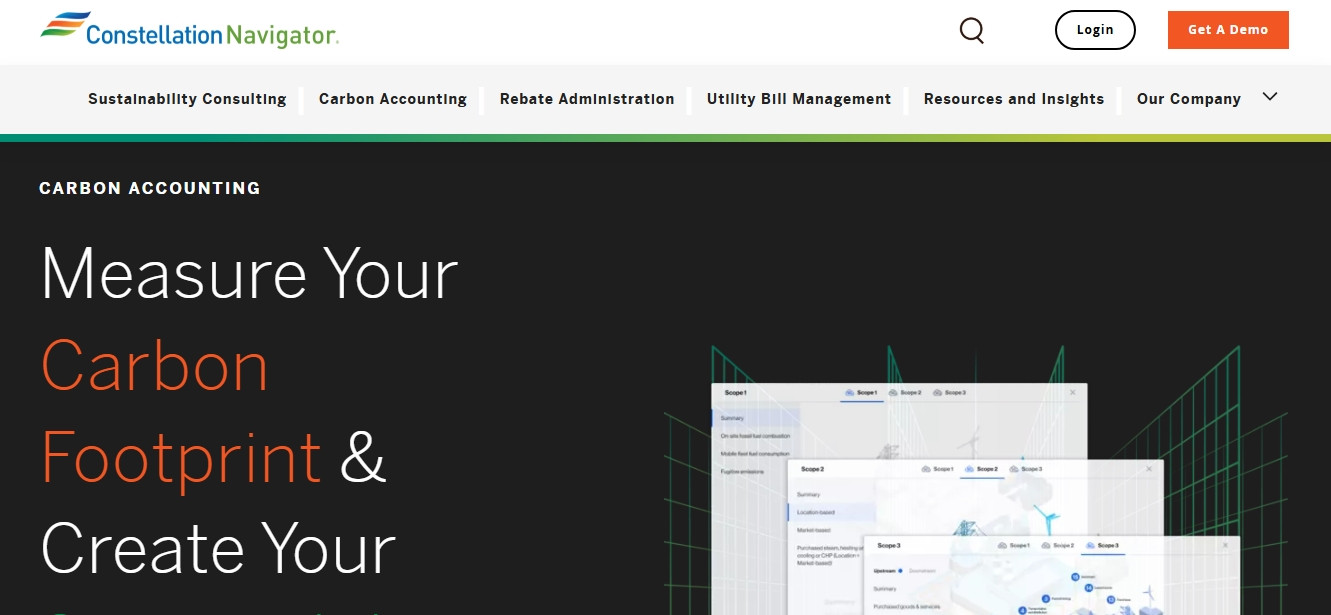
Navigator’s approach is emissions-first and workflow-driven: pull in the “raw ingredients” of Scope 1–3 data, standardize and calculate consistently, then reuse the same dataset across target setting, scenario planning, and disclosure outputs. Its key features include:
Automated data ingestion: Import data from spreadsheets, vendor invoices, and physical records, and integrate with existing systems.
Factor library and methods: Use a database of commodity types and emissions factors to quantify value-chain emissions.
Scope mapping and baselines: Map operations to the correct scopes and build a baseline across a single site or a full portfolio.
Hotspots and prioritization: Rank emissions by location/source/activity and surface hotspots and project opportunities (efficiency, electrification, supply changes).
Scenario analysis for targets: Run location- and market-based scenario analysis to support target setting and planning across the portfolio.
Framework-ready reporting: Export disclosure outputs aligned to GRI, CDP, and GHG Protocol, with traceability from source data to report.
Closing Insights
Constellation built Navigator as part of its broader commercial sustainability offering, pairing software with advisory support and energy-market execution. That matters because many carbon tools stop at measurement: Navigator is explicitly designed to connect emissions baselines and reduction planning to actions Constellation already sells to business customers (renewable energy purchases, energy efficiency projects, and carbon offsets), so the “what should we do next?” step is part of the same conversation.
In regulatory and assurance terms, the platform fits best in the United States (and for US-headquartered multinationals) that run GHG Protocol inventories and must repeatedly answer disclosure and investor frameworks such as CDP and TCFD, or sector-specific questionnaires like GRESB. It also fits companies with complex supplier networks that need structured Scope 3 engagement and data sharing, since supplier collaboration is called out as a core capability. Security and audit readiness are emphasized via a transparent data-to-report trail and SOC 2 Type II certification. Pricing is not listed publicly; access is sold through a demo-led enterprise process.