China’s Lithium Battery Demand Set to Slow in Early 2026, Industry Warns

Cut through the green tape
We don't push agendas. At Net Zero Compare, we cut through the hype and fear to deliver the straightforward facts you need for making informed decisions on green products and services. Whether motivated by compliance, customer demands, or a real passion for the environment, you’re welcome here. We provide reliable information. Why you seek it is not our concern.
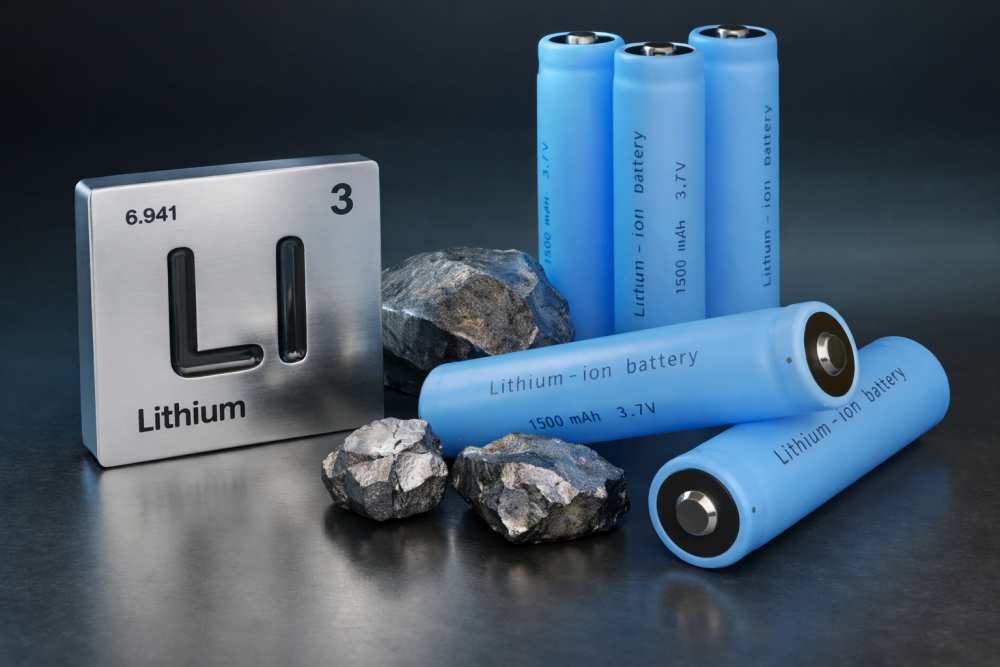
China has been the undisputed engine of global lithium battery growth, driven by strong government support for electric vehicles, renewable energy storage, and industrial electrification. Over the past decade, battery production capacity expanded at an exceptional pace, enabling China to supply domestic demand while becoming the world’s largest exporter of lithium-ion batteries.
That momentum is now expected to ease. According to Reuters, the head of the China Association of Automobile Manufacturers warned that demand for lithium batteries is likely to slump in the early months of 2026. The expected slowdown marks a shift from the high-growth environment that has characterized much of the sector’s recent history.
While overall demand levels remain high, the change signals that China’s battery market is entering a more mature and competitive phase.
Slower Electric Vehicle Growth in a Maturing Market
One of the main drivers behind the projected slowdown is moderating growth in China’s electric vehicle market. EV sales continue to rise in absolute terms, but the pace of expansion has cooled compared with earlier years when double-digit growth was common.
Urban markets are approaching higher levels of EV penetration, and replacement demand is gradually overtaking first-time buyers. At the same time, intense price competition among automakers has reduced margins, limiting their ability to absorb higher component costs or commit to aggressive production increases.
As batteries account for a significant share of an electric vehicle’s total cost, changes in vehicle sales trends have a direct and immediate impact on battery demand.
Overcapacity and Pricing Pressure in the Battery Sector
Another critical factor is overcapacity. Chinese battery manufacturers invested heavily in new plants during the recent boom, expecting sustained growth at home and abroad. This expansion covered multiple battery chemistries, including lithium iron phosphate and nickel-based batteries.
The result has been a supply-demand imbalance. Excess capacity has intensified competition, pushing battery prices down sharply over the past two years. While lower prices benefit automakers and consumers, they have squeezed profit margins for battery producers and raised concerns about the financial sustainability of smaller manufacturers.
Industry executives have increasingly warned that consolidation may be unavoidable if demand growth fails to absorb existing capacity.
Implications for Lithium and Raw Material Markets
The anticipated dip in battery demand growth also affects upstream markets. Lithium prices have already fallen significantly from their earlier peaks as new mining projects came online and inventories increased. A further slowdown in battery production could add pressure to lithium producers, particularly higher-cost operations.
For sustainability stakeholders, the impact is mixed. Reduced short-term demand growth may ease pressure on mining regions and associated environmental and social challenges. However, long-term investment in responsibly sourced lithium remains essential to support electrification and energy storage goals.
The episode highlights the need for better alignment between mining investment cycles and downstream demand realities.
Energy Storage Remains a Key Medium-Term Driver
Despite near-term caution, analysts emphasize that the slowdown is likely to be temporary. Beyond electric vehicles, demand for batteries used in stationary energy storage is expected to grow steadily as China expands renewable power generation.
Large-scale battery storage is increasingly critical for balancing solar and wind output, improving grid stability, and reducing reliance on fossil fuel backup generation. These applications could offset some of the weakness in EV-related battery demand later in 2026 and beyond.
As a result, battery producers with diversified customer bases and strong exposure to energy storage markets may be better positioned to navigate the downturn.
Strategic Choices for Industry and Policymakers
For automakers, weaker battery demand growth could provide short-term benefits through lower prices and improved supply availability. This may support the rollout of more affordable EV models, which remains a priority for accelerating adoption.
For policymakers in China, the situation underscores the need to shift industrial strategy. Rather than continued capacity expansion, future policy may focus on consolidation, quality standards, recycling infrastructure, and second-life battery applications. Battery recycling, in particular, is increasingly viewed as essential for reducing resource dependence and environmental impacts.
Internationally, the slowdown could influence global investment decisions. Countries developing domestic battery supply chains may find opportunities as Chinese firms seek overseas partnerships or exports to utilize spare capacity.
Adjustment, Not Retreat, in the Net-Zero Transition
The expected slump in China’s lithium battery demand in early 2026 does not signal a reversal of the clean energy transition. Instead, it reflects a market adjustment after years of rapid growth and aggressive investment.
For companies and governments focused on net-zero pathways, the lesson is clear: growth will not be linear. Managing cycles, avoiding overcapacity, and building resilient and sustainable supply chains will be as important as scaling production. Those that adapt to this more mature phase of the market are likely to emerge stronger as global demand for clean energy technologies continues to evolve.
Source: www.reuters.com

Mentioned in this article...
Organizations
More related content

OMV Warns Rigid Recycling Rules May Slow Plastics Innovation
Wind and Solar Overtake Fossil Fuels in EU Power Generation
OpenAI Outlines Strategy to Control Rising Data Centre Energy Costs