Big Batteries Are Becoming a Key Tool to Prevent Summer Power Outages

Cut through the green tape
We don't push agendas. At Net Zero Compare, we cut through the hype and fear to deliver the straightforward facts you need for making informed decisions on green products and services. Whether motivated by compliance, customer demands, or a real passion for the environment, you’re welcome here. We provide reliable information. Why you seek it is not our concern.
Electricity grids are under growing pressure as summer temperatures rise and heat waves become more frequent and intense. High temperatures drive up electricity demand, primarily due to air conditioning use, while also reducing the efficiency of power plants and transmission infrastructure. Power lines lose capacity in extreme heat, transformers overheat, and conventional generation units face a higher risk of failure.
According to analysis reported by Bloomberg, these combined stresses are making summer reliability one of the central challenges for power system operators. In response, utilities are increasingly turning to grid-scale battery storage as a fast, flexible way to stabilize electricity supply during critical periods.
How Grid-Scale Batteries Support Reliability
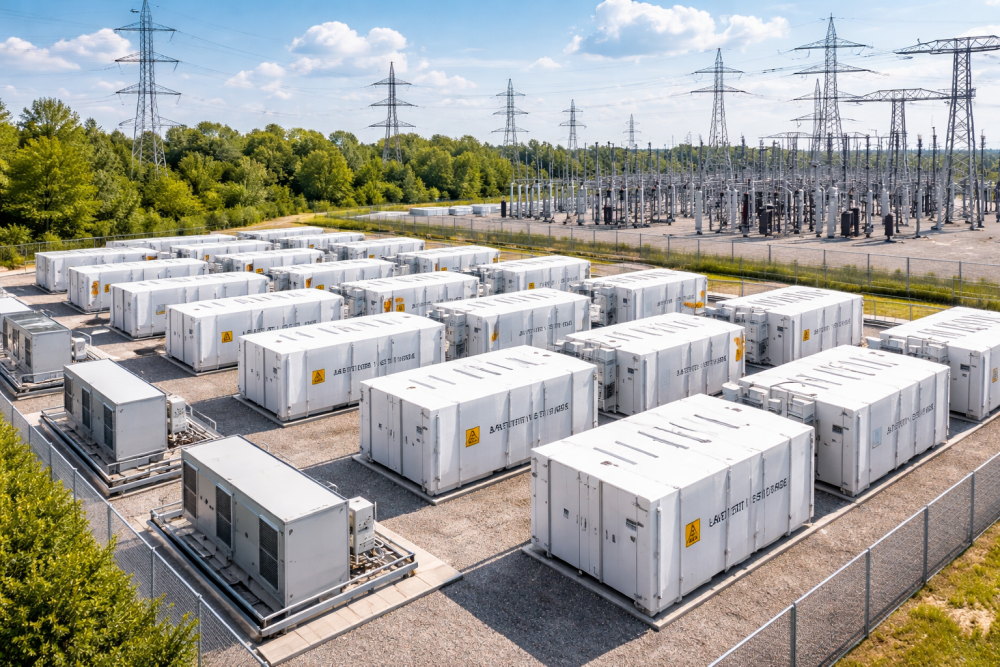
Battery energy storage systems do not produce electricity themselves. Instead, they store power when it is plentiful and release it almost instantly when demand spikes or supply unexpectedly drops. This rapid response capability distinguishes batteries from traditional power plants, which can take minutes or even hours to ramp up.
During heat waves, when demand can surge suddenly, or a power plant may trip offline, batteries can inject electricity into the grid within seconds. This immediate support helps prevent frequency drops and cascading failures that could otherwise lead to rolling blackouts or widespread outages.
Rapid Growth in Battery Deployment
Over the past decade, grid-scale battery capacity has expanded rapidly, particularly in major electricity markets. In the United States, installed battery storage has grown from almost zero to tens of gigawatts, with especially strong growth in states such as California and Texas. Initially driven by the need to integrate solar and wind energy, battery deployment is now increasingly justified on reliability grounds alone.
Utilities are installing batteries near population centers, substations, and renewable generation sites, allowing them to address local grid constraints more effectively than large centralized power plants.
Multiple Grid Services From a Single Asset
One reason batteries are attractive to grid operators is their versatility. Under normal conditions, they provide services such as frequency regulation, voltage control, and energy arbitrage. They can absorb excess power when supply is high and prices are low, then discharge electricity when demand and prices increase.
During grid emergencies, the same systems can act as reserve capacity, reducing the likelihood that operators must resort to load shedding. This ability to serve both everyday market needs and rare but critical events improves the overall economics of battery investments.
Economics and Competition With Peaker Plants
Falling battery costs have strengthened the business case for storage. Advances in lithium-ion technology and manufacturing scale have reduced capital costs significantly over the past decade. While batteries remain expensive upfront, their high utilization rates and fast response make them competitive with gas-fired peaker plants that operate only a few hours per year.
In some regions, batteries are already replacing new peaker plants as the preferred source of short-duration capacity. This shift also supports emissions reduction goals, as batteries avoid direct fossil fuel combustion during peak demand periods.
Policy and Market Design Matter
The pace of battery deployment depends heavily on market rules and regulatory frameworks. Capacity markets, reliability payments, and ancillary service compensation all influence project viability. Regions that recognize batteries as reliability assets and allow them to earn revenue from multiple services have seen faster growth.
Where regulatory clarity is lacking, investment has been slower, even when technical benefits are clear. Policymakers and regulators play a key role in aligning market incentives with the evolving needs of the grid.
Limits of Today’s Battery Technology
Despite their benefits, batteries are not a complete solution to all reliability challenges. Most grid-scale systems today provide between two and four hours of discharge. This makes them well-suited for short, sharp peaks in demand but less effective during prolonged multi-day heat events or extended outages.
Longer-duration storage technologies, including flow batteries and other emerging solutions, are under development but not yet widely deployed at scale. For now, batteries work best as part of a broader mix that includes transmission upgrades, demand response, and diversified generation.
Preparing for a Hotter and More Electrified Future
Climate projections suggest that extreme heat events will continue to intensify, increasing the value of fast-responding grid resources. At the same time, electrification of transport, buildings, and industry is expected to raise peak electricity demand further.
In this context, large batteries are shifting from niche infrastructure to core components of grid resilience strategies. For utilities and policymakers, investment in storage is increasingly about keeping the lights on, not only about supporting renewable energy targets.
Source: www.bloomberg.com

Mentioned in this article...
More related content

OMV Warns Rigid Recycling Rules May Slow Plastics Innovation
Wind and Solar Overtake Fossil Fuels in EU Power Generation
OpenAI Outlines Strategy to Control Rising Data Centre Energy Costs