AWS to Source Low-Carbon Nuton Copper From Rio Tinto for U.S. Data Center Infrastructure

Cut through the green tape
We don't push agendas. At Net Zero Compare, we cut through the hype and fear to deliver the straightforward facts you need for making informed decisions on green products and services. Whether motivated by compliance, customer demands, or a real passion for the environment, you’re welcome here. We provide reliable information. Why you seek it is not our concern.
The rapid expansion of cloud computing and artificial intelligence is driving unprecedented investment in data center infrastructure across the United States. While much attention has focused on the operational energy use of data centers, the emissions embedded in construction materials are emerging as a critical challenge. Copper, a core component of electrical systems, cooling equipment, and network infrastructure, plays a central role in this discussion due to its high emissions intensity during production.
Against this backdrop, Amazon Web Services (AWS) has announced an agreement to source copper produced using Rio Tinto’s Nuton low-carbon technology for its U.S. data center infrastructure. The move signals a shift toward addressing Scope 3 emissions, which include emissions generated across supply chains rather than during direct operations.
What Is Nuton Copper Technology
The copper supplied to AWS will be produced using Nuton, a proprietary heap leaching technology developed by Rio Tinto. Unlike conventional copper production methods that rely heavily on energy-intensive smelting and concentration processes, Nuton uses a bio-chemical leaching approach to extract copper from low-grade ores and historic waste materials.
According to Rio Tinto, Nuton technology can reduce carbon emissions by up to 80% compared with traditional copper processing, depending on site conditions and ore characteristics. The process also significantly lowers water use and enables the recovery of copper from materials that would otherwise be considered uneconomic. This not only reduces emissions but also limits the need for new mining operations.
Strategic Importance of Copper for Data Centers
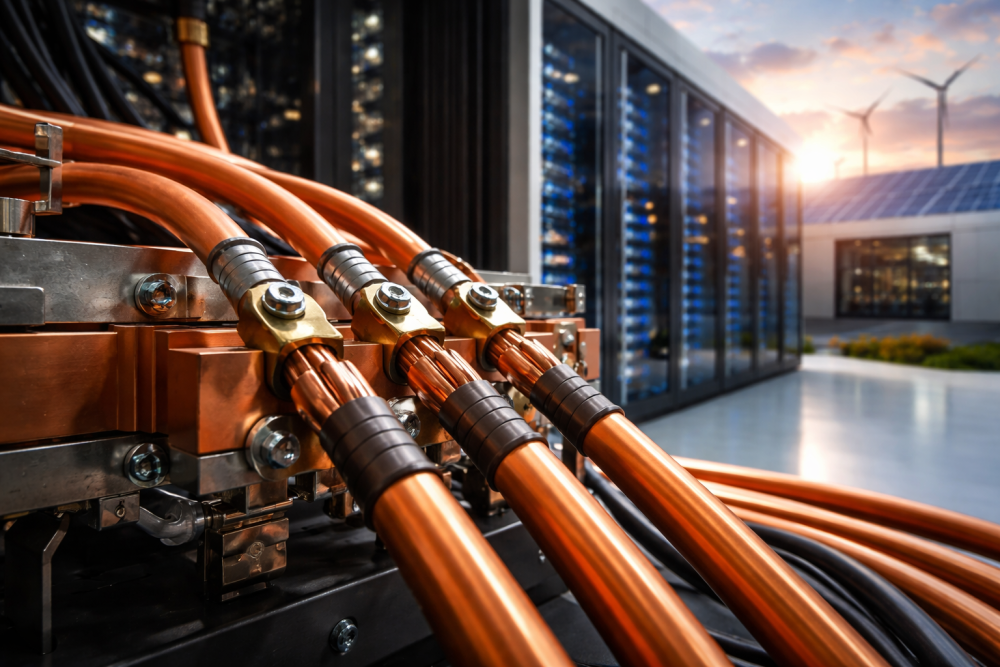
Copper is fundamental to data center development. It is used extensively in power distribution systems, transformers, cabling, backup power infrastructure, and cooling equipment. As data centers grow in size and complexity to support AI workloads, their copper intensity continues to rise.
At the same time, global copper demand is being driven upward by electrification trends, including electric vehicles, renewable energy systems, and grid expansion. These overlapping demands are increasing pressure on supply chains and heightening concerns about both availability and environmental impact. For large infrastructure developers like AWS, securing access to lower-carbon copper is becoming strategically important.
Aligning Procurement With Net-Zero Commitments
AWS has committed to reaching net-zero carbon emissions across its operations by 2040. The company has already met its goal of matching 100% of its electricity consumption with renewable energy, but reducing emissions embedded in construction materials remains a more complex challenge.
By sourcing Nuton-produced copper, AWS is targeting emissions that fall outside its direct control but are increasingly scrutinized by investors, regulators, and customers. Construction materials such as steel, concrete, and copper account for a significant share of lifecycle emissions associated with data center development. Addressing these materials is essential for aligning infrastructure growth with long-term climate targets.
Implications for Mining and Industrial Supply Chains
For Rio Tinto, the agreement with AWS provides a high-profile industrial customer for Nuton technology and supports its broader strategy to decarbonize mining operations. Rio Tinto has indicated that Nuton could be deployed at multiple sites globally, including legacy tailings facilities, which could potentially increase copper supply while reducing environmental impacts.
The collaboration also reflects a broader shift in commodity markets, where buyers are increasingly differentiating materials based on carbon intensity rather than price alone. Similar trends are emerging in steel, aluminum, and cement, where long-term offtake agreements are being used to support investment in low-carbon production technologies.
Broader Policy and Market Context
The AWS-Rio Tinto agreement comes at a time when governments and regulators are increasingly focused on supply chain emissions. In the United States and Europe, proposed disclosure rules and carbon accounting standards are placing greater emphasis on Scope 3 emissions. While voluntary corporate agreements can help accelerate change, many analysts argue that policy support and standardized reporting frameworks will be needed to scale low-carbon materials across sectors.
For policymakers, the deal highlights the importance of aligning digital infrastructure growth with climate objectives. As data centers become critical national infrastructure, ensuring that their construction materials support net -zero pathways will be essential for meeting broader emissions reduction goals.
A Signal of Shifting Buyer Expectations
Although financial details of the agreement have not been disclosed, the decision by AWS to prioritize low-carbon copper sends a clear signal to the market. Large buyers are increasingly willing to factor emissions performance into procurement decisions, creating incentives for producers to invest in cleaner technologies.
As demand for digital services continues to grow, agreements like this may play a key role in reshaping industrial supply chains. By linking infrastructure expansion with lower-carbon materials, technology companies can help accelerate the transition toward more sustainable industrial systems while supporting the broader goals of the energy transition.
Source: esgnews.com

Mentioned in this article...
Organizations
More related content

OMV Warns Rigid Recycling Rules May Slow Plastics Innovation
Wind and Solar Overtake Fossil Fuels in EU Power Generation
OpenAI Outlines Strategy to Control Rising Data Centre Energy Costs