

Available Carbon Accounting Features
Missing Carbon Accounting Features
Pricing
Starting Price
Options
- Monthly Subscription
Available Since
Deployment Options
Good Option For
- Small Business (11-50 people)
- Medium Business (51-250 people)
- Large Business (250+ people)
Deep dive
Core Features
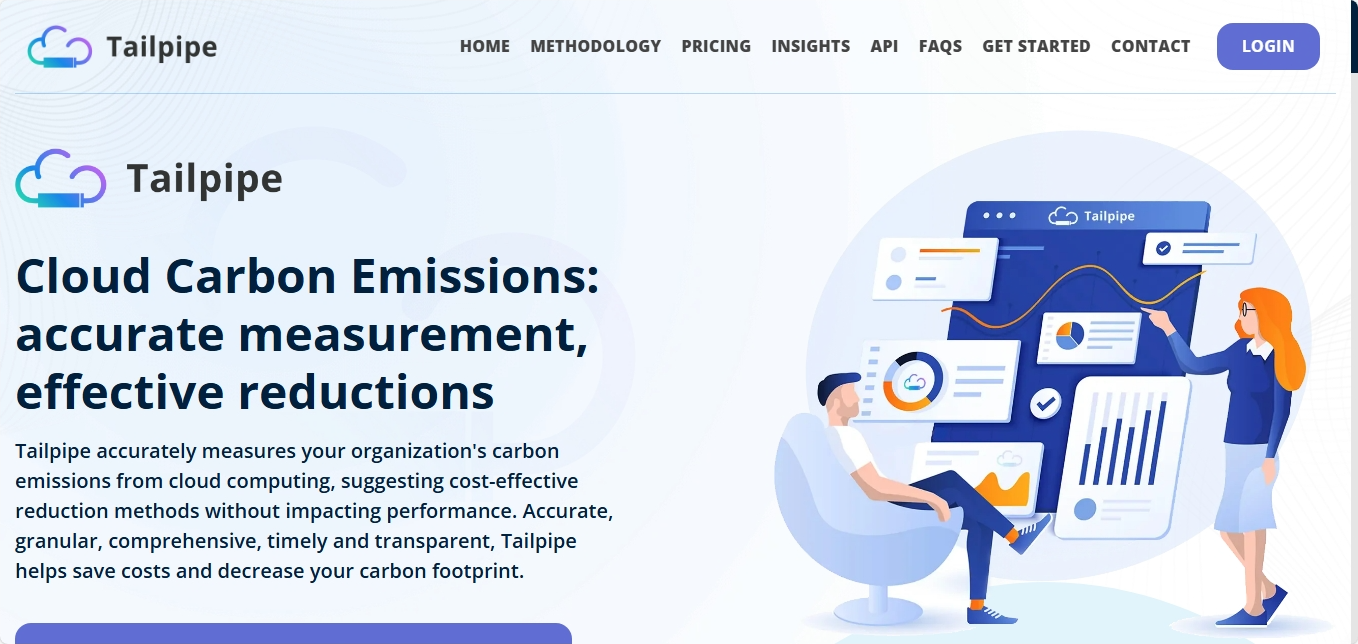
Tailpipe calculates the carbon emissions arising from an organization’s use of cloud computing using a methodology that considers both embodied emissions and operational emissions. Its key features include:
ISO-Standard Calculation Engine: Utilizes proprietary algorithms adhering to the ISO 21031:2024 global standard, processing data from cloud providers and silicon manufacturers to deliver scientifically validated emissions figures.
Embodied & Operational Emissions: Comprehensively accounts for both the carbon from operational energy use and the often-overlooked embodied carbon from hardware manufacture and disposal, providing a complete lifecycle view.
Granular Emissions Attribution: Breaks down totals to show emissions by specific cloud service, geographic region, and individual project, enabling precise identification of hotspots and targeted reduction actions.
Actionable Reduction Recommendations: Provides data-backed suggestions that target simultaneous reductions in both carbon output and cloud computing costs, placing implementation decisions in the user's hands.
Transparent Methodology & Dashboards: Offers complete visibility into data sources and calculations through clear dashboards, demystifying the emissions derivation process for stakeholders.
Multi-Cloud API Integration: Features easy-to-integrate APIs that deliver emissions data into existing systems, currently supporting AWS with Azure and GCP support forthcoming.
Closing Insights
Tailpipe was born from a distinct intersection of expertise rarely seen in software. It was created by practitioners with over two decades of experience in both designing low-carbon computing infrastructure and building advanced cloud systems. This dual background in environmental and computer science is Tailpipe's true differentiator; it's not merely a reporting tool but an engineering instrument. It tackles cloud carbon as a systems optimization problem, grounded in physics and data, which allows it to stand apart from solutions based primarily on financial proxies or averaged estimates.
A key technical differentiator is Tailpipe's rigorous approach to embodied emissions—the carbon cost of manufacturing and disposing of physical hardware, which accounts for 20-30% of total ICT emissions. The platform calculates this using a standardized formula that allocates emissions based on a customer's actual resource share and time share of cloud hardware, assumed to have a six-year lifespan. This level of granular, component-level accounting (CPU, RAM, SSD, etc.) is essential for organizations needing to report on complex Scope 3 emissions from purchased cloud services.
For organizations aiming to convert cloud sustainability pledges into measurable progress, Tailpipe offers a pathway grounded in accuracy and action. By providing clear dashboards and APIs, it bridges the communication gap between infrastructure engineering teams and corporate sustainability officers. The platform's expert-informed recommendations translate complex data into practical cost-saving and emission-reducing strategies. Organizations interested in moving beyond carbon accounting approximations can engage with Tailpipe's team to explore how its precise measurements and scientific approach can integrate into their cloud management and sustainability reporting frameworks.