Robots May Be Key to Cutting Manufacturing Emissions, New Study Finds

Cut through the green tape
We don't push agendas. At Net Zero Compare, we cut through the hype and fear to deliver the straightforward facts you need for making informed decisions on green products and services. Whether motivated by compliance, customer demands, or a real passion for the environment, you’re welcome here. We provide reliable information. Why you seek it is not our concern.
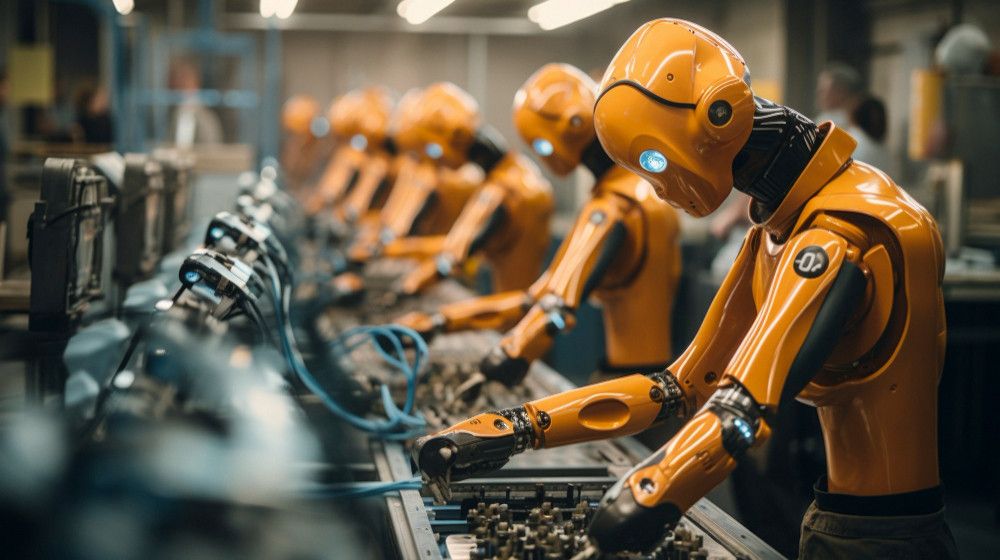
A new study in Scientific Reports reveals that industrial robots not only boost manufacturing productivity but also play a significant role in reducing carbon emissions globally.
Authored by Yongliang Zhang and Jianing Zhu of China University of Mining and Technology, and Shali Wang of Guizhou University of Engineering Science, the study analyzed data from 38 countries and 15 manufacturing sectors between 2000 and 2014. The researchers found that the wider adoption of industrial robots significantly reduces emissions, especially in developed countries, capital-intensive sectors, and digitally advanced industries.
The mechanism is twofold: robots enhance production efficiency and help countries move up the global value chain. This shift enables cleaner, higher-value activities like research and design to replace more polluting, low-end manufacturing. Additionally, the use of robots fosters international spillovers — spreading low-carbon practices through global trade networks.
However, the authors caution that these benefits are not equally distributed. In many developing nations, limited access to digital infrastructure and clean energy, coupled with their role as production hubs for advanced economies, may lead to "carbon leakage" — where high-emission activities are effectively outsourced.
Policy recommendations from the authors include increased investment in digital infrastructure, workforce upskilling, and green energy integration to fully harness the environmental benefits of automation. They also call for stronger international collaboration to ensure equitable and effective carbon reduction worldwide.
As countries seek solutions to meet urgent climate goals, this research suggests that robots, long associated with efficiency, may also be vital tools in building a cleaner, smarter industrial future.
The full paper is available at https://www.nature.com/articles/s41598-025-12958-9#Sec23

More related content

OMV Warns Rigid Recycling Rules May Slow Plastics Innovation

Wind and Solar Overtake Fossil Fuels in EU Power Generation

OpenAI Outlines Strategy to Control Rising Data Centre Energy Costs
