

Available Carbon Accounting Features
Missing Carbon Accounting Features
Pricing
Starting Price
Options
Available Since
Deployment Options
Good Option For
Deep dive
Core Features
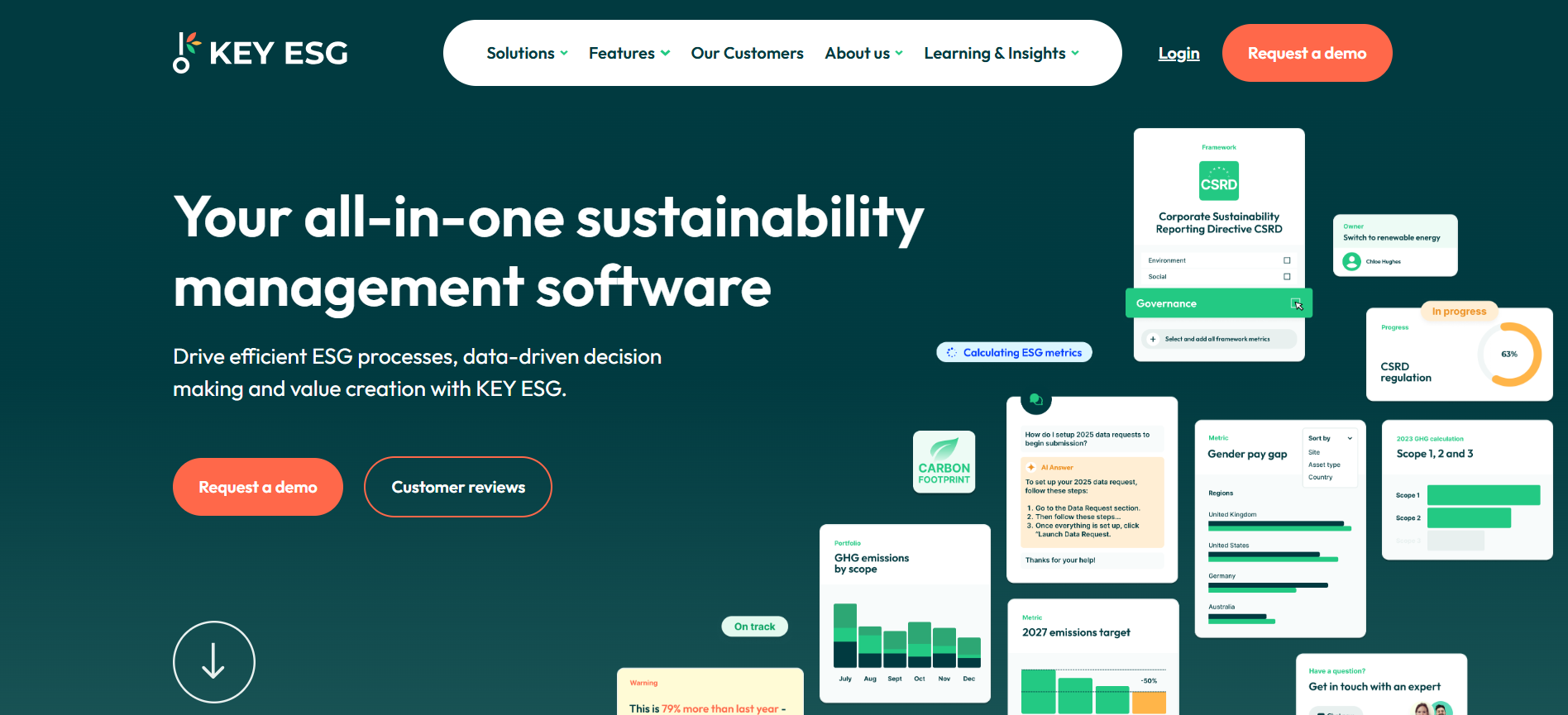
Corporate Carbon Accounting (Scopes 1, 2 and 3): The Key ESG Carbon Accounting Platform enables organisations to calculate greenhouse-gas emissions across all three scopes. Users can collect activity data from operations, energy consumption, travel, procurement and supply-chain sources, converting it into CO₂-equivalent emissions using recognised methodologies.
Scope 3 & Supplier Data Collection: A key component of the platform is its focus on Scope 3 emissions. Key ESG supports supplier engagement workflows that allow organisations to collect emissions-related data from vendors, estimate gaps using secondary data and consolidate results into a unified Scope 3 inventory.
Regulatory-Aligned Reporting: The platform is designed to support compliance with major sustainability and climate-reporting frameworks. Carbon data generated within Key ESG can be mapped to ESG disclosures and used to support CSRD, GRI, TCFD and other climate-related reporting requirements.
Centralised ESG & Climate Data Management: Carbon accounting is integrated into the broader Key ESG environment, which centralises environmental, social and governance data. This allows companies to manage climate metrics alongside wider ESG indicators within a single platform.
Dashboards & Emissions Analytics: Key ESG provides dashboards that visualise emissions by scope, category and business unit. These insights help sustainability teams identify hotspots, prioritise reduction initiatives and track emissions trends over time.
Audit Trail & Documentation: The platform includes structured data capture, documentation and audit trails to support internal reviews and external assurance processes. Evidence management helps organisations demonstrate methodological consistency and data provenance.
Plans & Pricing
Key ESG does not publicly disclose pricing for its carbon accounting platform.
Pricing is typically enterprise subscription-based, with costs depending on:
organisational size and geographic footprint
number of reporting entities and users
Scope 3 complexity and supplier coverage
selected ESG and reporting modules
onboarding, configuration and support services
Prospective customers generally engage in a sales consultation to define the scope and pricing.
Integrations
Key ESG is built to integrate into enterprise IT and data environments. Typical integration patterns include:
ERP and financial systems for procurement and spend data
Energy and utilities data sources
Supplier data collection workflows
Internal ESG and compliance systems
While specific off-the-shelf connectors are not always publicly listed, the platform supports structured imports and system integrations to reduce manual data handling.
Certifications & Awards
Key ESG positions its methodology in alignment with recognised standards, including:
GHG Protocol for corporate emissions accounting
CSRD / ESRS climate disclosures
GRI and TCFD-aligned reporting structures
No standalone ISO certification or third-party audit certification for the software is publicly disclosed. However, the platform emphasises audit readiness and methodological transparency.
Expert Voices & Reviews
Public analyst reviews are limited, but Key ESG is generally positioned as:
an integrated ESG and carbon platform, rather than a standalone carbon calculator
a solution suited for organisations needing both ESG governance and emissions data
a platform prioritising compliance alignment and structured reporting
Feedback from sustainability professionals typically highlights the value of combining ESG governance and carbon accounting in one system, especially for CSRD preparation.
Customers & Case Studies
Key ESG does not publicly disclose detailed customer case studies for the carbon accounting module. Based on its positioning, the platform is typically used by:
mid-sized and large enterprises
Organisations subject to ESG and climate disclosure requirements
Companies preparing for CSRD and other regulatory reporting
Businesses managing complex Scope 3 value chains
Use cases generally focus on building auditable emissions baselines and supporting regulatory disclosures rather than advanced scenario modelling.
Closing Insights
Key ESG’s carbon accounting platform is best understood as part of a broader ESG management ecosystem rather than a standalone emissions-calculation engine.
Strengths:
Integrated ESG and carbon data management
Scope 1–3 emissions coverage
Supplier data collection for Scope 3
Alignment with CSRD and global reporting frameworks
Enterprise-grade audit trails and governance
Limitations:
Not a specialist LCA or product-footprinting tool
Limited public details on emission-factor databases and modelling depth
No explicit carbon-pricing, offsets or scenario-modelling modules
Less suitable for highly technical industrial emissions modelling
Best Fit:
Organisations seeking a single ESG platform that includes carbon accounting for regulatory reporting and governance, especially in preparation for CSRD.