China Breaks Ground on 60 GW Yarlung Tsangpo Mega-Dam


Cut through the green tape
We don't push agendas. At Net Zero Compare, we cut through the hype and fear to deliver the straightforward facts you need for making informed decisions on green products and services. Whether motivated by compliance, customer demands, or a real passion for the environment, you’re welcome here. We provide reliable information. Why you seek it is not our concern.
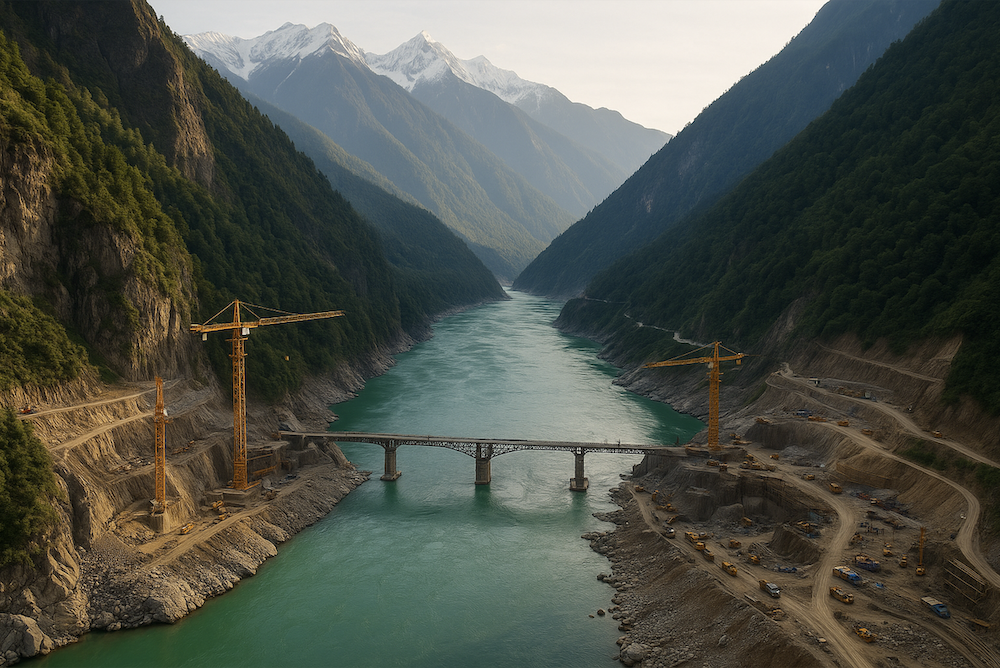
Chinese Premier Li Qiang has confirmed that work is now underway on a five-station cascade in the lower Yarlung Tsangpo, known as the Brahmaputra once it enters India. The development will cost an estimated ¥1.2 trillion (about US $170 billion) and install around 60 GW of capacity. When fully commissioned in the early-to-mid-2030s, it is expected to generate close to 300 TWh of electricity per year, roughly equal to the United Kingdom’s total annual power consumption and triple the output of the 22.5 GW Three Gorges facility.
Why Beijing is banking on hydropower
Hydropower already supplies more than 425 GW of China’s 1,950 GW generation fleet, far ahead of any other country. The Yarlung Tsangpo complex supports China’s commitments to peak carbon emissions by 2030 and reach net-zero by 2060, while also providing the firm capacity needed to balance the country’s rapidly growing solar and wind resources.
Engineering the “two-kilometre drop”
Within only 50 km, the river descends about 2,000 m through the planet’s deepest canyon, offering extraordinary hydraulic head. Engineers plan a mix of arch and gravity dams, high-head turbines, and ultra-high-voltage direct-current (UHVDC) lines to transmit power to central and eastern China. The steep gradient delivers record energy density, but the region’s high seismicity calls for advanced geotechnical design and real-time structural monitoring.
Environmental and seismic fault lines
The gorge is home to snow leopards, Bengal tigers, and ancient conifer forests. Conservation groups warn that the dams could fragment habitats, block fish migration routes, and alter sediment flows that sustain downstream floodplains. Geologists also note the potential for reservoir-induced seismicity in a zone already prone to earthquakes.
Downstream diplomacy
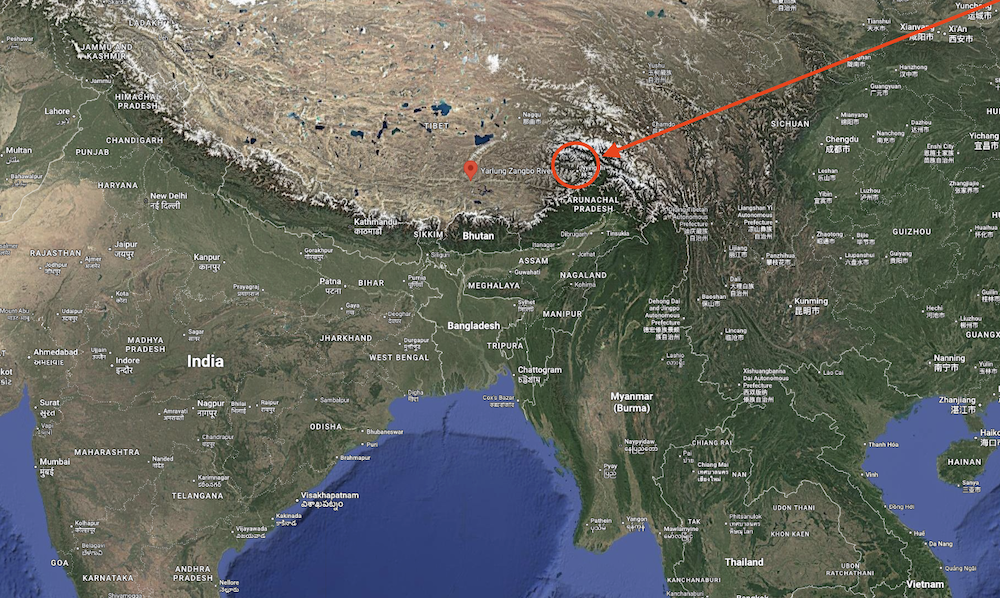
More than 130 million people in India’s Arunachal Pradesh and Assam, and Bangladesh depend on the Brahmaputra–Jamuna Basin for irrigation, fisheries, and drinking water. New Delhi and Dhaka have voiced concerns that unilateral flow regulation might intensify dry-season scarcity or create flash-flood risks during the monsoon. Chinese officials say the projects are run-of-river and will not significantly cut transboundary flows, but transparency on reservoir operations remains limited.
Local economic lift-off
Beijing describes the scheme as a “project of the century” that will create thousands of construction jobs, expand grid connections into Sichuan and Yunnan, and stimulate domestic supply chains for turbines, UHVDC equipment, and pumped-storage plants. Shares of several Chinese hydro-equipment manufacturers reportedly rose after the groundbreaking announcement.
Practical takeaways for Net Zero Compare readers
Carbon accounting
At 300 TWh per year, the project could avoid about 250 million tonnes of CO₂ annually compared with China’s average coal-fired generation mix, although lifecycle emissions depend on reservoir methane release and transmission losses.Supply-chain opportunities
Chinese consortia are expected to tender for high-head turbines rated above 500 m, UHVDC converters, and smart-grid stabilizers. International firms with niche expertise may find partnership openings despite broader geopolitical tensions.Water-risk diligence
Corporations sourcing agricultural commodities from the Brahmaputra Basin should monitor hydrological data once impoundment begins, because seasonal flow and sediment patterns could shift.Benchmark for gigascale projects
The dam illustrates how very large infrastructure can accelerate national energy transitions yet intensify cross-border externalities, a pattern relevant to upcoming projects on the Mekong, Congo, and Amazon tributaries.
What happens next?
Construction timetable: 2025 to 2035, with the first turbine potentially online by 2031 if work proceeds as planned.
Key regulatory watchpoints: application of China’s Ecological Conservation Redlines in Tibet, progress on a China–India water-data protocol, and periodic seismic-risk audits by the National Energy Administration.
Market signals: periodic spikes in demand for steel and cement, along with potential tightening of global high-head turbine supply between 2028 and 2032.

More related content

OMV Warns Rigid Recycling Rules May Slow Plastics Innovation

Wind and Solar Overtake Fossil Fuels in EU Power Generation

OpenAI Outlines Strategy to Control Rising Data Centre Energy Costs
